– The history of the Albanian Church is almost as long as the history of Christianity itself. St. Paul in his letter to the Romans mentions these very lands, writing that he spread the gospel “as far as Illyricum.”
Bringing the message of salvation to this part of the world has been a tremendous challenge for centuries. Albania has a population of 4,500,000 people. It is located on the Adriatic sea coast of the Balkan Peninsula, between Kosovo and Montenegro on the north, Macedonia on the east, and Greece on the south. Apostle Paul wrote that he preached in the Roman province of Illyricum (Romans 15:19), and history holds that he visited Durrës.
– As early as 55 AD, the first bishopric in Albania was established in Durrës. The oldest bishoprics included Shkodër (Scutari), mentioned in documents as far back as 385 AD.
– The contribution of Christianity to Albanian culture cannot be overestimated. The Latin baptismal formula from the 15th century remains the first preserved written Albanian document. The first book in Albanian was a missal from 1555, the first Albanian poet was a Catholic priest, and the first Albanian dictionary was written in 1635 by Bishop Frang Bardhi.
– This community faced systematic eradication under the communist dictatorship of Enver Hoxha from 1945 to 1991, culminating in the 1967 declaration of Albania as the world’s first atheist state — resulting in the seizure of 327 Catholic churches, execution or imprisonment of nearly all clergy, and widespread martyrdom.
– Despite this near-total suppression, underground persistence of faith enabled a post-1991 revival, marked by the reestablishment of the Episcopal Conference in 1993, papal visits by John Paul II in 1993 and Francis in 2014, and ongoing beatifications of martyrs.
This is not just history — this is **martyrology**. This is **resurrection**.
Albania has a story no other corner of Christianity can fully replicate.
St. Thomas Aquinas, the Angelic Doctor, devoted extraordinary care to this subject in the Summa Theologiae (Prima Pars, Questions 54–58), and his conclusions remain the touchstone of Catholic thought on the matter. Here is a thorough and ordered exposition:
🕊️ Angelic Knowledge: A Deep Dive
I. Angels Are Pure Intellect
As purely spiritual beings, angels only have intellectual activity. According to the scholastics, angels are not composed of bodily parts, do not have bodily organs and, therefore, can only perform acts that do not require corporeal functions.
An angel is called “intellect” and “mind,” because all his knowledge is intellectual — whereas the knowledge of a soul is partly intellectual and partly sensitive.
This is the foundational distinction. Human knowing begins in the senses — we see, hear, touch, and from that sensory data, the intellect abstracts universal truths. Angels have no such process. Their knowing is purely spiritual from the very start.
II. The Three Types of Angelic Knowledge
Angels possess three types of knowledge: natural knowledge, infused knowledge, and Beatific knowledge. Their natural knowledge is derived from their angelic nature and is limited to understanding the essences and principles of created things. While using this knowledge, they can comprehend multiple truths under the same topic at once, as a united whole. They perceive the full picture instantaneously, bypassing the human process of rational deduction. Unlike humans, who reason sequentially, angels grasp both principles and conclusions in a single intellectual act, which is why they never change their minds.
1. Natural Knowledge — Innate Species
The innate species, infused into the angels’ minds at their creation, are actually intelligible by themselves. This is the most dramatic difference from human knowing. Humans are born with no knowledge and must acquire it painfully through experience and study. Angels are created already equipped with intelligible species — interior representations of reality — placed there by God Himself at the moment of their creation.
Angels do not have to work out any of their knowledge by abstraction or by studious attention. They have their knowledge with their nature, whereas man has, with his nature, not knowledge, but the ability to acquire knowledge.
Think of it this way: a human scholar spends a lifetime learning mathematics, philosophy, and science. An angel simply is in possession of such truths — not because they studied them, but because God placed that understanding within them at their origin.
2. Infused Knowledge — Divine Illumination
God bestows infused knowledge in the angels’ intellect and grants them deeper insight into divine mysteries. This knowledge surpasses their natural understanding of creation but does not include God’s complete understanding of His divine essence or the future. Angels can access and act upon this infused knowledge instantly and fully.
Being by nature higher than man and much closer to God, the angels receive more of His light — that is, a greater power of understanding, infused ideas, mind-pictures representing external objects, the spiritual and material creatures of this universe.
3. Beatific Knowledge — The Vision of God
Beatific knowledge represents a direct, continuous, and experiential vision of God’s essence, transcending both natural and infused knowledge. This transcendent form of knowledge is not merely an intellectual access to information; it is a profound participation in the divine life, varying in clarity and intensity among the different choirs of angels, according to their natures. The Beatific Vision is the source of their eternal joy and union with God, granted as the ultimate fulfillment of their being.
It is through this Beatific Vision that angels, knowing all things in the Divine Word, can hold all truths together in one unified gaze. By such knowledge as the angels have of things through the Word, they know all things under one intelligible species, which is the Divine essence. Therefore, as regards such knowledge, they know all things at once.
III. Intuitive, Not Discursive — Angels Do Not “Reason”
This is perhaps the most striking feature of angelic intellect.
Angels have intuitive knowledge, immediately understanding things without the need for reason, and lack sensory perception but have intellectual illumination.
Lower intellects of their very nature attain perfection in their cognition by a process of movement and discourse; higher intellects have no need for this process. It is the weakness of our intellects that necessitates the process of discursive reasoning, as we cannot see immediately the consequences inherent in first principles. The angels have a “fullness of intellectual light” that gives them all the consequences of these first principles.
In other words, where a human must reason step-by-step from premises to conclusions — like climbing a staircase — an angel sees the entire staircase, top to bottom, in a single glance.
IV. Angelic Knowledge Is Infallible in Nature, But Not in All Things
An important nuance: angelic knowledge, while extraordinarily powerful, is not omniscient.
In the angels, all they have is the act of simple apprehension; as they don’t make judgements in the way that we do, they cannot make mistakes in this way. However, Aquinas identifies that they can still make mistakes — it is just that the mistakes that they can make are precisely the big ones. Their natural cognition is perfect, but their supernatural cognition — their cognition of things ordained supernaturally by God — is fallible.
This explains how Satan and the fallen angels could err: not in natural knowledge, but in their free judgment regarding supernatural realities — specifically, their relationship to God and His plan.
V. What Angels Cannot Know
Angels do not know the future, nor can they read our minds against our will.
To know the future with absolute certainty — to know future events themselves — this third type of knowing exists in God alone. Both angels and men have knowledge of probable future events, angels more perfectly than men. But angels do not have direct and absolute knowledge of future events.
As a matter of faith, the angels are not endowed with cardiognosis — knowledge of the secrets of the heart — nor with a certain knowledge of future acts of the free will; these being exclusively divine prerogatives. It follows that their knowledge of the thoughts and future free actions of men is purely conjectural and can at most engender only moral certitude.
This has enormous practical implications: the devil cannot read your soul. Only God knows the interior of the human heart with certainty. That which is most intimate — your free acts of the will and the movements of your conscience — belongs to God alone.
VI. Higher Angels Know More Than Lower Angels
The distinction of angelic hierarchies is based on the different intellectual natures of angels, and the various ways in which the Essence of God illuminates them. This is why the higher angels have a more universal view of things than the lesser angels: they learn the truth of things from God Himself, while the angels of the second hierarchy understand them through universal causes, and those of the third through the application of causes to particular effects.
Higher angels also teach lower angels, but in a uniquely spiritual way: A higher angel illuminates or teaches a lower angel by “strengthening” the cognitive faculty of the lower angel and at the same time by “somehow dividing” into smaller elements what he knows through one, more universal concept, so as to accommodate his knowledge to the capacities of the lower angel.
VII. Angels Know Singulars — Including You
A beautiful and consoling point: angels know not only universal truths, but particular things — including individual human beings.
Through the species imparted to them, angels know things not only as to their universal nature, but likewise in their individual conditions, in so far as they are the manifold representations of that one simple essence.
Your guardian angel does not merely know “humanity” in the abstract. He knows you — your particular soul, your particular struggles, your particular calling.
VIII. How Angels Communicate
In a sense, the angels speak to one another, but not in utterances like humans. Their “speech” is a direct communication from one intellect to the other.
All angelic communication is done instantaneously, without any hindrance from space or time, since it is a purely spiritual communication. Angels can choose to speak to only one angel, or to several, or to all, simply by intending and willing it — but they cannot read each other’s minds.
The Practical Takeaway
The theology of angelic knowledge is not abstract speculation. It reveals the breathtaking diversity of God’s creation — that between the human mind and the infinite mind of God, there exist vast intelligences of pure light, forever gazing upon divine truth. It humbles the human intellect while simultaneously elevating it: for humans, through grace, are destined for the same Beatific Vision that constitutes the eternal bliss of the angels (cf. CCC 1023–1024).
St. Thomas wrote in the Summa that the angels were created so that creation itself might more perfectly mirror the fullness of God’s goodness and wisdom. They are not ornamental — they are active participants in the drama of salvation.
It is commonly claimed that the practice of praying to departed saints and to angels is a late development in Christianity, probably post-dating the Council of Nicea. In this post, I will try to argue that prayers to departed saints were relatively common in the pre-Nicene Church.
There are 5 to 8 clear post-Apostolic references from at least 3 locations. Some of the references come from official Christian teachers. The earliest reference may be first or second century, and many of the second and third century writers’ beliefs probably reflect the customs of even earlier times.
Below are three lists of quotations (with some interpretive notes) from Christians writing before 325 AD. The first list has quotations which state or imply the belief that angels and deceased humans can be requested by Christians alive on earth to pray for them.
The second list has quotations which state or imply the belief that angels and deceased humans are aware of the prayers of Christians on earth, and join them mystically in prayer. Quotes in the third list are ambiguous but support the doctrine of communion with the departed in one way or another. I follow these lists with a brief analysis of the evidence and what it implies about the antiquity of the practice of praying to saints.
Let it be made clear that by “prayers” is meant any kind of request for action made by one person to another. It is uncontroversial that Christians can pray to saints in the following sense: a Christian can ask another Christian who is alive on earth to pray for him or her.
What is more questionable is whether Christians can pray to saints in the following sense: pray to angels or Christians who have departed from earthly life and await resurrection. This latter sense is what I mean by “prayers to saints” for the rest of this article.
For longer texts, or texts that are unclear in meaning, I have written the relevant portions in bold lettering. I realize that there are theological objections to this practice; there is also lots of popular-level apologetic material replying to many of these objections. Please read material that replies to these objections on the internet before offering these objections in the comment section.
1. Some prayers to Saints
I take the texts in the first category to show examples of this practice of prayers to Saints, or express approval of this practice (as in the case of Origen). Let us briefly review their content.
1.1 Hermas of Rome:
I prayed [to the Angel of Repentance, who is called the Shepherd] much that he would explain to me the similitude of the field…And he answered me again, saying, “Every one who is the servant of God, and has his Lord in his heart, asks of Him understanding, and receives it, and opens up every parable; and the words of the Lord become known to him which are spoken in parables. But those who are weak and slothful in prayer, hesitate to ask anything from the Lord; but the Lord is full of compassion, and gives without fail to all who ask Him. But you, having been strengthened by the holy Angel, and having obtained from Him such intercession, and not being slothful, why do not you ask of the Lord understanding, and receive it from Him?” I said to him, “Sir, having you with me, I am necessitated to ask questions of you, for you show me all things, and converse with me; but if I were to see or hear these things without you, I would then ask the Lord to explain them.”
The Shepherd of Hermas, 3.5.4
Rome, Date questionable; perhaps as early as AD 85-90, perhaps as late as AD 140-155 [1]
Hermas writes about various visions he receives and commandments that are issued to him by “the angel of repentance” who appears to him in the form of a Shepherd. [11] This angel does not seem to be Christ, but rather a creature.
Hermas says that he prayed to this angel, to help him understand the teachings he was being given. The angel of repentance speaks of how he has received intercession from an Angel that strengthens him. Schaff and Wade seem to think that this angel is Christ, capitalizing “Him” and “Angel”. Perhaps this is so. But regardless, Hermas does pray to the angel of repentance, showing that he prays to saints and believes that prayers to saints are legitimate.
And if the second Angel is not Christ, but is simply the angel of repentance referring to himself, then we have a reference to an angel’s intercession to God on behalf of Hermas.
1.2 St. Hippolytus of Rome:
Tell me, you three boys, remember me, I entreat you, that I also may obtain the same lot of martyrdom with you, who was the fourth person with you who was walking in the midst of the furnace and who was hymning to God with you as from one mouth? Describe to us his form and beauty so that we also, seeing him in the flesh, may recognize him.
Commentary on Daniel, 30.1[2]
Rome, Circa AD 202-211
St. Hippolytus makes a request of the three Holy Youths of the book of Daniel. He asks them to “remember” him. The object of this remembrance is that he may be martyred like they were thrown into the fire. These youths are deceased, and so St. Hippolytus is praying to saints.
1.3 Origen of Alexandria:
Now supplication and plea and thanksgiving may be offered to people without impropriety. Two of them, namely pleading and thanksgiving, might be offered not only to saints but to people alone in general, whereas supplication should be offered to saints alone, should there be found a Paul or a Peter, who may benefit us and make us worthy to attain authority for the forgiveness of sins.
On Prayer, 14.6 [3]
Alexandria, Circa AD 253
In Origen’s discussion of prayer, he distinguishes the kind of prayer that should be offered to God alone, and the kind of prayer that should be offered to humans. Remember that prayer is any kind of “asking”. Among the prayers that can be offered to humans, the kind of prayer that should be offered to only saints (which could mean Christians alive on earth or Christians departed) is supplication, while the kinds of prayer that can be offered to all people (saints or not) are plea and thanksgiving.
The context is ambiguous about whether Origen means by saints the living or the departed; he uses “saints” in both senses depending on context. Four factors contribute to the conclusion that he is talking about departed saints.
First, he clearly teaches (see the Origen quote included in section 2 below) that departed saints can pray for us (though this point considered all by itself does not support the interpretation that these are departed saints). Second, he speaks as though it is difficult to find saints of the kind he is discussing, implying that it is not merely normal Christians he is talking about.
Third, he mentions Peter and Paul as examples of the kind of difficult-to-find saints, and they are indeed deceased and lived a holy life, implying that it is Christians of the deceased and holy variety that are hard to find, but permissible to pray to. Fourth, he speaks of how these saints “may benefit us and make us worthy to attain authority for the forgiveness of sins.” This suggests that the power or authority that they make available is spiritual strength to overcome the power of sin: again, this could not just be a request made to any Christian. Perhaps this power for forgiveness could be a reference to absolution by a priest; but given the mention of Peter and Paul this is not likely.
1.4 3rd Century Papyrus:
As we sing to Father Son and Holy Spirit, may all the powers join with us to say Amen. To the only giver of all good things be power and praise. Amen.
Probably Egyptian, 3rd Century AD hymn [4]
The text in this papyrus may seem like a mere expression of praise to God with unimportant references to “angels”. But let us look more closely. The first sentence contains a request: “may…the powers…say”. This is indeed a prayer to the powers.
And it is not merely a request that the heavenly powers be involved in praising God together with the Christians. It also involves a request to the heavenly powers to give the “Amen”, to say to God “may it be”. The request really amounts to asking the powers “please say to the Father, Son, and Spirit, that all of our sung prayers may be answered”. So it is a request for help addressed to the powers (which some would call “angels”).
1.5 John Ryland’s Papyrus:
Beneath your compassion we take refuge, Theotokos. Our petitions do not despise in time of trouble, but from dangers ransom us, Only Holy, Only Blessed
3rd Century Letter [5]
Egypt, Circa AD 250
This prayer to the Theotokos is very clear. It is a direct request that the Mother of God, who is among the saints with her Son, aid the troubled Christian.
1.6 Inscription on the Tomb of St. Sabina:
Atticus, sleep in peace, secure in your safety, and pray anxiously for our sins
Funerary inscription near St. Sabina’s Tomb
Rome, Circa AD 300
1.7 Inscription on the Tomb of St. Sabina:
Pray for your parents, Matronata Matrona. She lived one year, fifty-two days
Funerary inscription near St. Sabina’s Tomb [6]
Rome, Circa AD 300
1.8 Another inscription from the catacombs in Rome:
Anatolius made this for his well-deserving son, who lived seven years, seven months, and twenty days. May thy spirit rest well in God. Pray for thy sister.
Funerary inscription [7]
Rome, Circa AD 325
These last three references may or may not be pre-Nicene. Frederick Edward Warren noted that they are difficult to date. [8] They all attest to belief that a Christian can ask prayers of a departed Christian, even if that other person is not canonically a saint.
2. Some Prayers with Saints:
Texts in the second category do not explicitly state or clearly imply that prayers to saints are permissible; but they do express the same worldview as the Christian writers who teach that such prayers are permissible (and perhaps they do imply that St. Clement and St. Cyprian thought praying to saints was permissible, if these authors had other assumptions in common with Christians who pray to saints).
2.1 St. Clement of Alexandria
In this way is he [the true Christian] always pure for prayer. He also prays in the society of angels, as being already of angelic rank, and he is never out of their holy keeping; and though he pray alone, he has the choir of the saints standing with him [in prayer]
Miscellanies 7:12
Alexandria, AD 208
St. Clement reflects belief in the intercessory power of the angels and their presence with the Christian in prayer. Though there is no explicit teaching that Christians should pray to angels, or that angels pray for the Christian, one could argue that people who pray together pray for each other, and they often request the prayers of others.
2.2 Origen of Alexandria
“But not the high priest [Christ] alone prays for those who pray sincerely, but also the angels… as also the souls of the saints who have already fallen asleep”
On Prayer 11
Alexandria, AD 233
Origen believes that angels and departed saints pray for Christians. This quote helps demonstrate that Origen thought that prayers are made by Christians who have already departed, and that such people can be called “saints”.
2.3 St. Cyprian of Carthage
“Let us remember one another in concord and unanimity. Let us on both sides [of death] always pray for one another. Let us relieve burdens and afflictions by mutual love, that if one of us, by the swiftness of divine condescension, shall go hence first, our love may continue in the presence of the Lord, and our prayers for our brethren and sisters not cease in the presence of the Father’s mercy”
Letters 56[60]:5
Carthage, AD 253[8]
St. Cyprian’s teaching does not seem to be a request to departed saints, though it is a request to saints who will depart. It reflects the same belief as Hermas, St. Hippolytus, Origen, and other early writers: that departed Christians pray for us who are on earth. It also could mean that departed Christians have a continual awareness of what goes on with those on earth.
3. Ambiguous References:
If the definition of prayer is widened to include any kind of thanksgiving or acknowledgement of a person who is not presently embodied, then we can include all of the ambiguous texts below:
3.1 Inscription on a Catacomb:
Mayest thou live among the saints!
From a Roman Catacomb[9]
AD 268 or 269
Here is some kind of expression of acknowledgement and hope being made towards a deceased Christian. It does not clearly imply belief in the ability of a Christian to answer prayers, but it is an example of praying for the departed, and perhaps of addressing them and communicating with them. This practice of praying for departed Christians is at least as clear and widespread early on as the practice of praying to saints. I will examine it in a later post.
3.2 From the Apocryphal Acts of John
(27) The painter, then, on the first day made an outline of [John the Apostle] and went away…later John…went into the bedchamber, and saw the portrait of an old man crowned with garlands, and lamps and altars set before it. And he called him and said: Lycomedes, what meanest thou by this matter of the portrait? can it be one of thy gods that is painted here? for I see that thou art still living in heathen fashion. And Lycomedes answered him: My only God is he who raised me up from death with my wife: but if, next to that God, it be right that the men who have benefited us should be called gods -it is thou, father, whom I have had painted in that portrait, whom I crown and love and reverence as having become my good guide.
(28) And John who had never at any time seen his own face said to him: Thou mockest me, child: am I like that in form, [excelling] thy Lord? how canst thou persuade me that the portrait is like me? And Lycomedes brought him a mirror. And when he had seen himself in the mirror and looked earnestly at the portrait, he said: As the Lord Jesus Christ liveth, the portrait is like me: yet not like me, child, but like my fleshly image; for if this painter, who hath imitated this my face, desireth to draw me in a portrait, he will be at a loss…
(29) …But this that thou hast now done is childish and imperfect: thou hast drawn a dead likeness of the dead.
The Apocryphal Acts of John, 27-29 [10]
Circa AD 150
This text is spurious and heterodox. It probably is not a valuable source of historical information about the life of St. John the Theologian and Apostle. And it clearly has a Gnostic doctrinal bent, as evidenced in the talk of “fleshly image” and “dead likeness of the dead [body]” which does not reflect a Christian view of matter.
But it is a response to and critique of the orthodoxy of its time. And it would be odd if the Gnostic polemicist wrote something that was in no way a response to orthodox practice. More likely, this is a criticism of an existing orthodox practice: the veneration of icons of departed saints. It clearly attests to belief in prayers to saints in the sense of thanksgiving for the departed; and arguably it attests to supplication too, because of the emphasis the “fleshly, non-spiritual Christian” Lycomedes places on St. John’s good guidance and benefits. If Lycomedes’ practice corresponds to a present-day (circa AD 150) “sarxist” (the opposite of Gnostic) then this character’s talk of St. John as a god-by-grace, a good guide, and one who benefits him could easily correspond to the “sarxist” practice of praying to the departed St. John, who is not alive at AD 150.
3.3 Inscription in a Church:
Under the holy place of M[ary?] I wrote there the [names] The image I adored Of her…
The Grotto of the Annunciation in Jerusalem [11]
Date highly uncertain; sometime between first and third centuries
This inscription is hard to decipher because the letters are worn. But from what little we can still translate, it again indicates at least a belief in the veneration of departed saints, because it reflects belief that there is a holy place where the image of a woman is adored; and given that the name begins with “M”, it is likely that woman is the Mother of God, Mary.
It is not clear what names were written underneath St. Mary’s image. But the fact that a list of names was written under the holy place of St. Mary’s image suggests that here too we have supplication being made to the Theotokos on behalf of Christians on earth.
Analysis
Scholarship has established that the practice of praying to saints was present in some circles of Judaism before and after the appearing of Christianity.[12] This creates a kind of precedent for the possibility that Christians would permit this practice. There is no time to look at any possible biblical basis for prayers to saints in this post, but perhaps some arguments can be made at a later time that Scripture permits such prayers and that there are examples of such prayers in both the Old and New Testaments.
Here it is necessary to consider the patristic witness and what kind of evidence it gives. For those who do not accept the inherent divine authority of the Church Fathers, the Fathers’ claims (and those of other early Christians) can still count as historical witness to what Christians believed during, before, or after their writings. The initial argument to be made in favor of a pre-Nicene practice of prayers to saints is very short and simple. We have examples of pre-Nicene Christians praying to saints; therefore it was probably permissible. But it is not enough to note this. Instead, their testimonies must be weighed and criticized carefully on five bases: the (a) quantity or number of testimonies, (b) the orthodoxy of the writers, (c) their position or office in the Church, (d) their antiquity, and (e) locations.
(a) Quantity.
An obvious objection to the simple argument above is that the references are not numerous enough to warrant the conclusion that early Christians prayed to saints:
If all you have are 5-8 references to a practice, does that really prove that it was normal for Christians? There are so many other texts that do not refer to this practice.
In response, we must indeed grant 5-8 references do not conclusively prove that it was normal. But the sparseness of these numbers should not be grounds for dismissing the evidence, which might still make it probable that prayers to saints was a normal practice. Many Christian writings have been destroyed over the centuries.
Many things Christians considered important were not written down until later times when it became easier to be a Christian. And the fact that this practice is not referred to in all texts is also not grounds for denying that it was normal. After all, not every writer would write about everything pertaining to Christian life and faith. And we do not assume that because St. Clement of Rome does not refer to St. Mary’s betrothal to Joseph that he therefore does not believe in it. Absence of evidence is not always evidence of absence. Furthermore, if we pick a doctrine like the eternal generation of the Son, the few handfuls of references to it in pre-Nicene Christianity, and the lack of objection to it, are considered adequate grounds for saying it is likely that the pre-Nicene Church believed it. And though the attestation of prayers to saints is not as numerous, we can apply the same criteria and say: why not think that it is somewhat likely that the pre-Nicene Church practiced prayers to saints?
(b) Orthodoxy.
A second problem arises when we ask about the orthodoxy of the writers:
Not every opinion expressed by early Christians was genuinely Christian. Many of the authors mentioned above held questionable beliefs. Hermas’ Christology is quite suspect, appearing sometimes to identify the Logos and the Holy Spirit. St. Hippolytus was a schismatic. Origen, for all his piety, held to a highly-Platonized version of Christianity, which included believing in an eternal cycle of fall and redemption, as well as a questionable Christology that seems at different points Nicene, Nestorian, or Arian. St. Clement of Alexandria’s thought has Gnosticizing tendencies. St. Cyprian believed in the total invalidity of heretical baptisms. And of course with the many anonymous inscriptions and texts included, we cannot be sure that the writers were representing actual Christian teaching at the time. Perhaps all of these writers were heretics on this exact same point: they all thought prayers to saints were permissible.
By way of reply, there are not just a few, but many examples of Christians favorable to these practices. There are between 5 and 8 examples of Christians explicitly praying to saints documented above. There are no examples of orthodox Christians opposed to these practices. Even if not all of the writers are totally orthodox (by Protestant, Roman Catholic, or Eastern Orthodox standards) or if the orthodoxy of some is in doubt, the number of testimonies will outweigh questions about the detailed correctness of their faith. If all of those who prayed to saints held an heretical belief in common, then that might be grounds for thinking this belief led to the practice of prayers to saints. Then perhaps we would have reason to dismiss their testimony, and say that they all fabricated this practice based on their private heretical opinions. But such is not the case.
(c) Office.
An objection based on the office or position of the witnesses can be voiced as follows:
Not all of the prayers to saints are known to be made by bishops or priests or deacons. The anonymous inscriptions might not be made by official teachers. We can hardly take these as representative sources of Christian teaching at the time if we do not know who said them.
In reply, the fact that we do have confirmation from bishops and presbyters shows that prayers to saints were considered permissible by at least some teachers. Also, though it would be suspicious if only the laypeople in one location were favorable to a practice, the fact that the practice is widespread (see below) makes it less-likely that this is an isolated lay-movement, transmitted by lay-theology. And we must also bear in mind the attitude that teachers had towards writings of non-teachers that expressed prayers to saints. For instance, St. Irenaeus did not refer to prayers to saints in his writings. But he did think that the book called the Shepherd of Hermas was Scripture. Hence he wrote:
Truly, then, the Scripture declared, which says, “First of all believe that there is one God, who has established all things, and completed them, and having caused that from what had no being, all things should come into existence:” (book ii. sim. 1.) He who contains all things, and is Himself contained by no one.[13]
This suggests that St. Irenaeus believed that the Shepherd’s doctrines were true (whether he believed absolutely all of them were true, or whether he accurately interpreted them all is another story). But if much of Hermas’ book is full of prayers to saints, and St. Irenaeus regarded that book as Scripture, then there must be some kind of presumption that St. Irenaeus believed that prayers to saints were permissible.
(d) Antiquity.
Perhaps we can object to the argument that prayers to saints was a common practice by saying the references are not early enough:
Hermas may be early, but he is less-trustworthy. St. Hippolytus is later, writing in the third century. Origen is not very trustworthy, and he is writing later. The papyri are mid-to-late third century and early fourth. This could be an instance of the gradual corruption of Christianity, admitting more and more of paganism as it became acclimated to its surrounding culture.
The earliest datable example of a prayer to saints we have is from Hermas, whether we pick the earlier (85-90) or the later date (140-155). That means we have at least one reference probably from before 155. An advantage to the witness of St. Hippolytus is that he is liturgically hyper-conservative; this makes it much more likely that his prayer to the Three Holy Youths reflects a practice that predates the writing of his commentary (202-211). Perhaps in the 190s, when he was about 20 years old, St. Hippolytus would begin to care about which practices were established and which were not. If so, he would be unlikely to adopt a practice that did not have some pedigree and at least an apparently reliable claim to apostolicity.
So it is likely that here we have implicit attestation to the practice being older than 170. If St. Irenaeus approves of Hermas’ prayers to saints, then he is also an example of someone who approves of prayers to saints in AD 180 while he wrote Against Heresies. But again, it is likely that he believed in this before he wrote the text itself, which should put us back at least a decade by conservative estimates; so he gives attestation to permission of prayers to saints around 170 as well. Origen’s work in the early 200s likely does not reflect a new practice in Egypt, given that the practice was probably in place elsewhere.
So let us be conservative in dating the practice and say that he believed in prayers to saints by 240. The papyrus from 250 could perhaps be pushed back another decade to 240 as well. The dates of the other texts are less-certain, but again, the origination of a practice generally precedes its first recorded incident. So by a conservative date for the origins of the practice, we have about five references to prayers to saints before 250. If we are more liberal and read the evidence charitably, then we should take Christians at their word when they speak of the Church as a conservative institution that preserved and did not create traditions, and if we grant that its teachers thought they could trace their doctrinal lineage back to the Apostles, then we should be inclined to grant that this practice was indeed Apostolic in origin. Regardless of how early we date these writings or their sources, for fairness sake we should think about how early the records of doctrines like eternal generation have to be in order for us to think they were taught by the pre-Nicene Church as part of Apostolic tradition. Applying this kind of standard makes it difficult to deny that prayers to saints were quite early.
(e) Location.
Finally, let us consider the possibility that the locations of the sources are not widespread enough:
Much of the practice is concentrated in Rome—with Hermas and Hippolytus. And it is no surprise that we see the inscriptions to deceased Christians here too.
However, it is false to say that the evidence just reflects a Roman belief. St. Irenaeus, if we may include him, was located in present day Lyons, France. But he probably grew up in Asia Minor, based on the fact that he learned from St. Polycarp. We can combine this testimony with that of the Egyptians: Origen, St. Clement, and the papyrus. If we again grant that the Church was a conservative institution and was not making things up on a wide scale, then it is plausible that St. Irenaeus picked up belief in prayers to saints while still in Asia Minor.
Conclusion:
We are left with at least three significant locations where several Christians (including some official teachers) believed in prayers to saints at a relatively early date, perhaps almost a century before Nicea. This may not prove to those with a Protestant mindset that the practice is Apostolic. Nor will it convince every listener that the prayers to saints were practiced “everywhere, at all times, by all”.
But it does provide some evidence that the practice was quite widespread, quite early, and taught by some important Christians. If we abide by the same standards of evidence that we use for other doctrines (the eternal generation of the Son, baptism in the name of the Trinity, the divinity of the Holy Spirit) then it is hard to deny that prayers to saints were common among early Christians.
[4] Published in Oxy. Pap. 1786 along with the music it was sung to, and again in PO 18.507. The papyrus has a 3rd century mercantile account on the reverse side. The hymn must therefore have been in Egypt soon after the time of Athenagoras. Reference from the introduction to Athenagoras in Embassy for the Christians, The Resurrection of the Dead (Ancient Christian Writers, 23)
[9] Reference taken from The Liturgy and Ritual of the Ante-Nicene Church
[10] Text available at: http://www.gnosis.org/library/actjohn.htm. For discussion and analysis see pages 94-98 in Steven Bigham’s Early Christian Attitudes Towards Images.
The citations presented here document the widespread belief in the prayers/intercessions of angels and saints for believers on earth. All emphasis will be mine.
Shepherd of Hermas (AD 89-145)
Chapter 4
I prayed him much that he would explain to me the similitude of the field, and of the master of the vineyard, and of the slave who staked the vineyard, and of the sakes, and of the weeds that were plucked out of the vineyard, and of the son, and of the friends who were fellow-councillors, for I knew that all these things were a kind of parable. And he answered me, and said, You are exceedingly persistent with your questions. You ought not, he continued, to ask any questions at all; for if it is needful to explain anything, it will be made known to you. I said to him, Sir, whatsoever you show me, and do not explain, I shall have seen to no purpose, not understanding its meaning. In like manner, also, if you speak parables to me, and do not unfold them, I shall have heard your words in vain. And he answered me again, saying, Every one who is the servant of God, and has his Lord in his heart, asks of Him understanding, and receives it, and opens up every parable; and the words of the Lord become known to him which are spoken in parables. But those who are weak and slothful in prayer, hesitate to ask anything from the Lord; but the Lord is full of compassion, and gives without fail to all who ask Him. But you, having been strengthened by the holy Angel, and having obtained from Him such intercession, and not being slothful, why do not you ask of the Lord understanding, and receive it from Him? I said to him, Sir, having you with me, I am necessitated to ask questions of you, for you show me all things, and converse with me; but if I were to see or hear these things without you, I would then ask the Lord to explain them.
(Third Book: Similitudes, FIFTH SIMILITUDE — OF TRUE FASTING AND ITS REWARD: ALSO OF PURITY OF BODY.)
St. Hippolytus of Rome (Circa AD 202-211)
Tell me, you three boys, remember me, I entreat you, that I also may obtain the same lot of martyrdom with you, who was the fourth person with you who was walking in the midst of the furnace and who was hymning to God with you as from one mouth? Describe to us his form and beauty so that we also, seeing him in the flesh, may recognize him. (Commentary on Daniel, 30.1[2])
Origen (AD 233)
“But not the high priest [Christ] alone prays for those who pray sincerely, but also the angels . . . as also the souls of the saints who have already fallen asleep.” (Prayer, 11)
St. Clement of Alexandria (Alexandria, AD 208)
In this way is he [the true Christian] always pure for prayer. He also prays in the society of angels, as being already of angelic rank, and he is never out of their holy keeping; and though he pray alone, he has the choir of the saints standing with him [in prayer]. (Miscellanies, Book VII, Chapter 12. The True Gnostic is Beneficent, Continent, and Despises Worldly Things)
St. Cyprian of Carthage (AD 253)
5. We earnestly exhort as much as we can, dearest brother, for the sake of the mutual love by which we are joined one to another, that since we are instructed by the providence of the Lord, who warns us, and are admonished by the wholesome counsels of divine mercy, that the day of our contest and struggle is already approaching, we should not cease to be instant with all the people in fastings, in watchings, in prayers. Let us be urgent, with constant groanings and frequent prayers. For these are our heavenly arms, which make us to stand fast and bravely to persevere. These are the spiritual defences and divine weapons which defend us. Let us on both sides [of death] always pray for one another. Let us relieve burdens and afflictions by mutual love, that if one of us, by the swiftness of divine condescension, shall go hence first, our love may continue in the presence of the Lord, and our prayers for our brethren and sisters not cease in the presence of the Father’s mercy. (Epistle 56)
St. Cyril of Jerusalem (AD 350)
9. Then we commemorate also those who have fallen asleep before us, first Patriarchs, Prophets, Apostles, Martyrs, that at their prayers and intercessions God would receive our petition. Then on behalf also of the Holy Fathers and Bishops who have fallen asleep before us, and in a word of all who in past years have fallen asleep among us, believing that it will be a very great benefit to the souls , for whom the supplication is put up, while that holy and most awful sacrifice is set forth. (Catechetical Lectures, Lecture 23)
St. Hilary of Poitiers (AD 365)
“To those who wish to stand [in God’s grace], neither the guardianship of saints nor the defenses of angels are wanting.” (Commentary on the Psalms, 124:5:6)
St. Ephraim (AD 370)
“You victorious martyrs who endured torments gladly for the sake of the God and Savior, you who have boldness of speech toward the Lord himself, you saints, intercede for us who are timid and sinful men, full of sloth, that the grace of Christ may come upon us, and enlighten the hearts of all of us so that we may love him.” (Commentary on Mark)
“Remember me, you heirs of God, you brethren of Christ; supplicate the Savior earnestly for me, that I may be freed through Christ from him that fights against me day by day.” (The Fear at the End of Life)
Pectorius (AD 375)
Aschandius, my father, dearly beloved of my heart, with my sweet mother and my brethren, remember your Pectorius in the peace of the Fish [Christ].” (Epitaph of Pectorius)
Gregory of Nazianzen (AD 380)
“May you [Cyprian] look down from above propitiously upon us, and guide our word and life; and shepherd this sacred flock… gladden the Holy Trinity, before which you stand.” (Orations 17[24])
4. Thus might you console us; but what of the flock? Would you first promise the oversight and leadership of yourself, a man under whose wings we all would gladly repose, and for whose words we thirst more eagerly than men suffering from thirst for the purest fountain? Secondly, persuade us that the good shepherd who laid down his life for the sheep John 10:11 has not even now left us; but is present, and tends and guides, and knows his own, and is known of his own, and, though bodily invisible, is spiritually recognized, and defends his flock against the wolves, and allows no one to climb over into the fold as a robber and traitor; to pervert and steal away, by the voice of strangers, souls under the fair guidance of the truth. Aye, I am well assured that his intercession is of more avail now than was his instruction in former days, since he is closer to God, now that he has shaken off his bodily fetters, and freed his mind from the clay which obscured it, and holds intercourse naked with the nakedness of the prime and purest Mind; being promoted, if it be not rash to say so, to the rank and confidence of an angel. This, with your power of speech and spirit, you will set forth and discuss better than I can sketch it. But in order that, through ignorance of his excellences, your language may not fall very far short of his deserts, I will, from my own knowledge of the departed, briefly draw an outline, and preliminary plan of an eulogy to be handed to you, the illustrious artist of such subjects, for the details of the beauty of his virtue to be filled in and transmitted to the ears and minds of all. (Ibid., Oration 18)
Gregory of Nyssa (AD 380)
“[Ephraim], you who are standing at the divine altar [in heaven] . . . bear us all in remembrance, petitioning for us the remission of sins, and the fruition of an everlasting kingdom.” (Sermon on Ephraim the Syrian)
John Chrysostom (AD 392-396)
“When you perceive that God is chastening you, fly not to his enemies . . . but to his friends, the martyrs, the saints, and those who were pleasing to him, and who have great power [in God].” (Orations 8:6)
“If then I shall show [somewhat] which he when alive never dreamed of, neither he, nor any other man that ever lived, what other proof of the resurrection will you require? For that while alive one should win battles and victories, being a king and having armies at his disposal, is nothing marvelous, no, nor startling or novel; but that after a Cross and Tomb one should perform such great things throughout every land and sea, this it is which is most especially replete with such amazement, and proclaims His divine and unutterable Power. And Alexander indeed after his decease never restored again his kingdom which had been rent in pieces and quite abolished: indeed how was it likely he, dead, should do so? But Christ then most of all set up His after He was dead. And why speak I of Christ? Seeing that He granted to His disciples also, after their deaths, to shine? For, tell me, where is the tomb of Alexander? Show it me and tell me the day on which he died. But of the servants of Christ the very tombs are glorious, seeing they have taken possession of the most loyal city; and their days are well known, making festivals for the world. And his tomb even his own people know not, but this man’s the very barbarians know. And the tombs of the servants of the Crucified are more splendid than the palaces of kings; not for the size and beauty of the buildings, (yet even in this they surpass them,) but, what is far more, in the zeal of those who frequent them. For he that wears the purple himself goes to embrace those tombs, and, laying aside his pride, stands begging the saints to be his advocates with God, and he that has the diadem implores the tent-maker and the fisherman, though dead, to be his patrons. Will you dare then, tell me, to call the Lord of these dead; whose servants even after their decease are the patrons of the kings of the world?…” (Homilies on Second Corinthians, Homily 26 2 Corinthians 12:1-10)
Ambrose of Milan (AD 393)
“May Peter, who wept so efficaciously for himself, weep for us and turn towards us Christ’s benign countenance.” (The Six Days Work, 5:25:90)
Jerome (AD 406)
6. For you say that the souls of Apostles and martyrs have their abode either in the bosom of Abraham, or in the place of refreshment, or under the altar of God, and that they cannot leave their own tombs, and be present where they will. They are, it seems, of senatorial rank, and are not subjected to the worst kind of prison and the society of murderers, but are kept apart in liberal and honourable custody in the isles of the blessed and the Elysian fields.
Will you lay down the law for God? Will you put the Apostles into chains? So that to the day of judgment they are to be kept in confinement, and are not with their Lord, although it is written concerning them, Revelation 14:4 They follow the Lamb, wherever he goes. If the Lamb is present everywhere, the same must be believed respecting those who are with the Lamb. And while the devil and the demons wander through the whole world, and with only too great speed present themselves everywhere; are martyrs, after the shedding of their blood, to be kept out of sight shut up in a coffin, from whence they cannot escape? You say, in your pamphlet, that so long as we are alive we can pray for one another; but once we die, the prayer of no person for another can be heard, and all the more because the martyrs, though they Revelation 6:10 cry for the avenging of their blood, have never been able to obtain their request. If Apostles and martyrs while still in the body can pray for others, when they ought still to be anxious for themselves, how much more must they do so when once they have won their crowns, overcome, and triumphed?
A single man, Moses, oft wins pardon from God for six hundred thousand armed men; and Acts 7:59-60 Stephen, the follower of his Lord and the first Christianmartyr, entreats pardon for his persecutors; and when once they have entered on their life with Christ, shall they have less power than before?
The Apostle PaulActs 27:37 says that two hundred and seventy-six souls were given to him in the ship; and when, after his dissolution, he has begun to be with Christ, must he shut his mouth, and be unable to say a word for those who throughout the whole world have believed in his Gospel?Shall Vigilantius the live dog be better than Paul the dead lion? I should be right in saying so after Ecclesiastes, if I admitted that Paul is dead in spirit.
The truth is that the saints are not called dead, but are said to be asleep. Wherefore John 11:11 Lazarus, who was about to rise again, is said to have slept. And the Apostle 1 Thessalonians 4:13 forbids the Thessalonians to be sorry for those who were asleep. As for you, when wide awake you are asleep, and asleep when you write, and you bring before me an apocryphal book which, under the name of Esdras, is read by you and those of your feather, and in this book it is written that after death no one dares pray for others.
I have never read the book: for what need is there to take up what the Church does not receive? It can hardly be your intention to confront me with Balsamus, and Barbelus, and the Thesaurus of Manichæus, and the ludicrous name of Leusiboras; though possibly because you live at the foot of the Pyrenees, and border on Iberia, you follow the incredible marvels of the ancient hereticBasilides and his so-called knowledge, which is mere ignorance, and set forth what is condemned by the authority of the whole world.
I say this because in your short treatise you quote Solomon as if he were on your side, though Solomon never wrote the words in question at all; so that, as you have a second Esdras you may have a second Solomon.
And, if you like, you may read the imaginary revelations of all the patriarchs and prophets, and, when you have learned them, you may sing them among the women in their weaving-shops, or rather order them to be read in your taverns, the more easily by these melancholy ditties to stimulate the ignorant mob to replenish their cups. (Against Vigilantius)
Augustine (AD 400-419)
“There is an ecclesiastical discipline, as the faithful know, when the names of the martyrs are read aloud in that place at the altar of God, where prayer is not offered for them. Prayer, however, is offered for the dead who are remembered. For it is wrong to pray for a martyr, to whose prayers we ought ourselves be commended.” (Sermons, 159:1)
21. As to our paying honor to the memory of the martyrs, and the accusation of Faustus, that we worship them instead of idols, I should not care to answer such a charge, were it not for the sake of showing how Faustus, in his desire to cast reproach on us, has overstepped the Manichæan inventions, and has fallen heedlessly into a popular notion found in Pagan poetry, although he is so anxious to be distinguished from the Pagans. For in saying that we have turned the idols into martyrs, he speaks of our worshipping them with similar rites, and appeasing the shades of the departed with wine and food. Do you, then, believe in shades? We never heard you speak of such things, nor have we read of them in your books. In fact, you generally oppose such ideas: for you tell us that the souls of the dead, if they are wicked, or not purified, are made to pass through various changes, or suffer punishment still more severe; while the good souls are placed in ships, and sail through heaven to that imaginary region of light which they died fighting for. According to you, then, no souls remain near the burying-place of the body; and how can there be any shades of the departed? What and where are they? Faustus’ love of evil-speaking has made him forget his own creed; or perhaps he spoke in his sleep about ghosts, and did not wake up even when he saw his words in writing. It is true that Christians pay religious honor to the memory of the martyrs, both to excite us to imitate them and to obtain a share in their merits, and the assistance of their prayers. But we build altars not to any martyr, but to the God of martyrs, although it is to the memory of the martyrs. No one officiating at the altar in the saints’ burying-place ever says, We bring an offering to you, O Peter! Or O Paul! Or O Cyprian! The offering is made to God, who gave the crown of martyrdom, while it is in memory of those thus crowned. The emotion is increased by the associations of the place, and love is excited both towards those who are our examples, and towards Him by whose help we may follow such examples. We regard the martyrs with the same affectionate intimacy that we feel towards holy men of God in this life, when we know that their hearts are prepared to endure the same suffering for the truth of the gospel. There is more devotion in our feeling towards the martyrs, because we know that their conflict is over; and we can speak with greater confidence in praise of those already victors in heaven, than of those still combating here. What is properly divine worship, which the Greeks call latria, and for which there is no word in Latin, both in doctrine and in practice, we give only to God. To this worship belongs the offering of sacrifices; as we see in the word idolatry, which means the giving of this worship to idols. Accordingly we never offer, or require any one to offer, sacrifice to a martyr, or to a holysoul, or to any angel. Any one falling into this error is instructed by doctrine, either in the way of correction or of caution. For holy beings themselves, whether saints or angels, refuse to accept what they know to be due to God alone.
We see this in Paul and Barnabas, when the men of Lycaonia wished to sacrifice to them as gods, on account of the miracles they performed. They rent their clothes, and restrained the people, crying out to them, and persuading them that they were not gods. We see it also in the angels, as we read in the Apocalypse that an angel would not allow himself to be worshipped, and said to his worshipper, “I am your fellow-servant, and of your brethen.” Revelation 19:10Those who claim this worship are proud spirits, the devil and his angels, as we see in all the temples and rites of the Gentiles. Some proud men, too, have copied their example; as is related of some kings of Babylon. Thus the holy Daniel was accused and persecuted, because when the king made a decree that no petition should be made to any god, but only to the king, he was found worshipping and praying to his own God, that is, the one true God. Daniel vi As for those who drink to excess at the feasts of the martyrs, we of course condemn their conduct; for to do so even in their own houses would be contrary to sound doctrine. But we must try to amend what is bad as well as prescribe what is good, and must of necessity bear for a time with some things that are not according to our teaching. The rules of Christian conduct are not to be taken from the indulgences of the intemperate or the infirmities of the weak. Still, even in this, the guilt of intemperance is much less than that of impiety. To sacrifice to the martyrs, even fasting, is worse than to go home intoxicated from their feast: to sacrifice to the martyrs, I say, which is a different thing from sacrificing to God in memory of the martyrs, as we do constantly, in the manner required since the revelation of the New Testament, for this belongs to the worship or latria which is due to God alone. But it is vain to try to make these heretics understand the full meaning of these words of the Psalmist: “He that offers the sacrifice of praise glorifies me, and in this way will I show him my salvation.” Before the coming of Christ, the flesh and blood of this sacrifice were foreshadowed in the animals slain; in the passion of Christ the types were fulfilled by the truesacrifice; after the ascension of Christ, this sacrifice is commemorated in the sacrament. Between the sacrifices of the Pagans and of the Hebrews there is all the difference that there is between a false imitation and a typical anticipation. We do not despise or denounce the virginity of holywomen because there were vestal virgins. And, in the same way, it is no reproach to the sacrifices of our fathers that the Gentiles also had sacrifices. The difference between the Christian and vestal virginity is great, yet it consists wholly in the being to whom the vow is made and paid; and so the difference in the being to whom the sacrifices of the Pagans and Hebrews are made and offered makes a wide difference between them. In the one case they are offered to devils, who presumptuously make this claim in order to be held as gods, because sacrifice is a divine honor. In the other case they are offered to the one trueGod, as a type of the truesacrifice, which also was to be offered to Him in the passion of the body and blood of Christ. (Against Faustus the Manichean, Book 20)
1. The Lord, beloved brethren, has defined that fullness of love which we ought to bear to one another, when He said: Greater love has no man than this, that a man lay down his life for his friends. Inasmuch, then, as He had said before, This is my commandment, that you love one another, as I have loved you; and appended to these words what you have just been hearing, Greater love has no man than this, that a man lay down his life for his friends; there follows from this as a consequence, what this same Evangelist John says in his epistle, That as Christ laid down His life for us, even so we also ought to lay down our lives for the brethren; 1 John 3:16 loving one another in truth, as He has loved us, who laid down His life for us. Such also is doubtless the meaning of what we read in the Proverbs of Solomon: If you sit down to supper at the table of a ruler, consider wisely what is set before you; and so put to your hand, knowing that you are bound to make similar preparations. For what is the table of the ruler, but that from which we take the body and blood of Him who laid down His life for us? And what is it to sit thereat, but to approach in humility? And what is it to consider intelligently what is set before you, but worthily to reflect on the magnitude of the favor? And what is it, so to put to your hand, as knowing that you are bound to make similar preparations, but as I have already said, that, as Christ laid down His life for us, so we also ought to lay down our lives for the brethren? For as the Apostle Peter also says, Christ suffered for us, leaving us an example, that we should follow His steps. 1 Peter 2:21 This is to make similar preparations. This it was that the blessed martyrs did in their burning love; and if we celebrate their memories in no mere empty form, and, in the banquet whereat they themselves were filled to the full, approach the table of the Lord, we must, as they did, be also ourselves making similar preparations. For on these very grounds we do not commemorate them at that table in the same way, as we do others who now rest in peace, as that we should also pray for them, but rather that they should do so for us, that we may cleave to their footsteps; because they have actually attained that fullness of love, than which, our Lord has told us, there cannot be a greater. For such tokens of love they exhibited for their brethren, as they themselves had equally received at the table of the Lord. (Tractates on the Gospel of John, Tractate 84 John 15:13)
Chapter 9.— What the Reign of the Saints with Christ for a Thousand Years Is, and How It Differs from the Eternal Kingdom.
But while the devil is bound, the saints reign with Christ during the same thousand years, understood in the same way, that is, of the time of His first coming. For, leaving out of account that kingdom concerning which He shall say in the end, Come, you blessed of my Father, take possession of the kingdom prepared for you, Matthew 25:34 the Church could not now be called His kingdom or the kingdom of heaven unless His saints were even now reigning with Him, though in another and far different way; for to His saints He says, Lo, I am with you always, even to the end of the world. Matthew 28:20 Certainly it is in this present time that the scribe well instructed in the kingdom of God, and of whom we have already spoken, brings forth from his treasure things new and old. And from the Church those reapers shall gather out the tares which He suffered to grow with the wheat till the harvest, as He explains in the words The harvest is the end of the world; and the reapers are the angels. As therefore the tares are gathered together and burned with fire, so shall it be in the end of the world. The Son of man shall send His angels, and they shall gather out of His kingdom all offenses. Matthew 13:39-41 Can He mean out of that kingdom in which are no offenses? Then it must be out of His present kingdom, the Church, that they are gathered. So He says, He that breaks one of the least of these commandments, and teaches men so, shall be called least in the kingdom of heaven: but he that does and teaches thus shall be called great in the kingdom of heaven. Matthew 5:19 He speaks of both as being in the kingdom of heaven, both the man who does not perform the commandments which He teaches — for to break means not to keep, not to perform — and the man who does and teaches as He did; but the one He calls least, the other great. And He immediately adds, For I say unto you, that unless your righteousness exceed that of the scribes and Pharisees,— that is, the righteousness of those who break what they teach; for of the scribes and Pharisees He elsewhere says, For they say and do not; Matthew 23:3 — unless therefore, your righteousness exceed theirs that is, so that you do not break but rather do what you teach, you shall not enter the kingdom of heaven. Matthew 5:20 We must understand in one sense the kingdom of heaven in which exist together both he who breaks what he teaches and he who does it, the one being least, the other great, and in another sense the kingdom of heaven into which only he who does what he teaches shall enter. Consequently, where both classes exist, it is the Church as it now is, but where only the one shall exist, it is the Church as it is destined to be when no wicked person shall be in her. Therefore the Church even now is the kingdom of Christ, and the kingdom of heaven. Accordingly, even now His saints reign with Him, though otherwise than as they shall reign hereafter; and yet, though the tares grow in the Church along with the wheat, they do not reign with Him. For they reign with Him who do what the apostle says, If you be risen with Christ, mind the things which are above, where Christ sits at the right hand of God. Seek those things which are above, not the things which are on the earth. Colossians 3:1-2 Of such persons he also says that their conversation is in heaven. Philippians 3:20 In fine, they reign with Him who are so in His kingdom that they themselves are His kingdom. But in what sense are those the kingdom of Christ who, to say no more, though they are in it until all offenses are gathered out of it at the end of the world, yet seek their own things in it, and not the things that are Christ’s? Philippians 2:21
It is then of this kingdom militant, in which conflict with the enemy is still maintained, and war carried on with warring lusts, or government laid upon them as they yield, until we come to that most peaceful kingdom in which we shall reign without an enemy, and it is of this first resurrection in the present life, that the Apocalypse speaks in the words just quoted. For, after saying that the devil is bound a thousand years and is afterwards loosed for a short season, it goes on to give a sketch of what the Church does or of what is done in the Church in those days, in the words, And I saw seats and them that sat upon them, and judgment was given. It is not to be supposed that this refers to the last judgment, but to the seats of the rulers and to the rulers themselves by whom the Church is now governed. And no better interpretation of judgment being given can be produced than that which we have in the words, What you bind on earth shall be bound in heaven; and what you loose on earth shall be loosed in heaven. Matthew 18:18 Whence the apostle says, What have I to do with judging them that are without? Do you not judge them that are within? 1 Corinthians 5:12And the souls, says John, of those who were slain for the testimony of Jesus and for the word of God,— understanding what he afterwards says, reigned with Christ a thousand years, Revelation 20:4 —that is, the souls of the martyrs not yet restored to their bodies. For the souls of the piousdead are not separated from the Church, which even now is the kingdom of Christ; otherwise there would be no remembrance made of them at the altar of God in the partaking of the body of Christ, nor would it do any good in danger to run to His baptism, that we might not pass from this life without it; nor to reconciliation, if by penitence or a bad conscience any one may be severed from His body. For why are these things practised, if not because the faithful, even though dead, are His members? Therefore, while these thousand years run on, their souls reign with Him, though not as yet in conjunction with their bodies. And therefore in another part of this same book we read, Blessed are the dead who die in the Lord from henceforth and now, says the Spirit, that they may rest from their labors; for their works do follow them. Revelation 14:13 The Church, then, begins its reign with Christ now in the living and in the dead. For, as the apostle says, Christ died that He might be Lord both of the living and of the dead. Romans 14:9But he mentioned the souls of the martyrs only, because they who have contended even to death for the truth, themselves principally reign after death; but, taking the part for the whole, we understand the words of all others who belong to the Church, which is the kingdom of Christ. (The City of God, Book 20 Concerning the last judgment, and the declarations regarding it in the old and new testaments.)
Enoch contains a fascinating depiction of the souls of human who were slaughtered, by the instigation of the rebellious angels that taught mankind to make weapons to kill, crying out to the angels of heaven to bring their petitions to God that he might avenge them:
[Chapter 8]
1 And Azazel taught men to make swords, and knives, and shields, and breastplates, and made known to them the metals of the earth and the art of working them, and bracelets, and ornaments, and the use of antimony, and the beautifying of the eyelids, and all kinds of costly stones, and all 2 colouring tinctures. And there arose much godlessness, and they committed fornication, and they 3 were led astray, and became corrupt in all their ways. Semjaza taught enchantments, and root-cuttings, ‘Armaros the resolving of enchantments, Baraqijal (taught) astrology, Kokabel the constellations, Ezeqeel the knowledge of the clouds, Araqiel the signs of the earth, Shamsiel the signs of the sun, and Sariel the course of the moon. And as men perished, they cried, and their cry went up to heaven . . .
[Chapter 9]
1 And then Michael, Uriel, Raphael, and Gabriel looked down from heaven and saw much blood being 2 shed upon the earth, and all lawlessness being wrought upon the earth. And they said one to another: ‘The earth made without inhabitant cries the voice of their cryingst up to the gates of heaven. 3 And now to you, the holy ones of heaven, THE SOULS OF MEN MAKE THEIR SUIT, SAYING, “BRING OUR CAUSE 4 BEFORE THE MOST HIGH.”‘ And they said to the Lord of the ages: ‘Lord of lords, God of gods, King of kings, and God of the ages, the throne of Thy glory (standeth) unto all the generations of the 5 ages, and Thy name holy and glorious and blessed unto all the ages! Thou hast made all things, and power over all things hast Thou: and all things are naked and open in Thy sight, and Thou seest all 6 things, and nothing can hide itself from Thee. Thou seest what Azazel hath done, who hath taught all unrighteousness on earth and revealed the eternal secrets which were (preserved) in heaven, which 7 men were striving to learn: And Semjaza, to whom Thou hast given authority to bear rule over his associates. And they have gone to the daughters of men upon the earth, and have slept with the 9 women, and have defiled themselves, and revealed to them all kinds of sins. And the women have 10 borne giants, and the whole earth has thereby been filled with blood and unrighteousness. And now, behold, the souls of those who have died are crying and making their suit to the gates of heaven, and their lamentations have ascended: and cannot cease because of the lawless deeds which are 11 wrought on the earth. And Thou knowest all things before they come to pass, and Thou seest these things and Thou dost suffer them, and Thou dost not say to us what we are to do to them in regard to these.’ (The Book of Enoch, Section I)
This simply provides further evidence that asking for the intercession of heavenly saints, whether angels or humans, is a thoroughly Jewish concept anchored in the correct application of the Old Testament writings. To illustrate this point, I quote from the second book of Maccabees:
“This Nica′nor in his utter boastfulness and arrogance had determined to erect a public monument of victory over Judas and his men. But Maccabe′us did not cease to trust with all confidence that he would get help from the Lord. And he exhorted his men not to fear the attack of the Gentiles, but to keep in mind the former times when help had come to them from heaven, and now to look for the victory which the Almighty would give them. Encouraging them from the law and the prophets, and reminding them also of the struggles they had won, he made them the more eager. And when he had aroused their courage, he gave his orders, at the same time pointing out the perfidy of the Gentiles and their violation of oaths. He armed each of them not so much with confidence in shields and spears as with the inspiration of brave words, and he cheered them all by relating a dream, a sort of vision, which was worthy of belief.
“What he saw was this: Oni′as, who had been high priest, a noble and good man, of modest bearing and gentle manner, one who spoke fittingly and had been trained from childhood in all that belongs to excellence, was praying with outstretched hands for the whole body of the Jews.Then likewise a man appeared, distinguished by his gray hair and dignity, and of marvelous majesty and authority. And Oni′as spoke, saying, ‘This is a man who loves the brethren and prays much for the people and the holy city, Jeremiah, the prophet of God.’ Jeremiah stretched out his right hand and gave to Judas a golden sword, and as he gave it he addressed him thus: ‘Take this holy sword, a gift from God, with which you will strike down your adversaries.’
“Encouraged by the words of Judas, so noble and so effective in arousing valor and awaking manliness in the souls of the young, they determined not to carry on a campaign but to attack bravely, and to decide the matter, by fighting hand to hand with all courage, because the city and the sanctuary and the temple were in danger. Their concern for wives and children, and also for brethren and relatives, lay upon them less heavily; their greatest and first fear was for the consecrated sanctuary.And those who had to remain in the city were in no little distress, being anxious over the encounter in the open country.” 2 Maccabees 15:6-19
The readers should all be familiar with the prophet Jerome. Onias III was a high priest who had been murdered by Andronicus around 171 BC.
The fact that Judas was given a dream-like vision where he saw that both of these righteous men of God were consciously aware of what was taking place with their people on earth, and were still praying fervently for their salvation, simply confirms the point that intercession of saints is indeed a biblical truth.
During the time I wrote this article, a gentleman, a scholar, an author and wordsmith; Dr. James Likoudis passed away. Perhaps asleep is he to us, but in soul; with Our Lord. May this Catholic champion rest in peace. Condolences to his family and friends who survive him and his memory.
Dr. James Likoudis, a true soldier of truth.
As a Catholic apologist, I’ve run into many zealous Eastern Orthodox and Reformed Protestants. Interestingly, some have cited the Chieti document claiming it discredits papal dogma and charisms. The document (formally known as SYNODALITY AND PRIMACY DURING THE FIRST MILLENNIUM: TOWARDS A COMMON UNDERSTANDING IN SERVICE TO THE UNITY OF THE CHURCH) provides a corpus wherein 21 points are enumerated illuminating unity and synodality; just as Saint John Chrysostom once said: “Church and Synod are synonymous”(1) and to this; as Catholics, we vehemently agree. However, it must be aforementioned, the DICASTERY FOR PROMOTING CHRISTIAN UNITY is a Vatican recognized organization, however; their statement DOES NOT DOGMATICALLY BIND ONE’S CONSCIENCE IN MATTERS OF FAITH AND MORALS. Thus, our schismatic brethren are perhaps ignorant or unwilling to abide by their Assembly of Canonical Orthodox Bishops of the United States of America when it stated:
“With thanks to God, we members of the North American Orthodox-Catholic Theological Consultation see the Chieti Statement as the fruit of perseverance in fidelity to our one Lord. It is a fruit holding many seeds, potentially yielding a harvest for the countless members of our Churches who experience the division every day in their lives and pray for it to be healed. Hoping to increase that harvest, we respond to Chieti. Although this consultation does not speak officially for either of our Churches, we have been asked to represent them in this dialogue. We submit this response to our leaders, faithful, and the members of the International Dialogue for their prayerful consideration as a means of hastening progress along the path to full communion.” (2)
Evidently, the document, according to the Eastern Orthodox church is not ecclesiastically binding unto the lay-orthodox. TheJoint International Commission for Theological Dialogue Between the Catholic Church and the Orthodox Church, on the 21st of September 2016, in Chieti Italy published the document as to keep alive talks of unity between the two churches.Of course, the polemicists; acting apart from their Orthodox Church’s memorandums, do not view this document as a means towards unity; but rather as an attempt towards weaponization against the catholicity of The Church. Upon assessment, the document speaks to the accommodation of synodal authority, while never relegating the authoritative Petrine supremacy of honor and unity. In fact, Saint Peter Chrysologus (of Revenna, Rome) referenced Pope Saint Leo the Great I when addressing Eutyches of Constantinople and apply wrote:
We exhort you […] that you obediently listen to what has been written by the blessed Pope (St. Leo the Great) of the city of Rome, since blessed Peter, who lives and presides in his own see, offers the truth of the faith to those who seek. For we, in our zeal for peace and faith, cannot decide questions of faith apart from the consent of the bishop of Rome. (3)
The catholicity of The Church vis-à-vis authority upon faith and morals, wether of the Latin West or the Greek East, was and is beheld by The See of the Roman Pontiff. Apart from the plethora of Western saints; many Eastern saints as well echo this sentiment, Saint Gregory Nazianzen (of Cappadocia, Byzantium) wrote:
Regarding the faith which they uphold, the Ancient Rome has kept a straight course from of old, and still does so, uniting the whole West by sound teaching, and is just, since she presides over all and guards the universal divine harmony. (4)
St. Gregory Nazianzen is quite clear, regarding the synod belonging to “Ancient Rome”; it’s bishop upheld a “straight course”. Furthermore, the papal teaching office is the presidency [“presides”] and “guard[s]” for the “universal divine harmony” of His church. The Chieti document states the Catholic position and in no way, when viewed wholly, denotes anything other than the Petrine supremacy. As stated above, The Chieti statement is compromised of 21 points and thus; let’s examine:
The Document’s Corpus
Point I:
Ecclesial communion arises directly from the Incarnation of the eternal Word of God, according to the goodwill (eudokia) of the Father, through the Holy Spirit. Christ, having come on earth, founded the Church as his body (cf. I Cor 12:12-27). The unity that exists among the Persons of the Trinity is reflected in the communion (koinonia) of the members of the Church with one another. Thus, as St Maximus the Confessor affirmed, the Church is an ‘eikon’ of the Holy Trinity [(SOURCE: St Maximus the Confessor, Mystagogia (PG 91, 663D)]. At the Last Supper, Jesus Christ prayed to his Father: Protect them in your name that you have given me, so that they may be one, as we are one’ (Jn 17:1). This Trinitarian unity is manifested in the Holy Eucharist, wherein the Church prays to God the Father through Jesus Christ in the Holy Spirit.”
St. Maximus the Confessor, in his Mystagogia; mentioned his view of church unity. He denotes that unity of The Father and The Holy Spirit is equal to that of the body of The Incarnate Son. The Son Incarnate is of dual natures never in disunity; divinity and humanity. As such, so should be the image (or eikon) of His church. However, St. Maximus the Confessor, in his Opscula Theologica et Polemica, when referencing Patriarch Pyrrhus of Constantinople; also predicates the unity of the church to the Apostolic See of Rome. He wrote:
For it is not right that one [Patriarch Pyrrhus of Constantinople] who has already been condemned and cast out by the Apostolic See of the city of Rome for his wrong opinions should be named with any kind of honor, until he be received by her [Apostolic See of the city of Rome], having returned to her, nay, to our Lord, by a pious confession and orthodox faith The Apostolic Throne [See of Rome], which is from the incarnate Son of God himself and which, in accordance with the holy canons and the definitions of faith, received from all the holy councils universal and supreme dominion (imperium), authority (auctoritatem), and the power (potestas) over all of God’s churches throughout the world to bind and loose. (5)
Seemingly, St. Maximus in his Mystogogia, desired not the disunity of Our Lord’s body, His church. However, in his Opscula Theologica et Polemica, he expressed that “the orthodox faith” according to “all the holy councils universal and supreme dominion (imperium), authority (auctoritatem), and the power (potestas) over all of God’s churches throughout the world to bind and loose.” is “The Apostolic Throne” of Rome.
Note: The above presentations cite supplementary quotations by the saint, individual or council…
Point II:
From earliest times, the one Church existed as many local churches. The communion (koinonia) of the Holy Spirit (cf. 2Cor 13:13) was experienced both within each local church and in the relations between them as a unity in diversity. Under the guidance of the Spirit (cf. Jn 16:13), the Church developed patterns of order and various practices in accordance with its nature as a people brought into unity from the unity of the Father, the Son and the Holy Spirit. [SOURCE: St. Cyprian of Carthage, De Oral. Dom., 23 (PL 4. 536)]
Saint Cyprian of Carthage in the above point stresses the unified communion of the one church. However, in his Epistles, he points to the one body of Our Lord, as in “one Chair”, that is the Petrine See as pronounced by Jesus Christ unto His one altar; His one priesthood upon His Rock. St. Cyprian explained:
There is one God and one Christ, and one Church, and one Chair founded on the Rock[super petram, i.e. on Peter] by the voice of the Lord. It is not possible to set up another altar or another priesthood besides that one altar and that one priesthood. Whoever gathers elsewhere, scatters.(6)
He stresses the oneness of the priesthood, the altar upon the one Chair. Our Lord, endowed Saint Peter with the prime, supreme throne of unity; seemingly – St. Cyprian was in agreement.
POINT III:
Synodality is a fundamental quality of the Church as a whole. As St John Chrysostom said: “”Church” means both gathering (systema) and synod (synodos) [SOURCE: St. John Chrysostom, Explicatio in Ps 149 (PG 55. 493)] The term comes from the word ‘council’ (synodos in Greek, Concilium in Latin), which primarily denotes a gathering of bishops, under the guidance of the Holy Spirit, for common deliberation and action in caring for the Church. Broadly, it refers to the active participation of all the faithful in the life and mission of the Church.
The above point regards a “participation of all the faithful in the life and mission of the Church”, as “the guidance” of the bishoprics in their synodal gatherings is by The Holy Spirit. Therefore, just as the previous saints mentioned, St. John Chrysostom wrote pleasingly of St. John the Apostle displaying the apostle’s ecclesial provenance and authority:
[John] “is the pillar of the churches throughout the world, who hath the keys of the kingdom of heaven”(7)
Albeit, when he drafts his homilies for the gospel of Saint Matthew, he denotes The Son and The Father’s grace upon the Church. Likening St. Peter to the most efficient “fisherman” navigating through the onslaught of “waves” (enemies) against her, the Church. Further, he draws a likening between the prophet Jeremiah and St. Peter. Concerning Jeremiah, a pillar and wall; that is a nation whilst for St. Peter, a pillar and wall; “that is for all the world.”
“…that is on the faith of his confession. Thus he shows many will believe and raises his mind and makes him shepherd. Do you see how he himself leads Peter to high thoughts of him, and reveals himself and shows that he is the Son of God by these two promise? For those things which are peculiar to God alone, namely to forgive sins, and to make the Church immovable in such an onset of waves, and to declare a fisherman to be stronger than any rock while all the world wars against him, these things he himself promises to give; as theFather said, speaking to Jeremiah, that he would set him as a column of brass and as a wall — but him [Jeremiah] for one nation [Israel], this man [Peter] for all the world. I would ask those who wish to lessen the dignity of the Son, which gifts were greater, those which the Father gave to Peter, or those which the Son gave to him? The Father gave to Peter the revelation of the Son, but the Son gave to Peter to sow that of the Father and of himself throughout the world; and to a mortal man he entrusted such authority over all things in heaven, giving him the keys, who extended the Church throughout the world and declares it to be stronger than heaven”(8)
Perhaps what is more telling is the manner upon which St. John Chrysostom displays the supremacy of the Petrine See by highlighting the dignity of the Roman region or synod through the designation of Sts. Peter and Paul as “leader[s]”; he wrote:
“there shall we see Paul, with Peter, and as a chief and leader of the choir of the Saints, and shall enjoy his generous love[…] the city [of Rome] is more notable upon this ground, than upon all others together” […] Not so bright is the heaven, when the sun sends forth his rays, as is the city of Rome, sending out these two lights into all parts of the world.(9)
Saint Cyril of Jerusalem mirrored St. John Chrisostom concerning church leadership; Sts. Peter and Paul at Rome. He mentioned:
That goodly pair, Peter and Paul, the rulers of the Church, being present, set matters right again; […] for it was Peter, he who bears with him the keys of heaven […] for it was Paul, he who was caught up into the third Heaven, and into paradise, and who heard unspeakable words, which it is not lawful for a man to utter.(10)
Evidently, this leadership (or “rulers”) sentiment about the Church at Rome, according to a substantial margin of the patristic and apostolic era evidence, took common stance.
POINT IV:
4. The term primacy refers to being the first (primus. protos). In the Church, primacy belongs to her Head – Jesus Christ, who is the beginning. the firstborn from the dead: that in all things he might have the pre-eminence (protevon) (Col. 1:18). Christian Tradition makes it clear that, within the synodal life of the Church at various levels, a bishop has been acknowledged as the ‘first Jesus Christ associates this being ‘first’ with service (diakonia): ‘Whoever wants to be first must be last of all and servant of all’ (Mk 9:35).
The fourth point makes no reference to patristics or church history. However, Saint Augustine pairs the twentieth chapter of St. John’s gospel with “’Whoever wants to be first must be last of all and servant of all” from St. Mark’s gospel. Furthermore; he, to his exegesis, applies St. Matthew’s gospel (Ch. XVI v. xix). St. Augustine understood that the visible primacy, denoting leadership and unity, belonged to St. Peter but also notes that; the apostles had ecclesial authority. He held to the Catholic formula, therein acknowledging apostolic synodal authority while upholding, through primacy, St. Peter’s universal jurisdiction. The below image contains St. Augustine’s quote upon this matter.
POINT V-VII:
5. In the second millennium, communion was broken between East and West. Many efforts have been made to restore communion between Catholics and Orthodox, but they have not succeeded. The Joint International Commission for Theological Dialogue between the Roman Catholic Church and the Orthodox Church, in its ongoing work to overcome theological divergences, has been considering the relationship between synodality and primacy in the life of the Church. Different understandings of these realities played a significant role in the division between Orthodox and Catholics. It is, therefore, essential to seek to establish a common understanding of these interrelated, complementary and inseparable realities.
6. In order to achieve this common understanding of primacy and synodality, it is necessary to reflect upon history. God reveals himself in history. It is particularly important to undertake together a theological reading of the history of the Church’s liturgy, spirituality, institutions and canons, which always have a theological dimension.
7. The history of the Church in the first millennium is decisive. Despite certain temporary ruptures, Christians from East and West lived in communion during that time, and, within that context, the essential structures of the Church were constituted. The relationship between synodality and primacy took various forms, which can give vital guidance to Orthodox and Catholics in their efforts to restore full communion today.
Great scholarship has attempted to explicate the notions within points five to seven. Dr. James Likoudis, a specialist in ecumenical relations between The Church East and West, provides valuable insight to the above three points. Catholic Answers (11) gives us a brief breakdown of his accolades and credentials;
“ […] is a former College Instructor in History and Government with over 20 years of teaching experience in public and private education. A nationally known writer and lecturer on Catechetics, Sex Education, and Liturgy, he is also the author of several books dealing with the ecclesiology of the Eastern Orthodox churches., including Ending the Byzantine Greek Schism, The Divine Primacy of the Bishop of Rome and Modern Eastern Orthodoxy: Letters to a Greek Orthodox on the Unity of the Church, and Eastern Orthodoxy And The See Of Peter: A Journey Toward Full Communion.” (12)
In his book The Divine Primacy of the Bishop of Rome and Modern Eastern Orthodoxy, Dr. James Likoudis illustrates the measures of “Unity, Sanctity, Catholicity, and Apostolicity” in relation to the schism between West and East; he wrote:
[…] maintain Catholic orthodoxy amidst the developments of heresy and schism. In the Catholic Church Unity has been brought about and preserved by the subordination of a multiplicity of bishops to their common visible head. The true Church’s indivisible Unity reveals its concrete reality only where the Roman Primacy of headship and supreme teaching authority in the Church is seen to be an essential feature of the Church’s visible organization and hierarchical constitution. The visible marks of Unity, Sanctity, Catholicity, and Apostolicity, therefore, cannot prescind from their linkage to the Roman Primacy as instituted by Christ. As T. Zapalena, S. observed in his “De Ecclesia Christi: Pars Apologetica” (Romae 1955): the “via notarum” “takes its nature and entire apologetical force from the promise, prediction and institution of Christ. But Christ instituted His Church upon Peter. Therefore, the primacy necessarily forms part of the Church’s true unity, catholicity, apostolicity, and indeed sanctity, at least the active, since the lawful administration of the means of salvation can only occur in dependence on Peter and his successor. (13)
Just as The Catholic claim, the Chieti document holds true to the ecclesial authority of apostolicity whilst holding true to the primacy of St. Peter as one that contains the charism of unity towards The Church universal. Not by happenstance but by critical assessment, Dr. James Likoudis agreed.
POINT VIII:
The one, holy, catholic and apostolic Church of which Christ is the head is present in the eucharistic synaxis of a local church under its bishop. He is the one who presides (the ‘proestos’). In the liturgical synaxis, the bishop makes visible the presence of Jesus Christ. In the local church (i.e. a diocese), the many faithful and clergy under the one bishop are united with one another in Christ, and are in communion with him in every aspect of the life of the Church, most especially in the celebration of the Eucharist. As St Ignatius of Antioch taught: ‘where the bishop is, there let all the people be, just as, where Jesus Christ is, we have the catholic church [katholike ekklesia – St Ignatius, Letter to the Smyrnaeans, 8]. Each local church celebrates in communion with all other local churches which confess the true faith and celebrate the same Eucharist. When a presbyter presides at the Eucharist, the local bishop is always commemorated as a sign of the unity of the local church. In the Eucharist, the proestos and the community are interdependent: the community cannot celebrate the Eucharist without a proestos, and the proestos, in turn, must celebrate with a community.
Saint Ignatius of Antioch, student of St. John the Apostle; as well understood the synodal authority of bishopric as the above point clarifies. However, he also understood the visible head of The Church to be at Rome. He was a forerunner to the previous saints mentioned, applying the same systematic ecclesiology. St. Ignatius of Antioch, in his address to the Roman church stated:
In the Greek, it states:
(14)
In the Latin, it states:
In English:
From Ignatius, whose other name is Theophorus,
To her who has found mercy in the greatness of the All-Highest Father, and Jesus Christ His only Son; to the church beloved and enlightened in her love to our God Jesus Christ by the will of Him who wills all things; to the church holding chief place in the territories of the district of Rome! – worthy of God, worthy of honour, blessing, praise, and success; worthy too in holiness, foremost in love, observing the law of Christ, and bearing the Father’s Name. (16)
He states; when addressing primacy, regarding the church at Rome, he stated; “church holding chief place in the territories of the district of Rome!”. It is without a doubt, he understood that regions have their respective bishops but all adhere to the universality of The Church at Rome. He went on to state; in the third chapter addressed to the Romans; as a confirmation displaying Rome’s jurisdiction; “You have never envied any one; you have taught others. Now I desire that those things may be confirmed (by your conduct), which in your instructions you enjoin (on others).” (17) Again, St. Ignatius expressed synodal authority of apostolicity while adhering to Roman primacy, the universal primacy endowed with the charism of unity (“you have taught others” and “instruction you enjoin”) and headship.
POINT IX-XI:
9. This interrelatedness between the proestos or bishop and the community is a constitutive element of the life of the local church. Together with the clergy, who are associated with his ministry, the local bishop acts in the midst of the faithful, who are Christ’s flock, as guarantor and servant of unity. As successor of the Apostles, he exercises his mission as one of service and love, shepherding his community, and leading it, as its head, to ever-deeper unity with Christ in the truth, maintaining the apostolic faith through the preaching of the Gospel and the celebration of the sacraments.
10. Since the bishop is the head of his local church, he represents his church to other local churches and in the communion of all the churches. Likewise, he makes that communion present to his own church. This is a fundamental principle of synodality.
The Regional Communion of Churches
11. There is abundant evidence that bishops in the early Church were conscious of having a shared responsibility for the Church as a whole. As St Cyprian said: ‘There is but one episcopate but it is spread amongst the harmonious host of all the numerous bishops’. [St. Cyprian, Ep.55, 24, 2; cf. also, ‘episcopatus unus est cuius a singulis in solidum pars tenetur (De unitate, 5).] This bond of unity was expressed in the requirement that at least three bishops should take part in the ordination (cheirotonia) of a new one; [First Ecumenical Council (Nicaca, 325), canon 4 & postolic Canon, 1: ‘A bishop must be ordained by two or three bishops’] it was also evident in the multiple gatherings of bishops in councils or synods to discuss in common issues of doctrine (dogma, didaskalia) and practice, and in their frequent exchanges of letters and mutual visits.
Points nine through eleven speak towards ecclesiology per regionem. In point eleven; it states that “bishops in the early Church were conscious of having a shared responsibility for the Church as a whole”. Of course, as consistently displayed in this examination; The Catholic Church acknowledges synodal and in this case; regional roles and authority. Interestingly, it goes on to make reference to Saint Cyprian of Carthage and Nicea I.
Firstly, if anyone intends a reading of these points to denote a relegation or contradiction to Roman primacy; they’d unfortunately be either mislead or they’re misunderstanding St. Cyprian’s ecclesial views and ignorant to the whole of his corpus of works. St. Cyprian was also very clear in his writings when he tied the whole of The Church [St. Matthew’s gospel (ch. XVI)] to St. Peter. He also then states that no other church (“altar” or “priesthood”) can be formed. He wrote:
“[Jeremiah 23:16-17] They are now offering peace who have not peace themselves. They are promising to bring back and recall the lapsed into the Church, who themselves have departed from the Church. There is one God and one Christ, and one Church, and one Chair founded on the Rock [Peter] by the voice of the Lord. It is not possible to set up another altar or another priesthood besides that one altar and that one priesthood. Whoever gathers elsewhere, scatters.”(18)
Interestingly, this quote by St. Cyprian, in this regional application; expressed the very same sentiment as St. John Chrysostom when comparing St. Peter to Jeremiah the prophet [please consult reference number 8]. They both draw the same conclusion and in the Chieti document, these holy saints are cited through frames of universal, regional and local ecclesial jurisdiction.
Secondly, in view of The First Ecumenical Council; Nicea I. Well known for the intuition of the dogma fortifying the deity of Our Lord contra-Arius and his abomination monikered The Arian Heresy. St. Athanasius of Alexandria, bishop and doctor of The Church, the very champion of orthodoxy (of the epoch) within Nicene theology, who was not only in attendance for Nicea I, but he also; in his De Sententia Dionysii wrote:
The following is the occasion of his writing the other letters. The Bishop Dionysius having heard of the affairs in Pentapolis and having written, in zeal for religion, as I said above, his letter to Euphranor and Ammonius against the heresy of Sabellius, some of the brethren belonging to the Church, of right opinions, but without asking him, so as to learn from himself how he had written, went up to Rome; and they spoke against him in the presence of his namesake Dionysius the Bishop of Rome. And he, upon hearing it, wrote simultaneously against the partisans of Sabellius and against those who held the very opinions for uttering which Arius was cast out of the Church; calling it an equal and opposite impicty to hold with Sabellius, or with those who say that the Word of God is a thing made and formed and originated. And he wrote also to Dionysius to inform him of what they had said about him. And the latter straightway wrote back, and inscribed his books ‘a Refutation and a Defence. Here mark the detestable gang of the adversaries of Christ, and how they themselves have stirred up their disgrace against themselves. For Dionysius, Bishop of Rome, having written also against those who said that the Son of God was a creature and a created thing, it is manifest that not now for the first time but from of old the heresy of the Arian adversaries of Christ has been anathematised by all. And Dionysius, Bishop of Alexandria, making his defense concerning the letter he had written, appears in his turn as neither thinking as they allege, nor having held the Arian error at all. (19)
St. Athanasius demonstrates a few crucial notions in this letter. By virtue of the primacy, they “spoke against him in the presence of his namesake Dionysius the Bishop of Rome.” Let’s enumerate what is meant by St. Athanasius in the quote above:
The declaration of heresy (by the bishop of Rome) equal to that of Sabellius.
The travel to Rome (of Dionysius of Alexandria) for the pronouncement of heresy by bishop Dionysius of Rome vis-à-vis Arius and Arianism.
Bishop Dionysius of Rome is he who “cast[s] out of The Church” the heretics.
How the casting out of heretics done by Dionysius of Rome meant they were “anathematised by all”.
Dionysius, the Bishop of Alexandria, having to “[write] (wrote) back” to Dionysius (bishop of Rome) producing a defence and clarifying his sound doctrine inline with that of Rome’s priesthood.
Episcopal authority is upheld in St. Athanasius’ view, though the universality of The Church is upheld by the Roman bishop. Of course, like the previous saints; this is not coincidental.
POINT XII-XIII:
12. Already during the first four centuries, various groupings of dioceses within particular regions emerged. The protos, the first among the bishops of the region, was the bishop of the first see, the metropolis, and his office as metropolitan was always attached to his see. The ecumenical councils attributed certain prerogatives (presbeia, pronomia, dikaia) to the metropolitan, always within the framework of synodality. Thus, the First Ecumenical Council (Nicaea, 325), while requiring of all the bishops of a province their personal participation in or written agreement to an episcopal election and consecration – a synodical act par excellence – attributed to the metropolitan the validation (kyros) of the election of a new bishop. (SOURCE: First Ecumenical Council (Nicaca, 325), canon 4; also canon 6)The Fourth Ecumenical Council (Chalcedon, 451) again evoked the rights (dikaia) of the metropolitan – insisting that this office is ecclesial, not political (SOURCE: Fourth Ecumenical Council (Chalcedon, 451), canon 12) – as did the Seventh Ecumenical Council (Nicaea II, 787), also.(SOURCE: Seventh Ecumenical Council (Nicaca II, 787), canon 11)
13. Apostolic Canon 34 offers a canonical description of the correlation between the protos and the other bishops of each region: ‘The bishops of the people of a province or region [ethnos] must recognize the one who is first [protos] amongst them, and consider him to be their head [kephale], and not do anything important without his consent [gnome]; each bishop may only do what concerns his own diocese [paroikia] and its dependent territories. But the first [protos] cannot do anything without the consent of all. For in this way concord [homonoia] will prevail, and God will be praised through the Lord in the Holy Spirit’. (SOURCE: Council of Antioch (327), canon 9)
In points 12 and 13, various councils are cited, they are; Nicea I, Chalcedon and Nicea II. Canons from these councils are used though, when viewing the councils as a whole; the fullness of the truth appears. Firstly, with Nicea I, the historian Luke Rivington (M.A), in his The Primitive Church and the See of Peter wrote:
“The two priests signed next, and then Alexandria, Antioch, and Jerusalem. Some writers have en-devoured to evade the force of this fact, by suggesting that Hosius was made president, as the emperor’s favourite, and from general respect for his character. One can hardly suppose that the suggestion could be due to anything but the exigencies of a theory which is opposed to the idea that Rome presided.[…] It is admitted on all hands, that long before the Council of Nicea the See of Rome was considered to be the See of Peter, and we have already seen that there is irrefragable proof that Alexandria acted as at least in some sense subordinate to Rome. It is freely admitted on all sides that Rome had a primacy of honour by those who deny her primacy of jurisdiction. Yet, according to this strange theory, her primacy of honour did not involve even the presidency at the first Ecumenical Council. What did that primacy of honour involve? Further, the sees are, even on this theory, placed in their usual order after the president’s signature, viz. first the papal legates, then Alexandria, and then Antioch.” (20)
The historian Dr. Luke Rivington, a convert from anglicanism to catholicism properly points out that; the See of Rome; through St. Peter and onto pope St. Sylvester I (his successor) sends legates and yet: they still have authority of “Primacy” over the council as they are to sign onto the council before all other synods. Rivington, when referring to Alexandria says: They are “subordinate to Rome”. Furthermore, he goes onto enumerate the synods in a hierarchical manner placing “The Papal Legates [as primacy] then Alexandria and then Antioch”. Consult images below Dr. Rivington’s statement…
Secondly; regarding Chalcedon, it is difficult to be of witness to anything apart from Roman supremacy. In Session I of Chalcedon, it states:
Paschasinus, the most reverend bishop and legate of the Apostolic See, stood up in the midst with his most reverend colleagues and said: We received directions at the hands of the most blessed and apostolic bishop of the Roman city, which is the head of all the churches, which directions say that Dioscorus is not to be allowed a seat in this assembly, but that if he should attempt to take his seat he is to be cast out. This instruction we must carry out; if now your holiness so commands let him be expelled or else we leave.
The most glorious judges and the full senate said: What special charge do you prefer against the most reverend bishop Dioscorus?
Paschasinus, the most reverend bishop and legate of the Apostolic See, said: Since he has come, it is necessary that objection be made to him.
The most glorious judges and the whole senate said: In accordance with what has been said, let the charge under which he lies, be specifically made.
Lucentius, the most reverend bishop having the place of the Apostolic See, said: Let him give a reason for his judgment. For he undertook to give sentence against one over whom he had no jurisdiction. And he dared to hold a synod without the authority of the Apostolic See [of Rome], a thing which had never taken place nor can take place. (21)
The very emperor who convened the Council of Chalcedon in AD 451, Emperor Marcian, who is a saint exclusively in Eastern Orthodoxy, wrote to Pope St. Leo I the Great:
In all that concerns the Catholic religion and the faith of Christians, we have thought it right to approach in the first place Your Holiness who is overseer and guardian of the divine faith. (22)
Or perhaps in the case of Empress Pulcheria, also exclusively a saint in Eastern Orthodoxy, when she as well wrote to Pope St. Leo I the Great:
[I am sure that the council] will define the Catholic belief by your authority [sou auqentounto] as Christian faith and piety require. (23)
Indeed the Council of Chalcedon does not undermine apostolicity, however neither does it undermines Roman primacy (both honorific and of unifying ecclesial, Catholic authority).
Lastly, the reference to Nicea II is a curious one as it famously, like the previous ecumenical councils, evidently displays the primacy of The Petrine See which Pope Hadrian beheld. For instance, Emperor Constantine VI and Empress Irene of Athens wrote to pope Hadrian:
They (the See of Rome) who receive the dignity of the empire, or the honour of the principal priesthood from our Lord Jesus Christ, ought to provide and to care for those things which please him, and rule and govern the people committed to their care according to his will and good pleasure. Therefore, O Most Holy Head [Caput], it is incumbent upon us and you, that irreprehensibly we know the things which be his, and that in these we exercise ourselves, since from him (Christ) we have received the imperial dignity, and you the dignity of the chief priesthood … As then you are the veritable chief priest (primus sacerdos) who presides in the place and in the see of the holy and superlaudable Apostle Peter, let your paternal blessedness come to us. (24)
This letter indicates the upholding of apostolic jurisdiction and therein, ecclesial authority. Constantine VI and his mother Irene of Athens wrote of the “incumben[cy] upon us [The eastern emperor and empress or “imperial dignity”] and you [Pope Hadrian]” highlighting their apostolic legitimacy just as the previous the saints, as early as Ignatius of Antioch (for instance) and councils affirmed. However, true to historical paradigm and pattern, they also uphold the “primus” of “the see of the holy and superlaudable Apostle Peter”. It is far greater witnessed when assessing the Moechian Controversy (25) which arose as Emperor Constantine VI, in AD 780: a mere 7 years before Nicea II, entered into an adulterous marriage with his mother’s servant, Theodote. Such would not have been problematic except, the Emperor; to facilitate this marriage, forced his wife into a cenobium. In AD 795, after 15 years of sacramental abuses in Constantinople, St. Theodore the Studite of Constantinople wrote and appealed to Pope St. Leo III:
Since Christ our God has granted to the great Peter, in addition to the keys to the kingdom of heaven, the dignity of being the first [Primate] among pastors, it is necessary to report to Peter or his successor [Pope] everything new that has been introduced in the catholic Church by those deviating from the truth. Thus, having learned to do this from our ancient holy fathers, we too, the most humble and lowly of all, in view of the innovation introduced to our Church, consider it our duty… to report this to the Angel of your supreme beatitude in our humble letter.(26)
Though it was officiated by the Abbot Joseph [see reference 25], the union was never blessed by Patriarch Tarasius (of Constantinople), however he evidently turned a blind-eye, thus allowing for the Emperor to besmirch the sacrament of matrimony. The blasphemous union lasted until AD 797, that is when the Emperor died. Only then, after his death, did Patriarch Tarasius reprimand the Abbot Joseph. Just as the first ecumenical council; Nicea I proclaims the authoritative and honorific charism of ecclesial unity via the primacy of the Petrine throne; as does Nicea II and does not, in any way; erode papal claims. View the image below for more, relevant sources…
POINT XIV-XVI
14. The institution of the metropolitanate is one form of regional communion between local churches. Subsequently other forms developed, namely the patriarchates comprising several metropolitanates. Both a metropolitan and a patriarch were diocesan bishops with full episcopal power within their own dioceses. In matters related to their respective metropolitanates or patriarchates, however, they had to act in accord with their fellow bishops. This way of acting is at the root of synodical institutions in the strict sense of the term, such as a regional synod of bishops. These synods were convened and presided over by the metropolitan or the patriarch. He and all the bishops acted in mutual complementarity and were accountable to the synod.
The Church at the Universal Level
15. Between the fourth and the seventh centuries, the order (taxis) of the five patriarchal sees came to be recognised, based on and sanctioned by the ecumenical councils, with the see of Rome occupying the first place, exercising a primacy of honour (presbeia tes times), followed by the sees of Constantinople, Alexandria, Antioch and Jerusalem, in that specific order, according to the canonical tradition.
16. In the West, the primacy of the see of Rome was understood, particularly from the fourth century onwards, with reference to Peter’s role among the Apostles. The primacy of the bishop of Rome among the bishops was gradually interpreted as a prerogative that was his because he was successor of Peter, the first of the apostles. This understanding was not adopted in the East, which had a different interpretation of the Scriptures and the Fathers on this point. Our dialogue may return to this matter in the future.
The document makes reference to Saint Jerome, it is a wonder as to how anyone who is not Catholic can utilize a document citing his work. His rhetoric was identical to the very many previously cited in this article, St. Jerome however minced not his words when he wrote to Jovinianus, a person with a great many errors that were condemned at the synods Rome and Milan (27). He wrote:
“But you say that the Church is founded upon Peter although the same thing is done in another place upon all the apostles, and all receive the kingdom of heaven, and the solidity of the Church is established equally upon all, nevertheless among the twelve one is therefore chosen that by the appointment of a head an occasion of dissension may be taken away”(28)
Though apostolicity grants for synodal “equal[ity] upon all”, the “one that is therefore chosen” is therein endowed with charisms befitting ecclesial, universal unity. Moreover, in his other works; he highlights papal indefectibility, infallibility and supremacy. View the below image.
There are countless patristic, papal attestations that from St. Jerome’s timeframe. For instance, whilst Jerome not only explicated upon papal charisms and dogma but he also remained obedient to Pope Saint Damasus I; who is succeeded by Pope Saint Siricius who wrote to Bishop Himerius of Tarragona (Spain) highlighting similar notions:
“For in view of our office there is no freedom for us, on whom a zeal for the Christian religion is incumbent greater than on all others, to dissimulate or to be silent. We [Rome] bear the burdens of all who are oppressed, or rather the blessed apostle Peter, who in all things protects and preserves us, the heirs, as we trust, of his administration, bears them in us […] Enough error on this matter! All priests who do not wish to be torn from the solidity of the apostolic rock, upon which Christ built the universal Church [the Roman Church] should now hold the aforementioned rule […] let them know that they have been expelled by the authority of the apostolic see [See of Rome] from every ecclesiastical office, which they used unworthily nor can they ever touch the mysteries which ought to be venerated, of which they deprived themselves when they were obsessed with obscene desires.” (29)
The understanding of equal ecclesial authority across respective bishoprics is very much part of Catholic ecclesiology. However, as Pope St. Siricius wrote; primacy entails that; “[Rome] bear[s] the burdens of all who are oppressed, or rather the blessed apostle Peter, who in all things protects and preserves us, the heirs, as we trust, of his administration, bears them in us”. Thus Petrine universality (effective and affective upon “every ecclesiastical office”) can pronounce anathema and all must abide. For supplementary sources, consult the following graphics:
POINT XVII-XIX
17. When a new patriarch was elected to one of the five sees in the taxis, the normal practice was that he would send a letter to all the other patriarchs, announcing his election and including a profession of faith. Such ‘letters of communion’ profoundly expressed the canonical bond of communion among the patriarchs. By including the new patriarch’s name, in the proper order, in the diptychs of their churches, read in the Liturgy, the other patriarchs acknowledged his election. The taxis of the patriarchal sees had its highest expression in the celebration of the holy Eucharist. Whenever two or more patriarchs gathered to celebrate the Eucharist, they would stand according to the taxis. This practice manifested the eucharistic character of their communion.
18. From the First Ecumenical Council (Nicaea, 325) onwards, major questions regarding faith and canonical order in the Church were discussed and resolved by the ecumenical councils. Though the bishop of Rome was not personally present at any of those councils, in each case either he was represented by his legates or he agreed with the council’s conclusions post factum. The Church’s understanding of the criteria for the reception of a council as ecumenical developed over the course of the first millennium. For example, prompted by historical circumstances, the Seventh Ecumenical Council (Nicaea II, 787) gave a detailed description of the criteria as then understood: the agreement (symphonia) of the heads of the churches, the cooperation (synergeia) of the bishop of Rome, and the agreement of the other patriarchs (symphronountes). An ecumenical council must have its own proper number in the sequence of ecumenical councils, and its teaching must accord with that of previous councils. Reception by the Church as a whole has always been the ultimate criterion for the ecumenicity of a council.
19. Over the centuries, a number of appeals were made to the bishop of Rome, also from the East, in disciplinary matters, such as the deposition of a bishop. An attempt was made at the Synod of Sardica to establish rules for such a procedure. Sardica was received at the Council in Trullo (692). The canons of Sardica determined that a bishop who had been condemned could appeal to the bishop of Rome, and that the latter, if he deemed it appropriate, might order a retrial, to be conducted by the bishops in the province neighbouring the bishop’s own. Appeals regarding disciplinary matters were also made to the see of Constantinople,(16) and to other sees. Such appeals to major sees were always treated in a synodical way. Appeals to the bishop of Rome from the East expressed the communion of the Church, but the bishop of Rome did not exercise canonical authority over the churches of the East.
Points XVII to XIX address universal authority. Curiously, the document makes reference to:
Ecu. Nicea II (AD 787)
Synod of Sardica/Serdica (AD 343)
Council of Trullo or Quinisext (AD 691)
Ecu. Chalcedon (AD 451)
In every one of these conventions, the Petrine See is seen with universality; not simply honorific (as the naysayers would express) but one of authority in the charism of ecumenical unity and ratification of pronouncements of dogma. Firstly, the seventh Ecumenical Council of Nicea II. It is relevant to the understanding of this council that one underpins Emperor Leo III and his son/successor, Emperor Constantine V’s heretical propagation of Iconoclasm. The anti-iconsentiment they espoused, historically; began in AD 717 but Constantine V ratifies the sentiment into empirical policy (or law) in AD 754.(30) St. Theodore the Studite of Constantinople remarked in his letter to Pope Paschal I, about the iconoclasts he wrote:
“[…] separated themselves from the body of Christ, and from the chief throne in which Christ placed the keys of faith: against which the gates of hell, namely the mouths of heretics, have not prevailed up to now, nor shall they ever prevail, according to the promise of him who does not lie. Therefore let the most blessed and apostolic Paschal, who is worthy of his name, rejoice, for he has fulfilled the work of Peter.”(31)
Famously, this council is championed by the likes (or their works) of Popes Sts. Gregory II and Gregory III; furthermore St. John of Damascus. The iconoclasm was defeated in AD 787 but re-emerged in the early AD 810s and done away with (again) by the end of the AD 810s. To address our separated, schismatic Eastern Orthodox peers, we view what St. John of Damascus wrote:
“Today the supreme head of the New Covenant – the one who proclaimed Christ as Son of God [Peter] most clearly when he said. ‘You are the Christ, the Son of the living God’ – sees the leader of the Old Covenant [Moses] standing next to the lawgiver of both.” (32)
The Doctor of the Church, the Damascene continues;
But why did He [Jesus] take along Peter and James and John? Peter, because he wanted to show him that the witness, which [Peter] had truly borne, was now confirmed by the witness of The Father, and to make credible His [i.e. Jesus’] own statement that the heavenly Father had revealed this to him [i. e. Peter]; and because as president he was also receiving the oars of the entire Church.” (33)
If the likes of St. John Damascene and St. Theodore the Studite sufficed not (vis-à-vis iconoclasm); there’s the case of Pope Hadrian and his letters to Nicea II. The naysayers attempt to draw a sort of confusion by mentioning the stylistic, linguistic differences between the Latin and the Greek transcripts (in a future article, I’ll address this laughable claim). However, what is not confused, from the earlier referenced address from Emperor Constantine VI and his mother Empress Irene of Athens to Pope Hadrian [see reference 24], is the correspondence, where “holy images” (icons) are mentioned, between Pope Hadrian and the King (of the Franks and later Emperor of Rome) Charlemagne. (34) Pope Hadrian wrote:
“We have made as yet no reply to the Emperors, fearing they may return to their error. We exhorted them long ago about the images and the dioceses of the archbishops which… we sought to restore to the Holy Catholic and Apostolic Roman Church, which they sequestered together with our patrimonies at the time they overthrew the holy images. To those exhortations, they never replied. They have returned in one point from their errors, but in the other two they remain where they were [dioceses of Southern Italy]… If your God-protected Royal Excellency agrees we repeat our exhortation [to Constantinople, expressing gratitude that the holy images are in their former state. But as to the dioceses of our holy Roman churches… and the patrimonies we warn the Emperor solemnly that if he does not restore them to our Holy Roman Church, we shall decree him a heretic for persistence in this error.” (35)
If Nicea II is of any indication, it’s of Papal supremacy. Attestations of the Emperor, Eastern and Western saints and the Petrine Throne confirm. For the Epistolam Nicea II by Pope Hadrian, consult the following image:
Secondly, the Synod of Sardica. Though it was monikered and held, by the West; as Sardica. It was adjacently held by the East as the Synod of Philippopolis. Hence, we will look at the Greek and the Latin manuscripts. Here are certain, interesting canons of these conventions. For instance; Canon 4 in the Greek:
The presbyterial bishop said, “If it is necessary to add to this decision, the dignity of sincere love, complete exclusivity, so that if the bishop deposes them in the judgment of these bishops in the neighborhood, and again imposes an apology on himself, no more.” to be substituted in his chair unless the bishop of the Romans excommunicates him about this.
The same Canon 4, but in Latin:
Gaudentius episcopus dixit: Addendum si placet huic septentiæ, quam plenam sanctitate protulisti, ut cum aliquis episcopus depositus fuerit eorum episcoporum judicio, qui in vicinis locis commorantur, et proclamaverit agendum sibi negotium in urbe Roma; alter episcopus in ejus cathedra post appellationem ejus, qui videtur esse depositus, omnino non ordinetur, nisi causa fuerit in judicio episcopi Romani determinata. (37)
As it is translated in English:
Gaudentius, the bishop, said: We must add, if it pleases you, to this seventy, which you brought forth with full sanctity, as when a certain bishop has been deposed by the judgment of those bishops who reside in neighboring places, and has proclaimed that business should be done for him in the city of Rome; another bishop in his chair after his appeal, who seems to have been deposed, will not be ordained at all, unless the cause has been determined in the judgment of the bishop of Rome.
And the bishop said, I think that it is well, that when the bishops of the province shall be gone to the brethren, and their bishops shall send their greetings, he and his deacon, and his bishops shall send them to the cities of the provinces, and to the cities of the provinces, with letters of recommendation, declaring the things to be done and the things to be done by the public churches, and by the governments, and by the kings, and by the cities, and by the cities, and by the cities.
If any of you has an elder’s wife who is a widow and you are not qualified to be overseer, do not let him keep quiet about it for the sake of the servant and his wife, so that they may be of service to them in this good work, which is a service worthy of them.
As for the rest of you, I now send them to Rome to be tested and examined by our beloved brother Paul, who is also our fellow worker in prayer. If, after some time, you find that you have been neglecting them, it would be good for you to ask him about them.
The same Canon 9, but in Latin:
Et hoc consequens esse videtur, ut de qualibet provincia episcopi ad eum fratrem et coëpiscopum nostrum preces mittant, qui in metropoli consistit, ut ille et diaconum ejus et supplicationes destinet, tribuens commendatitias epistolas pari ratione ad fratres et coëpiscopos nostros, qui in illo tempore in his regionibus et urbibus morantur, in quibus felix et beatus Augustus rempublicam gubernat.
“Si vero habet episcopus amicos in palatio, qui cupit aliquid quod tamen honestum est impetrare, non prohibetur per diaconum suum rogare ac significare his, quos scit benignam intercessionem sibi absenti posse præstare.
“X. Qui vero Romam venerint, sicut dictum est, sanctissimo fratri et coëpiscopo nostro Romanæ Ecclesiæ preces quas habent tradant, ut et ipse prius examinet, si honestæ et justæ sunt, et præstet diligentiam atque sollicitudinem, ut ad comitatum perferantur. Universi dixerunt, placere sibi et honestum esse consilium.
“Alypius episcopus dixit: Si propter pupillos et viduas vel laborantes, qui causas non iniquas habent, susceperint peregrinationis incommoda, habebunt aliquid rationis; nunc vero cum ea postulent præcipue, quæ sine invidia hominum et sine reprehensione esse non possunt, non necesse est eos ire ad comitatum. (39)
As it is translated in English:
And this seems to be the consequence, that the bishops from every province send prayers to that brother and our co-bishop, who is in the metropolis, that he and his deacons may direct their supplications, giving letters of commendation in the same manner to our brothers and co-bishops, who at that time in they dwell in these regions and cities, in which the happy and blessed Augustus governs the republic.
If, however, the bishop has friends in the palace, who wishes to obtain something that is nevertheless honorable, he is not prevented from asking through his deacon and indicating to those whom he knows can offer a kind intercession for him in his absence.
“X. But those who have come to Rome, as has been said, should deliver the prayers they have to our most holy brother and co-bishop of the Roman Church, so that he himself may first examine whether they are honest and just, and show care and concern that they may be conveyed to the company. They all said that it was a good and honest decision to please them.
Bishop Alypius said: If for the sake of the orphans and widows or the laborers, who have not unjust causes, they have undertaken the inconveniences of a pilgrimage, they will have some reason; Now, however, when they demand especially those things which cannot be without the envy of men and without criticism, it is not necessary for them to go to the company.
When examining the canons at Sardica/Philippopolis, specifically canons 4 and 9; we can draw the very same conclusion encyclical scholarship has drawn:
“Canon 3, proposed by Hosius, forbade bishops to transfer from one province to another; in a dispute between bishops a judge might not be brought in from another province; and it was illegitimate to visit or seek the assistance of the secular court (canons 7–9). Canon 4 stated that a deposed bishop who appealed to Rome should not be replaced until judgment was passed;“ (40)
The previously stated conclusion is just as what has been expressed throughout this article. Synods or Sees have authority; never can a learned Catholic reject this notion. However, the charism of unity; by virtue of the Petrine See and the primacy therein endowed by Our Lord. Consult the following images…
Thirdly, the Council of Trullo or Quinisext; and again, the canons did not erode patriarchal authority per synodum nor did they erode the authoritative universality of the Petrine synod vis-a-vis primacy. Here is one of many examples within this council.
Canon 3 states:
“”Since our pious and Christian Emperor has addressed this holy and ecumenical council, in order that it might provide for the purity of those who are in the list of the clergy, and who transmit divine things to others, and that they may be blameless ministrants, and worthy of the sacrifice of the great God, who is both Offering and High Priest, a sacrifice apprehended by the intelligence: and that it might cleanse away the pollutions wherewith these have been branded by unlawful marriages: now whereas they of the most holy Roman Church purpose to keep the rule of exact perfection, but those who are under the throne of this heaven-protected and royal city keep that of kindness and consideration, so blending both together as our fathers have done, and as the love of God requires…“ (41)
This canon states; “the most holy Roman Church” is the ecclesial authority against those “who are in the list of clergy” who had performed “unlawful marriages”. The expression in this canon continued and asserted; the Roman Church “ke[pt] the rule of exact perfection”. Sufficed to say, if Holy Rome has the charism that presides over the Sacrament of Marriage, as instituted by Our Lord; what greater authority and honor can the Petrine Throne possess?
Fourth and lastly, the fourth Ecumenical Council of Chalcedon.(42)In point XIX of this document, our schismatic brethren lean on where it stated: “but the bishop of Rome did not exercise canonical authority over the churches of the East.”. However, this is often interpreted, by the Reformers and the Eastern Orthodox, as a degeneration of papal charism and a regeneration of “first among equals” (primus inter pares). The naysayers are willing to dash the mountains of evidence explicating the “primus” and mutate the historicity. Nevertheless, the “first” at Chalcedon was Pope St. Leo I the Great where, not only was his Tome dogmatically elevated to The Church universal (Extraordinary Magesterium); but he also dogmatically vetoed a canon (canon 28) because it didn’t abide by the historical church and the canon was implemented without the presence of the primus himself, Pope St. Leo I. Session 1 of Chalcedon states:
Let him [Patriarch Dioscorus of Alexandria] give a reason for his judgment. For he undertook to give sentence against one over whom he had no jurisdiction. And he dared to hold a synod without the authority of the Apostolic See [See of Rome], a thing which had never taken place nor can take place. (43)
Prefacing the conundrum associated to canon 28, Leo writes in a sermon the following:
“For although the pastors, each one singly, preside over their flocks with a special care and know that they have to render an account for the sheep entrusted to them, we [Rome] have a duty which is shared with all; in fact the function of each one is part of our work: so that when men resort to the see of the blessed Apostle Peter [See of Rome] from the whole world, and seek from our stewardship that love of the whole Church entrusted to him by the Lord, the greater our duty to the whole, the heavier we feel the burden to rest on us.”(44)
St. Leo understood, as stated across this document; ecclesial authority per sunodum (“each one singly, preside over their flocks”). However, true to the historical narrative; he understood the universality of the Petrine Throne as “men resort to the blessed Apostle Peter” for the charism of universal presidency (I.e. “from the whole world” and “the greater our duty to the whole”). He exhibited the Petrine supremacy at Chalcedon. He annulled canon 28 of Chalcedon and Emperor St. Marcian, in correspondence with him; wrote:
“Of course in this Your Holiness has acted with the great wisdom befitting the Bishop of the apostolic see [See of Rome], that is, in guarding the ecclesiastical canons you have not suffered any innovations in the old rules and customs which have been observed to this day inviolate.”(45)
St. Marcian understood St. Leo to be he; by the authority invested in the “apostolic see” of Rome to be the “[guard over] the ecclesial canons”. A complete refutation to the naysayers who blunder upon the definition of the Papacy. Not only is this view espoused by the Emperor, but even Anatolius; the bishop of Constantinople at Chalcedon wrote:
As for those things which the universal council of Chalcedon recently ordained in favour of the Church of Constantinople, let your holiness be sure that there was no fault in me, who from my youth have always loved peace and quiet , keeping myself in humility. It was the most reverend clergy of the Church of Constantinople who were eager about it, and they were equally supported by the most reverend priests of those parts, who agreed about it. Even so the whole force and confirmation of the acts was reserved for the authority of your blessedness” (46)
The emperor and the Constantinopolitan bishop did in fact submit to Elder Rome. In fact, the sessions of Chalcedon further solidify the latter. Session 2 states:
This is the faith of the fathers, this is the faith of the Apostles. So we all believe, thus the orthodox believe. Anathema to him who does not thus believe. Peter has spoken thus through [Pope] Leo. (47)
Or perhaps, session 3:
Wherefore the most holy and blessed Leo, archbishop of the great and elder Rome, through us, and through this present most holy synod together with the thrice blessed and all-glorious Peter the Apostle, who is the rock and foundation of the Catholic Church, and the foundation of the orthodox faith, has stripped him [Dioscorus of Alexandria] of the episcopate. (48)
Maybe, Session 4:
And in the third place the writings of that blessed man, [Pope] Leo, Archbishop of all the churches, who condemned the heresy of Nestorius and Eutyches, show what the true faith is. (49)
Unequivocally, the attestations by the Emperor, the Bishop of Constantinople and was is authoritatively found in the sessions of Chalcedon denotes the Catholic ecclesial formula. Again; authority per synodum to bishoprics respectively but on dogmas pertaining to faith and morals; the Petrine Throne. For supplementary attestations, consult the following image.
POINT XX-XXI
Conclusion
20. Throughout the first millennium, the Church in the East and the West was united in preserving the apostolic faith, maintaining the apostolic succession of bishops, developing structures of synodality inseparably linked with primacy, and in an understanding of authority as a service (diakonia) of love. Though the unity of East and West was troubled at times, the bishops of East and West were conscious of belonging to the one Church.
21. This common heritage of theological principles, canonical provisions and liturgical practices from the first millennium constitutes a necessary reference point and a powerful source of inspiration for both Catholics and Orthodox as they seek to heal the wound of their division at the beginning of the third millennium. On the basis of this common heritage, both must consider how primacy, synodality, and the interrelatedness between them can be conceived and exercised today and in the future.
The Church universal is glued together by Petrine primacy. Point XX and XXI says “the Church in the East and the West was united in preserving the apostolic faith” but continues in stating: “developing structures of synodality inseparably linked with primacy, and in an understanding of authority as a service (diakonia) of love” accurately echoing the historical, ecclesial paradigm. Furthermore, vis-à-vis “theological principles, canonical provisions and liturgical practices”; we indeed have a “common heritage” but only through the rumination of “primacy, synodality, and the interrelatedness between them”.
(1) SAINT JOHN CHRYSOSTOM, Explicatio in Ps. 149: PG 55, 493.
(2) A Response to the Joint International Commission for Theological Dialogue between the Roman Catholic Church and the Orthodox Church Document “Synodality and Primacy during the First Millennium: Towards a Common Understanding in Service to the Unity of the Church” (2016), document published: October 28th, 2017. Weblink
(3) SAINT PETER CHRYSOLOGUS, Letter XXV: PL 54, 743. (trans: E. Giles).
(4) SAINT GREGORY NAZIANZEN, Carmen de Vita Sua I, PG 37, 1068. (trans: E. Giles).
(5) SAINT MAXIMUS the CONFESSOR, Opscula Theologica et Polemica XII PG 91, 141-146.
(6) SAINT CYPRIAN of CARTHAGE, Epistle XXXIV, PL 4, 336.
(7) SAINT JOHN CHRYSOSTOM, Homily for John I, PG 59, 480.
(8) SAINT. JOHN CHRYSOSTOM, Homily LIV for Matthew XVI, PG 58 ,534.
(9) SAINT. JOHN CHRYSOSTOM, Homily XXXII for Romans XVI. 17, 18, Trans. by J. Walker, et al. From Nicene and Post-Nicene Fathers, First Series, Vol. XI. Edited by Philip Schaff – PG 60, 670-678.
(10) SAINT CYRIL of JERUSALEM, Catechetical Letter VI, XV – On Heresies, trans. R. W. Church, in A Library of Fathers of the Holy Catholic Church (Oxford; London: J. H. Parker; J. G. and F. Rivington, 1838), 68 – PG 33, 562.
(12) Catholic Answers; Dr. James Likoudis. Weblink
(13) Doctor James Likoudis, The Divine Primacy of the Bishop of Rome and Modern Eastern Orthodoxy, page 77.
(14) SAINT IGNATIUS of ANTIOCH, Epistolae ad Romanos I, PG 5, 16-23.
(15) ibid.
(16) SAINT IGNATIUS of ANTIOCH, Epistolae ad Romanos I:i, The Apostolic Fathers, EARLY CHRISTIAN WRITINGS, trans.MAXWELL STANIFORTH Revised translation, Introductions and Notes by ANDREW LOUTH. Weblink.
(17) SAINT IGNATIUS of ANTIOCH, Epistolae ad Romanos III, trans. Alexander Roberts and James Donaldson. From Ante-Nicene Fathers, Vol. 1. Edited by Alexander Roberts, James Donaldson, and A. Cleveland Coxe. NY: Christian Literature Publishing Co., 1885.)
(18) SAINT CYPRIAN of CARTHAGE, Epistolae XXXIX, v, trans. Robert Ernest Wallis. From Ante-Nicene Fathers, Vol. 5. Edited by Alexander Roberts, James Donaldson, and A. Cleveland Coxe.(Buffalo, NY: Christian Literature Publishing Co.,1886.) Revised and edited for New Advent by Kevin Knight. PL 4, 336.
(19) SAINT ATHANASIUS of ALEXANDRIA, De Sententia Dionysii, Section XIIII, trans. Archibald Robertson. From Nicene and Post-Nicene Fathers, Second Series, Vol. IV. Edited by Philip Schaff and Henry Wace. (Buffalo, NY: Christian Literature Publishing Co., 1892.)
(20) DoctorLuke Rivington (M.A), The Primitive Church and the See of Peter, Magdalen College, Oxford. London, Longmans, Greens and co and New York: 15 east 16th street, 1894 chapter xi, s I – part I, page 161-162.
(21) Council of Chalcedon, Session I, trans. Henry Percival. From Nicene and Post-Nicene Fathers, Second Series, Vol. 14.Edited by Philip Schaff and Henry Wace. (Buffalo, NY: Christian Literature Publishing Co., 1900.) Revised and edited for New Advent by Kevin Knight.
(22) EMPEROR MARCIAN (Eastern Orthodox saint) to POPE ST. LEO THE GREAT; Mansi 6: 93.
(23) EMPRESS PULCHERIA (Eastern Orthodox saint) to POPE ST. LEO THE GREAT; Mansi 6: 101.
(24) EMPEROR CONSTANTINE VI and EMPRESS IRENE OF ATHENS to POPE HADRIAN; Labbe and Cossart, Concilia, Tom. VII., col. 32.
(25) MOECHIAN CONTROVERSY, H. G. Beck, Kirche und theologische Literatur im byzantinisch en Reich 491–494, 515. P. J. Alexander, The Patriarch Nicephorus of Constantinople(Oxford 1958). Encyclopaedia Weblink
(26) SAINT THEODORE the STUDITE of CONSTANTINOPLE to POPE SAINT LEO III; Epistle XXXIII. PG 99, 1017.
(27) New Advent; Jovinianus and St. Jerome. Weblink
(28) SAINT JEROME, Adv. Jovianum I, xxvi; PL 23, 258.
(29) POPE SAINT SIRICIUS to BISHOP HIMERIUS of TARRAGONA, Directa Ad Decessorem, Epistolae I, P. Coustant, Epistolae Romanorum pontificum, Paris, 1721. 623-638; PL 13, 1132.
(35) POPE HADRIAN to CHARLEMAGNE, Epistola Hadriani Papae ad Carolum Magnum; MANSI 13, 808.
(36) Canons ofSYNOD or SARDICA/ PHILIPPOPOLIS,
Hfl-Lec 1, 737-823;
Or
DTC 14, 1009-1014;
Or
M. Simonetti, 161-187;
Or
L.W. Barnard, The Council of Serdica: Some Problems Re-assessed: Annuarium Hist. Conc. 12 (1980) 1-25;
Or
The Site of the Council of Serdica: SP 17, Oxford 1982, 9-13;
Or
The Council of Serdica 343 A.D, Sofia 1983;
Or
I. Opelt, Die westliche Partei auf dem Konzil von Serdica, in Spätantike und frühbyzantinische Kultur Bulgariens zwischen Orient und Okzident, ed. von R.Pillinger, Vienna 1986 85-92; R. P.C. Hanson, The Search for the Christian Doctrine of God: The Arian Controversy, 318-381, Edinburgh 1988;
Or
B. H. Stolte, La chiesa orientale e i canoni “occi-dentali,” in Il tardoantico alle soglie del duemila: diritto, reli-gione, società, ed. G. Lanata, Pisa 2000, 165-175; H. Hess, The Early Development of Canon Law and the Council of Serdica, New York 2002.
(37) ibid.
(38) ibid.
(39) ibid.
(40)Encyclopedia.com; C. J. Von Hefele, Histoire des conciles d’après les documents originaux, tr. and continued by h. leclercq, 10 v. in 19 (Paris 1907–38) 1.2:737–823.
Or
C. J. Von Hefele, Histoire de l’église depuis les origines jusqu’à nos jours, eds., a. fliche and v. martin (Paris 1935–) 3:123–130. h. hess, The Canons of the Council of Sardica, A.D. 343(Oxford 1958).
Joan-nou, I, 1, 101-111; DTC 13, 1581-1597 (see Tables 1, 732f.);
Or
I canoni dei concili della Chiesa antica, I, I concili greci, ed. A. Di Be-rardino, Rome 2006, 91-182 (Greek text and Ital. trans.), R.M.T.
Or
Cholij, Married Clergy and Ecclesiastical Continence in Light of the Council of Trullo (691): AHC 19 (1987) 71-230; 241-299;
Or
H. Ohme, Das Concilium Quinisextum und seine Bischofsliste. Studien zum Konstantinopoler Konzil von 692, Berlin-New York 1990;
Or
Holy Cross Conference: The Council “in Trullo’; Basis for Ecclesiastical Reform?, A Conference Commemorating the 1300th Anniversary of the Penthekte Ecumenical Council “in Trullo,”‘ Brookline, MA 1995;
Or
H. Ohme, Das concilium Quinisex-tum. Neue Einsichten zu einem umstrittenen Konzil: OCP 58 (1992) 367-400; G. Nedungatt – M. Featherstone, The Council in Trullo Revisited, Rome 1995;
Or
A.C. Calivas, The Penthekte Synod and Liturgical Reform: The Greek Orthodox Theological Review 40 (1995) 125-147;
Or
M. van Esbroeck, Armenien und die Penthekte: AHC 24 (1992) 78-94;
Or
H. Ohme, The Causes of the Conflict about the Quinisext Council: New Perspectives on a Dis-puted Council: The Greek Orthodox Theological Review 40 (1995) 17-43;
Or
EPapi 1, 633-637.
Or ENGLISh:
Trans. Henry Percival. From Nicene and Post-Nicene Fathers, Second Series, Vol. 14. Edited by Philip Schaff and Henry Wace. (Buffalo, NY: Christian Literature Publishing Co., 1900)
CGG 1, 243-418; R.V. Sellers, The Council of Chalcedon, London 1953;
Or
P.Th. Camelot, Ephèse et Chalcédoine, Paris 1962; L.R. Wickham, Chalkedon: TRE 7 (1981) 668-675;
Or
A.J. Festugière, Actes du con-cile de Chalcédoine. Sessions III- VI, intr. by H. Chadwick, Ge-neva 1983;
Or
A. Grillmeier, Jesus der Christus im Glauben der Kirche. 2/1. Das Konzil von Chalkedon (451). Rezeption und Widerspruch (451-518), Freiburg – Basel – Vienna 1986;
Or
J. Vogt, Ephesus. Konzil u. Synoden: LTK3 3, 706 f.; E. Reichert, Nesto-rius: BBKL 6 (1993) 629-633;
Or
Heresy and Orthodoxy in the Early Church, London 1991, nr. 18; R. Kirchschläger – A. Stirne-mann (eds.), Chalkedon und die Folgen. Festschr. Z. 6o. Geburtstag v. Bisch. Mesrob K. Krikorian, Innsbruck- Vienna 1992;
Or
A. de Halleux, Nestorius. Histoire et doctrine: Irénikon 66 (1993) 163-177;
Or
L. Perrone, L’impatto del dogma di Calcedonia sulla rif-lessione teologica tra IV e V Concilio Ecumenico, in A. Di Berardino – B. Studer (eds.), Storia della teologia, I, Casale Monf. 1993, 568ff.;
Or
W. Breuning, Chalkedon 2. Das Konzil von Chalkedon: LTK32, 999-1002;
Or
J.W Need, Human Language and Knowledge in the Light of Chalcedon, New York 1996;
Or
P.Th. Camelot, Storia dei concili II: Efeso e Calcedonia, It. tr., Vatican City 1997; J. van Oort – J. Roldanus (eds.), Chalkedon: Geschichte und Aktualität, Louvain 1997;
Or
M. Fedou, Chalcédoine (Concile), 451, in J.-Y. Lacoste (ed.), Dictionnaire critique de théologie, Paris 1998, 266ff.;
A.M. Ritter, Das Konzil von Chalkedon, in C. Andresen – A.M. Ritter (eds.), Handbuch der Dogmen und Theologiegeschichte, I, Göttingen 31999, 261-270;
Or
K.-H. Uthemann, Zur Rezeption des Tomus Leonis in und nach Chalkedon. Wider den dogmenhistorischen Begriff “strenger Chalkedonismus,” SP 34, Louvain 2001, 572-604.
(43) Session 1, CHALCEDON [see reference 42].
(44) POPE SAINT LEO I the GREAT, Sermo V; PL 54, 153.
(45) EMPEROR SAINT MARCIAN to POPE SAINT LEO I the GREAT, Epistolae X; Mansi VI, 226.
(46) BISHOP ANATOLIUS of CONSTANTINOPLE to POPE SAINT LEO I the GREAT, Epistolae CXXXII; PL 54, 1094.
The quotes are courtesy of Divine Mercy Apologetics. They prove that St. Gregory Palamas’ position on Muslims is in perfect agreement woth the Catholic Church.
Catechism of the Catholic Church #841:
“The Church’s relationship with the Muslims. “The plan of salvation also includes those who acknowledge the Creator, in the first place amongst whom are the Muslims; these profess to hold the faith of Abraham, and together with us they adore the one, merciful God, mankind’s judge on the last day.”
A material knowledge of the Creator by natural means of philosophy, senses, and sciences through creation, potentially ignorant of formal revelation (Rom. 2:12–16).
Catechism of the Catholic Church #844:
“In their religious behavior, however, men also display the limits and errors that disfigure the image of God in them:
Very often, deceived by the Evil One, men have become vain in their reasonings, and have exchanged the truth of God for a lie, and served the creature rather than the Creator. Or else, living and dying in this world without God, they are exposed to ultimate despair.”
*Catechism appeals to Romans 1:21,25*
A formal knowledge of the Creator by supernatural means of revelatory wisdom. Thus, an inability toward ignorance of divine precept (potential rejection) (Rom. 1:20–21, 26, 28, 32).
🔸In the first place, amongst whom are the Muslims, according to Palamas:
Gregory Palamas, Triads, 1.1.18 –
“By examining the nature of sensible things, these people have arrived at a certain concept of God, but not at a conception truly worthy of Him and appropriate to His blessed nature. For their ‘disordered heart was darkened’ by the machinations of the wicked demons who were instructing them. For if a worthy conception of God could be attained through the use of intellection, how could these people have taken the demons for gods, and how could they have believed the demons when they taught man polytheism?”
Gregory Palamas, Triads, 1.1.19 –
Moreover, the mind of demons, created by God, possesses by nature its faculty of reason. But we do not hold that its activity comes from God, even though its possibility of acting comes from Him; one could with propriety call such reason an unreason. The intellect of pagan philosophers is likewise a divine gift insofar as it naturally possesses a wisdom endowed with reason. But it has been perverted by the wiles of the devil, who has transformed it into a foolish wisdom—wicked and senseless—since it puts forward such doctrines. But if someone tells us that the demons themselves have a desire and knowledge not absolutely bad, since they desire to exist, live, and think, here is the proper reply which I should give: it is not right to take issue with us because we say (with the brother of the Lord) that Greek wisdom is “demonic,” on the grounds that it arouses quarrels and contains almost every kind of false teaching, and is alienated from its proper end—that is, the knowledge of God; but at the same time, recognize that it may have some participation in the good in a remote and inchoate manner.
Gregory Palamas Triads, 1. 1. 20 –
“What then should be the work and the goal of those who seek the wisdom of God in creatures? Is it not the acquisition of the truth, and the glorification of the Creator? This is clear to all. But the knowledge of the pagan philosophers has fallen away from both these aims. Is there then anything of use to us in this philosophy? Certainly. For just as there is much therapeutic value even in substances obtained from the flesh of serpents, and the doctors consider there is no better and more useful medicine than that derived from this source, so there is something of benefit to be had even from the profane philosophers—but somewhat as in a mixture of honey and hemlock. So it is most needful that those who wish to separate out the honey from the mixture should beware that they do not take the deadly residue by mistake. […]What need is there to run these dangers without necessity, when it is possible to contemplate the wisdom of God in His creatures not only without peril but with profit? A life which hope in God has liberated from every care naturally impels the soul towards the contemplation of God’s creatures. Then it is struck with admiration, deepens its understanding, persists in the glorification of the Creator, and through this sense of wonder is led forward to what is greater.”
🔸 Canons of Blachernae (Constantinople V) [AD 1351]
Canon II
“…This evil one has also involved himself with many other circles against the Church. Now retreating and now advancing, he attacks the truth—sometimes with doctrines containing nothing sound, and sometimes with pleasures, which he is accustomed to enjoy and the end of which is separation from God. Most recently he has found favour with Barlaam. This man, a monk of Calabrian origin, steeped in Hellenic learning and relying wholly upon it, proceeded against the truth and those who adhere to it in a holy manner, and accused them of ditheism for saying that not only is the Trihypostatic and wholly imparticipable essence of God uncreated, but also the grace of the Spirit that is eternal and deifying and participable by the worthy. When a divine synod was convoked on these matters, he was refuted and condemned by the Holy Catholic and Apostolic Church of Christ on the basis of the theological writings of the holy Fathers, which supported the truth of the teaching of the current most holy Metropolitan of Thessalonike, Palamas, and of the monks.”
Canon IV
“John shared the opinions of Akindynos and had implemented, written, and planned much against Orthodoxy and those who adhered to it, or rather, against himself (for it was he who imposed the condemnation in writing on the notorious excommunicated Barlaam). For he was condemned and deposed. And once he had been excommunicated by synodal resolution, a sacred tomos was issued by the synod which proved both his adherence to the heresy of Akindynos and his rage without any reason against the Orthodox. Indeed this tomos, bearing the signatures of at least thirty hierarchs, which the most holy Patriarch of Jerusalem later also confirmed by signing, not only expels Akindynos and the patriarch from the Catholic Church and cuts them off completely from the Christian body, but furthermore, if anyone else at all should ever be detected thinking or saying or writing the same things against the said [most honourable] hieromonk, Kyr Gregory Palamas, and the monks who are with him—or rather against the holy theologians and the Church itself—we decree the same penalties against him and subject him to the same sentence, whether he belongs to the clergy or to the laity. This frequently mentioned most honourable hieromonk, Kyr Gregory Palamas, and the monks who agree with him—who in their writing and thinking, or rather, as already said, in their fighting by every means in defence of the divine Scriptures, and our common religion and tradition, have scrutinized and comprehended with precision nothing that is not congruous with the divine Scriptures—we hold to be not only superior to all their opponents, or rather, to those who contend against the Church of God, as the earlier synodal tomos puts it, but we also declare to be the most reliable defenders of the Church and of Orthodoxy, and its champions and helpers. For thus will the tomos issued in relation to those synods possess reliability and certainty, just as it now indeed does.”
Canon VII
“The Metropolitan of Thessalonike, on the urging of our divine Emperor and the Holy Church of God, spoke freely and at length on the doctrinal issues to be debated by the Church, and everybody praised him and agreed with him. Then he added the following, saying that a disputation in defense of Orthodoxy is one thing and a confession of faith is another, and that in the case of a disputation it is not necessary for the disputant to be scrupulously precise about his use of words, as Basil the Great has said, but in the case of a confession of faith, precision is observed in all matters and is obligatory.” [Letter 210.5]
🔸Scholarship on Palamas’ teaching as dogma:
But if Gregory’s insight and solution are important, so is his impact on the later Palamite synthesis. Part of that synthesis was actually prepared in the thirteenth century by Patriarch Gregory II of Cyprus. In a very real sense, the fundamental distinction between the essence and the energy is none other than the “working piece” of Palamas theology. Even so, its formal ratification as dogma by the Palamite councils of 1341, 1347, and 1351 was foreshadowed in the confirmation of the tomos at the Council of 1285. Significantly, all Orthodox scholars who have written on Palamas—Lossky, Krivosheine, Papamichael, Meyendorff, Christou—assume his voice to be a legitimate expression of Orthodox tradition. Mutatis mutandis, the same is true of Gregory of Cyprus. As one of the scholars has recognized, what is being defended is “one and the same tradition… at different points, by the Orthodox, from St. Photius to Gregory of Cyprus and St. Gregory Palamas.” […] The Palamite doctrine “might be viewed as a punishment permitted by God, which has managed to be imposed as official dogma.”
—M. Jugie, Theologia Dogmatica Christianorum Orientalium ab Ecclesia Catholica Dissidentium, I (Paris 1926), 431; idem, “Palamite (Controverse),” DTC, II, pt. 2 (Paris, 1932), col. 1817.
🔸Palamas’ Letter to the Thessalonians
Found in Migne’s PG 116: 808 – PG 150: 777–778 & 808 – PG 151: 551–656
Preserved by Philotheos (Kokkinos) of Constantinople [AD 1354–1374] in his “Vita” or “Encomion”
“At these [words], the Christians who happened to be there, seeing that the Turks were already getting irritated, signaled to me to finish my speech. Turning to a milder tone and smiling gently at them, I said again, ‘Had we, after all, been in agreement in our dialogue, we would be of one and the same faith, too.’ Then one of them said, ‘There will come a time when we will agree with each other.’
I consented and I wished even further that such a time may come quicker. […] Watch not to suffer anything like these ill-minded men; I do not mean in regard to their reverence of God (i.e., their faith in God), but rather in regard to their behavior. Take heed, therefore, not to be like them and find yourself on the one hand confessing that the virtues and the biblical injunctions are righteous, and on the other hand with your deeds breaking away from them…”
🔸Ecumenicity and Palamas
They show, for one thing, the extremely tolerant attitude of the Turks toward Christians whether in occupied territory or as captives. For another, they reveal the keen interest the imprisoned archbishop took in Islam, amicably disputing with the son of Emir Orkhan, even hoping that “a day will soon come when we will be able to understand each other”… In these texts one feels that this eminent representative of the Byzantine Church, in spite of all his traditional fidelity to the Empire of Constantinople, clearly distinguished the special mission of the Church from the political interests of Byzantium.
—John Meyendorff, St. Gregory Palamas and Orthodox Spirituality, St. Vladimir’s Seminary Press, 1974, p. 106
Perhaps worth recalling here that a friend of Cantacuzenus, the famous Hesychast theologian and Archbishop of Thessalonica, Gregory Palamas, describes in 1354 his journey to Turkish-occupied Asia Minor in a rather mystic tone—hoping, like Cantacuzenus, for a subsequent conversion of Muslims and implying the acceptance, for the time being, of a friendly coexistence…
—Meyendorff, Byzantine Views on Islam, Dumbarton Oaks Papers, Vol. 18 (1964), p. 123
“Byzantine polemical literature has largely determined the official canonical attitude of the Church towards Islam, an attitude which is reflected in the rites of the reception of Moslem converts to Christianity. One such very ancient rite contains a series of twenty-two anathemas against Moslem beliefs. The convert is required to anathematize Muhammad, all the relatives of the Prophet (each by name), and all the caliphs until Yezid (680–683). The fact that no later caliph is mentioned has led Fr. Cumont to conclude that the rite dates from the early eighth century. However, since the list lacks any chronological order (the name of Yezid is followed by that of Othman, the third caliph), the argument does not seem altogether conclusive.”
—Meyendorff, Byzantine Views on Islam, Dumbarton Oaks Papers, Vol. 18 (1964), pp. 123–124
Other anathemas are directed against the Qur’an: the Moslem conception of paradise, where all sorts of sins will take place “since God cannot be ashamed”; polygamy; the doctrine of predestination, which leads to the idea that God Himself is the origin of evil; the Moslem interpretation of the Gospel stories and the Qur’an’s treatment of the Old Testament. The anathemas repeat many of the arguments used by polemicists: the Arab worship of Aphrodite, called Khabár (Chabar), and the theory that has man issuing from a leech are mentioned, and the convert to Christianity is required to renounce them formally. The author of the rite obviously knew more about Islam than did John of Damascus. He probably made use of Nicetas’ treatise and also of other contemporary sources. It seems reasonable, therefore, to place the composition of the rite in the ninth century, at a time when similar rituals for the admission of Jews and Paulicians were composed.
—Meyendorff, Byzantine Views on Islam, Dumbarton Oaks Papers, Vol. 18 (1964), p. 124
At any rate, this particular rite was still in use in the twelfth century because Nicetas Choniates gives a detailed account of a conflict which opposed Emperor Manuel I to the patriarchal synod, and in which Eustathios, Metropolitan of Thessalonica, played a leading role. In 1178, Manuel published two decrees ordering the deletion of the last anathema from the rite, starting with the copy in use at the Great Church of St. Sophia. The anathema, quoted from Sura 112, reads as follows: “I anathematize the God of Muhammad about whom he says: ‘He is God alone, God the Eternal, He begets not and is not begotten, nor is there like unto Him anyone.’” The reason for this measure was that the emperor was afraid to scandalize the converts by obliging them to anathematize not only the beliefs of Muhammad, but also “the God of Muhammad,” for this seemed to imply that Christians and Moslems did not, in fact, believe in one and the same God. The imperial measure provoked strong opposition on the part of the patriarch and the synod. Eustathius of Thessalonica, who acted as the Church’s spokesman in this matter proclaimed that a god believed to be “of hammer-beaten metal” is not the true God, but a material idol, which should be anathematized as such. After some argument between the palace and the patriarchate, a compromise solution was found. The emperor withdrew his original decree; the twenty-second anathema was retained in the ritual, but now it read simply: “Anathema to Muhammad, to all his teaching and all his inheritance.”
This text was preserved in the later editions of the Euchologion. The episode is significant inasmuch as it clearly illustrates the existence in Byzantium of two views on Islam: the extreme and “closed” one, which adopted an absolutely negative attitude towards Muhammadanism and considered it a form of paganism; and another, the more moderate one, which tried to avoid burning all bridges and to preserve a measure of common reference—in particular, the recognition of a common allegiance to monotheism. Manuel I belonged to this second group, and in this respect he followed the tradition which seems always to have been predominant in official governmental circles of Byzantium.
—Meyendorff, Byzantine Views on Islam, Dumbarton Oaks Papers, Vol. 18 (1964), p. 124-125
Writers of spiritual and mystical disposition, although openly critical towards the Muslims, did not hesitate to enter into a dialogue with them. On the contrary, they allowed themselves convincingly to see Islam as part of God’s wholesome and unknown scheme of human salvation. They saw Islam from the Christian point of view and as such coming short of God’s ultimate offer—the Incarnation of His own Logos. Nonetheless, they perceived Islam as the means through which the Muslims relate directly to God through word and spirit.
—Daniel Sahas, Captivity and Dialogue: Gregory Palamas (1296–1360) and the Muslims, The Greek Orthodox Theological Review (1980), p. 432
🔸The East, “Syncretism”, and Vatican II
The Patriarchate of Constantinople initiated the role of the Orthodox Churches in the modern ecumenical movement, with its encyclical letter dating from 1920 to “all the Churches of Christ.” The call of the letter was for a koinonia of churches which would work for charitable cooperation and theological dialogue. The Ecumenical Patriarchate is a founding member of the World Council of Churches. There have been permanent representatives of the Ecumenical Patriarchate and the Russian Orthodox Church at the WCC since 1955 and 1962, respectively. The role of the Ecumenical Patriarch as the primary spiritual leader of the Orthodox Christian world and a transnational figure of global significance continues to become more vital each day. His All-Holiness Patriarch Bartholomew co-sponsored the Peace and Tolerance Conference in Istanbul (1994), bringing together Christians, Muslims, and Jews.
St. Gregory mentions a dialogue he had with a group of Turkish Muslims. What makes his comments rather amazing is that he affirms that both the Muslims and himself are calling upon one and the same God, even though these Turks are ignorant of the fact that this God whom they worship is inseparable from Christ:
“He, rising up his hands, let out a cry and they responded even louder. He did this three times.
Then those who were set to do the burying take the box up on their arms and walk further down. All the rest of them, with the Tasimanes, returned home. As I was sitting there I asked whether anyone could speak both languages that I needed. There was somebody, whom I asked to say TO THE TURKS [Muslims] on my behalf that what they had performed outside there I thought it was good, “for you addressed yourselves to God – to whom else? – for the deceased one. I wanted, however, to know what was that you exclaimed to God?” Tasimanes using the same interpreter said that he would explain: “We asked for forgiveness from God for the deceased, for his own sins committed in his soul.” Retorting myself I said, “Very well, but the judge is merciful, indeed, and dispenses mercy; and he who will come as judge of every race of men, even according to you, is Christ. You must be addressing, therefore, the prayers and the exclamations to Him. Thus you, too, invoke him as God, as we do, who believe that as an inborn Word of His he is indivisible from the Father; for there was no time when God was without reason or without the natural word.” (Source: Saint Gregory Palamas, Littera & Dialexis Patrologia Migne –PG, CL, COL. DCCCVIII)
Notice how this great saint argues that the Muslims do indeed believe in the same God, and not different one. He then sets forth to prove that Jesus is indivisible from this God whom the Turks worship since is the Word of the Father. St. Gregory could not argue this way if he actually thought that the Muslim god was different from the God he professed and worshiped.
In this post I will be citing extracts from the letters sent by Pope Agatho during the third Council of Constantinople (680-681 AD), which was convened to settle the matter of there being two wills in Christ our Lord.
Pope Agatho not only speaks of Peter’s primacy as the prince of the Apostles, he also references both the God-breathed Scriptures and early Church fathers and saints to back up his arguments. This shows his depth of learning and familiarity with the ancient traditions of the Church. All emphasis will be mine.
The Letter of Agatho, Pope of Old Rome, to the Emperor, and the Letter of Agatho and of 125 Bishops of the Roman Synod, Addressed to the Sixth Council
(Read at the Fourth Session, November 15, at the request of George, Patriarch of Constantinople and his Suffragans.)…
While contemplating the various anxieties of human life, and while groaning with vehement weeping before the one trueGod, in prayer that he might impart to my wavering soul the comfort of his divine mercy, and might lift me by his right hand out of the depths of grief and anxiety, I most gratefully recognize, my most illustrious lords and sons, that your purpose [i.e. of holding a Council] afforded me deep and wonderful consolation. For it was most pious and emanated from your most meek tranquillity, taught by the divine benignity for the benefit of the Christian commonwealth divinely entrusted to your keeping, that your imperial power and clemency might have a care to enquire diligently concerning the things of God (through whom Kings do reign, who is himself King of Kings and Lord of Lords) and might seek after the truth of his spotless faith as it has been handed down by the Apostles and by the Apostolic Fathers, and be zealously affected to command that in all the churches the pure tradition be held. And that no one may be ignorant of this pious intention of yours, or suspect that we have been compelled by force, and have not freely consented to the carrying into effect of the imperial decrees touching the preaching of our evangelical faith which was addressed to our predecessor Donus, a pontiff of Apostolic memory, they have through our ministry been sent to and entirely approved by all nations and peoples; for these decrees the Holy Spirit by his grace dictated to the tongue of the imperial pen, out of the treasure of a pure heart, as the words of an adviser not of an oppressor, defending himself, not looking with contempt upon others; not afflicting, but exhorting; and inviting to those things which are of God in godly wise, because he, the Maker and Redeemer of all men, who had he come in the majesty of his Godhead into the world, might have terrified mortals, preferred to descend through his inestimable clemency and humility to the estate of us whom he had created and thus to redeem us, who also expects from us a willing confession of the truefaith.
And this it is that the blessed Peter, the prince of the Apostles, teaches: Feed the flock of Christ which is among you, not by constraint, but willingly, exhorting it according to God. Therefore, encouraged by these imperial decrees, O most meek lords of all things, and relieved from the depths of affliction and raised to the hope of consolation, I have begun, refreshed somewhat by a better confidence, to comply with promptness with the things which were sometime ago bidden by the Sacra of your gentlest fortitude, and am endeavouring in obedience therewith to find persons, such as our deficient times and the quality of this obedient province permit, and taking advice with my fellow-servant bishops, as well concerning the approaching synod of this Apostolic See, as concerning our own clergy, the lovers of the Christian Empire, and, afterwards concerning the religious servants of God, that I might exhort them to follow in haste the footsteps of your most pious Tranquillity. And, were it not that the great compass of the provinces, in which our humility’s council is situated had caused so great a loss of time, our servitude a while ago could have fulfilled with studious obedience what even now has scarcely been done. For while from the various provinces a council has been gathering about us, and while we have been able to select some persons of those from this very Roman city immediately subject to your most serene power, or from those near by, others again we have been obliged to wait for from far distant provinces, in which the word of Christianfaith was preached by those sent by the predecessors of my littleness; and thus quite a space of time has elapsed: and I pass over my bodily pains in consequence of which life to a perpetually suffering person is neither possible nor pleasant. Therefore, most Christian lords and sons, in accordance with the most pious jussio of your God-protected clemency, we have had a care to send, with the devotion of a prayerful heart (from the obedience we owe you, not because we relied on the [superabundant] knowledge of those whom we send to you), our fellow-servants here present, Abundantius, John, and John, our most reverend brother bishops, Theodore and George our most beloved sons and presbyters, with our most beloved son John, a deacon, and with Constantine, a subdeaconof this holy spiritual mother, the Apostolic See, as well as Theodore, the presbyter legate of the holy Church of Ravenna and the religious servants of God the monks. For, among men placed amid the Gentiles, and earning their daily bread by bodily labour with considerable distraction, how could a knowledge of the Scriptures, in its fullness, be found unless what has been canonically defined by our holy and apostolic predecessors, and by the venerable five councils, we preserve in simplicity of heart, and without any distorting keep the faith come to us from the Fathers, always desirous and endeavouring to possess that one and chiefest good, viz.: that nothing be diminished from the things canonically defined, and that nothing be changed nor added thereto, but that those same things, both in words and sense, be guarded untouched?
To these same commissioners we also have given the witness of some of the holy Fathers, whom this Apostolic Church of Christ receives, together with their books, so that, having obtained from the power of your most benign Christianity the privilege of suggesting, they might out of these endeavour to give satisfaction, (when your imperial Meekness shall have so commanded) as to what this Apostolic Church of Christ, their spiritual mother and the mother of your God-sprung empire, believes and preaches, not in words of worldly eloquence, which are not at the command of ordinary men, but in the integrity of the apostolic faith, in which having been taught from the cradle, we pray that we may serve and obey the Lord of heaven, the Propagator of your Christian empire, even unto the end. Consequently, we have granted them faculty or authority with your most tranquil mightiness, to afford satisfaction with simplicity whenever your clemency shall command, it being enjoined on them as a limitation that they presume not to add to, take away, or to change anything; but that they set forth this tradition of the Apostolic See in all sincerity as it has been taught by the apostolic pontiffs, who were our predecessors. For these delegates we most humbly implore with bent knees of the mind your clemency ever full of condescension, that agreeably to the most benign and most august promise of the imperial Sacra, your Christlike Tranquillity may deem them worthy of acceptance and may deign to give a favourable hearing to their most humble suggestions. Thus may your meekest Piety find the ears of Almighty God open to your prayers, and may you order that they return to their own unharmed in their rectitude of our Apostolic faith, as well as in the integrity of their bodies.
And thus may the supernal Majesty restore to the benign rule of your government through the most heroic and unconquerable labours of your God-strengthened clemency, the whole Christian commonwealth, and may he subdue hostile nations to your mighty sceptre, that there may be satisfaction from this time forth to every soul and to all nations, because what you deigned to promise solemnly by your most august letters about the immunity and safety of those who came to the Council, you have fulfilled in all respects. It is not their wisdom that gave us confidence to make bold to send them to your pious presence; but our littleness obediently complied with what your imperial benignity, with a gracious order, exhorted to. And briefly we shall intimate to your divinely instructed Piety, what the strength of our Apostolic faith contains, which we have received through Apostolic tradition and through the tradition of the Apostolical pontiffs, and that of the five holy general synods, through which the foundations of Christ’sCatholicChurch have been strengthened and established; this then is the status [and the regular tradition ] of our Evangelical and Apostolic faith, to wit, that as we confess the holy and inseparable Trinity, that is, the Father, the Son and the Holy Ghost, to be of one deity, of one nature and substance or essence, so we will profess also that it has one natural will, power, operation, domination, majesty, potency, and glory. And whatever is said of the same Holy Trinity essentially in singular number we understand to refer to the one nature of the three consubstantial Persons, having been so taught by canonical logic. But when we make a confession concerning one of the same three Persons of that Holy Trinity, of the Son of God, or God the Word, and of the mystery of his adorable dispensation according to the flesh, we assert that all things are double in the one and the same our Lord and Saviour Jesus Christ according to the Evangelical tradition, that is to say, we confess his two natures, to wit the divine and the human, of which and in which he, even after the wonderful and inseparable union, subsists. And we confess that each of his natures has its own natural propriety, and that the divine, has all things that are divine, without any sin. And we recognize that each one (of the two natures) of the one and the same incarnated, that is, humanated (humanati) Word of God is in him unconfusedly, inseparably and unchangeably, intelligence alone discerning a unity, to avoid the error of confusion. For we equally detest the blasphemy of division and of commixture. For when we confess two natures and two natural wills, and two natural operations in our one Lord Jesus Christ, we do not assert that they are contrary or opposed one to the other (as those who err from the path of truth and accuse the apostolic tradition of doing. Far be this impiety from the hearts of the faithful!), nor as though separated (per se separated) in two persons or subsistences, but we say that as the same our Lord Jesus Christ has two natures so also he has two natural wills and operations, to wit, the divine and the human: the divine will and operation he has in common with the coessential Father from all eternity: the human, he has received from us, taken with our nature in time. This is the apostolic and evangelic tradition, which the spiritual mother of your most felicitous empire, the Apostolic Church of Christ, holds.
This is the pure expression of piety. This is the true and immaculate profession of the Christian religion, not invented by human cunning, but which was taught by the Holy Ghostthrough the princes of the Apostles. This is the firm and irreprehensible doctrine of the holy Apostles, the integrity of the sincere piety of which, so long as it is preached freely, defends the empire of your Tranquillity in the Christian commonwealth, and exults [will defend it, will render it stable; and exulting], and (as we firmly trust) will demonstrate it full of happiness. Believe your most humble [servant], my most Christian lords and sons, that I am pouring forth these prayers with my tears, or its stability and exultation [in Greek exaltation]. And these things I (although unworthy and insignificant) dare advise through my sincere love, because your God-granted victory is our salvation, the happiness of your Tranquillity is our joy, the harmlessness of your kindness is the security of our littleness. And therefore I beseech you with a contrite heart and rivers of tears, with prostrated mind, deign to stretch forth your most clement right hand to the Apostolic doctrine which the co-worker of your pious labours, the blessed apostlePeter, has delivered, that it be not hidden under a bushel, but that it be preached in the whole earth more shrilly than a bugle: because the true confession thereof for which Peter was pronounced blessed by the Lord of all things, was revealed by the Father of heaven, for he received from the Redeemer of all himself, by three commendations, the duty of feeding the spiritual sheep of the Church; under whose protecting shield, this Apostolic Church of his has never turned away from the path of truth in any direction of error, whose authority, as that of the Prince of all the Apostles, the whole CatholicChurch, and the Ecumenical Synods have faithfully embraced, and followed in all things; and all the venerable Fathers have embraced its Apostolic doctrine, through which they as the most approved luminaries of the Church of Christ have shone; and the holyorthodox doctors have venerated and followed it, while the heretics have pursued it with false criminations and with derogatory hatred.
This is the living tradition of the Apostles of Christ, which his Church holds everywhere, which is chiefly to be loved and fostered, and is to be preached with confidence, which conciliates with God through its truthful confession, which also renders one commendable to Christ the Lord, which keeps the Christian empire of your Clemency, which gives far-reaching victories to your most pious Fortitude from the Lord of heaven, which accompanies you in battle, and defeats your foes; which protects on every side as an impregnable wall your God-sprung empire, which throws terror into opposing nations, and smites them with the divine wrath, which also in wars celestially gives triumphal palms over the downfall and subjection of the enemy, and ever guards your most faithful sovereignty secure and joyful in peace. For this is the rule of the truefaith, which this spiritual mother of your most tranquil empire, the Apostolic Church of Christ, has both in prosperity and in adversity always held and defended with energy; which, it will be proved, by the grace of Almighty God, has never erred from the path of the apostolic tradition, nor has she been depraved by yielding to heretical innovations, but from the beginning she has received the Christianfaithfrom her founders, the princes of the Apostles of Christ, and remains undefiled unto the end, according to the divine promise of the Lord and Saviour himself, which he uttered in the holyGospelsto the prince of his disciples: saying, Peter, Peter, behold, Satan has desired to have you, that he might sift you as wheat; but I have prayed for you, that (your) faith fail not. And when you are converted, strengthen your brethren. Let your tranquil Clemency therefore consider, since it is the Lord and Saviour of all, whose faith it is, that promised that Peter’s faith should not fail and exhorted him to strengthen his brethren, how it is known to all that the Apostolic pontiffs, the predecessors of my littleness, have always confidently done this very thing: of whom also our littleness, since I have received this ministry by divine designation, wishes to be the follower, although unequal to them and the least of all. For woe is me, if I neglect to preach the truth of my Lord, which they have sincerely preached. Woe is me, if I cover over with silence the truth which I am bidden to give to the exchangers, i.e., to teach to the Christian people and imbue it therewith. What shall I say in the future examination by Christ himself, if I blush (which God forbid!) to preach here the truth of his words? What satisfaction shall I be able to give for myself, what for the souls committed to me, when he demands a strict account of the office I have received? Who, then, my most clement and most pious lords and sons, (I speak trembling and prostrate in spirit) would not be stirred by that admirable promise, which is made to the faithful: Whoever shall confess me before men, him also will I confess before my Father, who is in heaven? And which one even of the infidels shall not be terrified by that most severe threat, in which he protests that he will be full of wrath, and declares that Whoever shall deny me before men, him also will I deny before my Father, who is in heaven? Whence also blessed Paul, the apostle of the Gentiles, gives warning and says: But though we, or an angel from the heaven should preach to you any other Gospel from what we have evangelized to you, let him be anathema. Since, therefore, such an extremity of punishment overhangs the corruptors, or suppressors of truth by silence, would not any one flee from an attempt at curtailing the truth of the Lord’s faith?
Wherefore the predecessors of Apostolic memory of my littleness, learned in the doctrine of the Lord, ever since the prelates of the Church of Constantinople have been trying to introduce into the immaculate Church of Christ an heretical innovation, have never ceased to exhort and warn them with many prayers, that they should, at least by silence, desist from the hereticalerror of the depraved dogma, lest from this they make the beginning of a split in the unity of the Church, by asserting one will, and one operation of the two natures in the one Jesus Christ our Lord: a thing which the Arians and the Apollinarists, the Eutychians, the Timotheans, the Acephali, the Theodosians and the Gaianitæ taught, and every hereticalmadness, whether of those who confound, or of those who divide the mystery of the Incarnation of Christ. Those that confound the mystery of the holy Incarnation, inasmuch as they say that there is one nature of the deity and humanity of Christ, contend that he has one will, as of one, and (one) personal operation. But they who divide, on the other hand, the inseparable union, unite the two natures which they acknowledge that the Saviour possesses, not however in an union which is recognized to be hypostatic; but blasphemously join them by concord, through the affection of the will, like two subsistences, i.e., two somebodies. Moreover, the Apostolic Church of Christ, the spiritual mother of your God-founded empire, confesses one Jesus Christ our Lord existing of and in two natures, and she maintains that his two natures, to wit, the divine and the human, exist in him unconfused even after their inseparable union, and she acknowledges that each of these natures of Christ is perfect in the proprieties of its nature, and she confesses that all things belonging to the proprieties of the natures are double, because the same our Lord Jesus Christ himself is both perfect God and perfect man, of two and in two natures: and after his wonderful Incarnation, his deity cannot be thought of without his humanity, nor his humanity without his deity. Consequently, therefore, according to the rule of the holyCatholic and Apostolic Church of Christ, she also confesses and preaches that there are in him two natural wills and two natural operations. For if anybody should mean a personal will, when in the holy Trinity there are said to be three Persons, it would be necessary that there should be asserted three personal wills, and three personal operations (which is absurd and truly profane). Since, as the truth of the Christianfaith holds, the will is natural, where the one nature of the holy and inseparable Trinity is spoken of, it must be consistently understood that there is one natural will, and one natural operation. But when in truth we confess that in the one person of our Lord Jesus Christ the mediator between God and men, there are two natures (that is to say the divine and the human), even after his admirable union, just as we canonically confess the two natures of one and the same person, so too we confess his two natural wills and two natural operations.
But that the understanding of this truthful confession may become clear to your Piety’s mind from the God-inspired doctrine of the Old and the New Testament, (for your Clemency is incomparably more able to penetrate the meaning of the sacred Scriptures, than our littleness to set it forth in flowing words), our Lord Jesus Christ himself, who is true and perfect God, and true and perfect man, in his holyGospels shows forth in some instances human things, in others, divine, and still in others both together, making a manifestation concerning himself in order that he might instruct his faithful to believe and preach that he is both true God and true man. Thus as man he prays to the Father to take away the cup of suffering, because in him our humannature was complete, sin only excepted, Father, if it be possible, let this cup pass from me; nevertheless not as I will, but as you will. And in another passage: Not my will, but yours be done. If we wish to know the meaning of which testimony as explained by the holy and approved Fathers, and truly to understand what my will and yours signify, the blessed Ambrose in his second book to the Emperor Gratian, of blessed memory, teaches us the meaning of this passage in these words, saying: He then, receives my will, he takes my sorrow, I confidently call it sorrow as I am speaking of the cross, mine is the will, which he calls his, because he bears my sorrow as man, he spoke as a man, and therefore he says: ‘Not as I will but as you will.’ Mine is the sadness which he has received according to my affection. See, most pious of princes, how clearly here this holy Father sets forth that the words our Lord used in his prayer, Not my will, pertain to his humanity; through which also he is said, according to the teaching of Blessed Paul the Apostle of the Gentiles, to have become obedient unto death, even the death of the Cross. Wherefore also it is taught us that he was obedient to his parents, which must piously be understood to refer to his voluntaryobedience, not according to his divinity (by which he governs all things), but according to his humanity, by which he spontaneously submitted himself to his parents. St. Luke the Evangelist likewise bears witness to the same thing, telling how the same our Lord Jesus Christprayed according to his humanity to his Father, and said, Father, if it be possible let the cup pass from me; nevertheless not my will but yours be done,— which passage Athanasius, the Confessor of Christ, and Archbishop of the Church of Alexandria, in his book against Apollinaris the heretic, concerning the Trinity and the Incarnation, also understanding the wills to be two, thus explains: And when he says, Father, if it be possible, let this cup pass from me, nevertheless not my will but yours be done, and again, The spirit is willing, but the flesh is weak; he shows that there are two wills, the one human which is the will of the flesh, but the other divine. For his human will, out of the weakness of the flesh was fleeing away from the passion, but his divine will was ready for it. What truer explanation could be found? For how is it possible not to acknowledge in him two wills, to wit, a human and a divine, when in him, even after the inseparable union, there are two natures according to the definitions of the synods? For John also, who leaned upon the Lord’s breast, his beloved disciple, shows forth the same self-restraint in these words: I came down from heaven not to do my own will but the will of the Father that sent me. And again: This is the will of him that sent me, that of all that he gave me I should lose nothing, but should raise it up again at the last day. Again he introduces the Lord as disputing with the Jews, and saying among other things: I seek not my own will, but the will of him that sent me. On the meaning of which divine words blessed Augustine, a most illustrious doctor, thus writes in his book against Maximinus the Arian. He says, When the Son says to the Father ‘Not what I will, but what you will,’ what does it profit you, that you brought your words into subjection and say, It shows truly that his will was subject to his Father, as though we would deny that the will of man should be subject to the will of God? For that the Lord said this in his humannature, anyone will quickly see who studies attentively this place of the Gospel. For therein he says, ‘My soul is exceeding sorrowful even unto death.’ Can this possibly be said of the nature of the One Word? But, O man, who thinks to make the nature of the Holy Ghost to groan, why do you say that the nature of the Only-begotten Word of God cannot be sad? But to prevent anyone arguing in this way, he does not say ‘I am sad;’ (and even if he had so said, it could properly only have been understood of his humannature) but he says ‘My soul is sad,’ which soul he has as man; however in this also which he said, ‘Not what I will’ he showed that he willed something different from what the Father did, which he could not have done except in his humannature, since he did not introduce our infirmity into his divine nature, but would transfigure human affection. For had he not been made man, the Only Word could in no way have said to the Father, ‘Not what I will.’ For it could never be possible for that immutable nature to will anything different from what the Father willed. If you would but make this distinction, O you Arians, you would not be heretics.
In this disputation this venerable Father shows that when the Lord says his own he means the will of his humanity, and when he says not to do his own will, he teaches us not chiefly to seek our own wills but that through obedience we should submit our wills to the Divine Will. From all which it is evident that he had a human will by which he obeyed his Father, and that he had in himself this same human will immaculate from all sin, as trueGod and man. Which thing St. Ambrose also thus treats of in his explanation of St. Luke the Evangelist…
Who does not hate, and rage against, and avoid such blind errors, if he have any desire to be saved and seek to offer to the Lord at his coming a right faith? Therefore the Holy Church of God, the mother of your most Christian power, should be delivered and liberated with all your might (through the help of God) from the errors of such teachers, and the evangelical and apostolic uprightness of the orthodoxfaith, which has been established upon the firm rock of this Church of blessed Peter, the Prince of the Apostles, which by his grace and guardianship remains free from all error, [that faith I say] the whole number of rulers and priests, of the clergy and of the people, unanimously should confess and preach with us as the true declaration of the Apostolic tradition, in order to please God and to save their own souls.
And these things we have taken pains to insert in the tractate of our humility, for we have been afflicted and have groaned without ceasing that such grievous errors should be entertained by bishops of the Church, who are zealous to establish their own peculiar views rather than the truth of the faith, and think that our sincere fraternal admonition has its spring in a contempt for them. And indeed the apostolic predecessors of my humility admonished, begged, upbraided, besought, reproved, and exercised every kind of exhortation that the recent wound might receive a remedy, moved thereto not by a mind filled with hatred (God is my witness) nor through the elation of boasting, nor through the opposition of contention, nor through an inane desire to find some fault with their teachings, nor through anything akin to the love of arrogance, but out of zeal for the uprightness of the truth, and for the rule of the confession of the pure Gospel, and for the salvation of souls, and for the stability of the Christian state, and for the safety of those who rule the Roman Empire. Nor did they cease from their admonitions after the long duration of this domesticated error, but always exhorted and bore record, and that with fraternal charity, not through malice or pertinacious hatred (far be it from the Christian heart to rejoice at another’s fall, when the Lord of all teaches, I desire not the death of a sinner, but that he be converted and live; and who rejoices over one sinner that repents more than over ninety-and-nine just persons: who came down from heaven to earth to deliver the lost sheep, inclining the power of his majesty), but desiring them with outstretched spiritual arms, and exhorting to embrace them returning to the unity of the orthodoxfaith, and awaiting their conversion to the full rectitude of the orthodoxfaith: that they might not make themselves aliens from our communion, that is from the communion of blessed Peter the Apostle, whose ministry, we (though unworthy) exercise, and preach the faith he has handed down, but that they should together with us pray Christ the Lord, the spotless sacrifice, for the stability of your most strong and serene Empire. (Third Council of Constantinople – CHURCH FATHERS)
And:
The Letter of Agatho and of the Roman Synod of 125 Bishops which was to Serve as an Instruction to the Legates Sent to Attend the Sixth Synod.
(Found in Labbe and Cossart, Concilia, Tom. VI., col. 677 et seqq., and in Migne, Pat. Lat. Tom. LXXXVII., col. 1215 et seqq. [This last text, which is Mansi’s, I have followed].)
[The Letter opens with a number of compliments to the Emperor, much in style and matter like the introduction of the preceding letter. I have not thought it worth while to translate this, but have begun at the doctrinal part, which is given to the reader in full. (Labbe and Cossart, col. 682.)]
We believe in God the Father Almighty, maker of heaven and earth, and of all things visible and invisible; and in his only-begotten Son, who was begotten of him before all worlds; very God of Very God, Light of Light, begotten not made, being of one substance with the Father, that is of the same substance as the Father; by him were all things made which are in heaven and which are in earth; and in the Holy Ghost, the Lord and giver of life, who proceeds from the Father, and with the Father and the Son together is worshipped and glorified; the Trinity in unity and Unity in trinity; a unity so far as essence is concerned, but a trinity of persons or subsistences;and so we confess God the Father, God the Son, and God the Holy Ghost; not three gods, but one God, the Father, the Son, and the Holy Ghost: not a subsistency of three names, but one substance of three subsistences; and of these persons one is the essence, or substance or nature, that is to say one is the godhead, one the eternity, one the power, one the kingdom, one the glory, one the adoration, one the essential will and operation of the same Holy and inseparable Trinity, which has created all things, has made disposition of them, and still contains them.
Moreover we confess that one of the same holy consubstantial Trinity, God the Word, who was begotten of the Father before the worlds, in the last days of the world for us and for our salvation came down from heaven, and was incarnate of the Holy Ghost, and of our Lady, the holy, immaculate, ever-virgin and glorious Mary, truly and properly the Mother of God, that is to say according to the flesh which was born of her; and was truly made man, the same being very God and very man. God of God his Father, but man of his Virgin Mother, incarnate of her flesh with a reasonable and intelligent soul: of one substance with God the Father, as touching his godhead, and consubstantial with us as touching his manhood, and in all points like us, but without sin. He was crucified for us under Pontius Pilate, he suffered, was buried and rose again; ascended into heaven, and sits at the right hand of the Father, and he shall come again to judge both the quick and the dead, and of his kingdom there shall be no end.
And this same one Lord of ours, Jesus Christ, the only-begotten Son of God, we acknowledge to subsist of and in two substances unconfusedly, unchangeably, indivisibly, inseparably, the difference of the natures being by no means taken away by the union, but rather the proprieties of each nature being preserved and concurring in one Person and one Subsistence, not scattered or divided into two Persons, nor confused into one composite nature; but we confess one and the same only-begotten Son, God the Word, our Lord Jesus Christ, not one in another, nor one added to another, but himself the same in two natures— that is to say in the Godhead and in the manhood even after the hypostatic union: for neither was the Word changed into the nature of flesh, nor was the flesh transformed into the nature of the Word, for each remained what it was by nature. We discern by contemplation alone the distinction between the natures united in him of which inconfusedly, inseparably and unchangeably he is composed; for one is of both, and through one both, because there are together both the height of the deity and the humility of the flesh, each nature preserving after the union its own proper character without any defect; and each form acting in communion with the other what is proper to itself. The Word working what is proper to the Word, and the flesh what is proper to the flesh; of which the one shines with miracles, the other bows down beneath injuries. Wherefore, as we confess that he truly has two natures or substances, viz.: the Godhead and the manhood, inconfusedly, indivisibly and unchangeably [united], so also the rule of piety instructs us that he has two natural wills and two natural operations, as perfect God and perfect man, one and the same our Lord Jesus Christ. And this the apostolic and evangelical tradition and the authority of the Holy Fathers (whom the Holy Apostolic and CatholicChurch and the venerable Synods receive), has plainly taught us.
[The letter goes on to say that this is the traditional faith, and is that which was set forth in a council over which Pope Martin presided, and that those opposed to this faith have erred from the truth, some in one way, and some in another. It next apologizes for the delay in sending the persons ordered by the imperial Sacra, and proceeds thus: (Labbe and Cossart, col. 686; Migne, col. 1224).]
In the first place, a great number of us are spread over a vast extent of country even to the sea coast, and the length of their journey necessarily took much time. Moreover we were in hopes of being able to join to our humility our fellow-servant and brother bishop, Theodore, the archbishop and philosopher of the island of Great Britain, with others who have been kept there even till today; and to add to these various bishops of this council who have their sees in different parts, that our humble suggestion [i.e., the doctrinal definition contained in the letters] might proceed from a council of wide-spread influence, lest if only a part were cognizant of what was being done, it might escape the notice of a part; and especially because among the Gentiles, as the Longobards, and the Sclavi, as also the Franks, the French, the Goths, and the Britains, there are known to be very many of our fellow-servants who do not cease curiously to enquire on the subject, that they may know what is being done in the cause of the Apostolic faith: who as they can be of advantage so long as they hold the truefaith with us, and think in unison with us, so are they found troublesome and contrary, if (which may God forbid!) they stumble at any article of the faith. But we, although most humble, yet strive with all our might that the commonwealth of your Christian empire may be shown to be more sublime than all the nations, for in it has been founded the See of Blessed Peter, the prince of the Apostles, by the authority of which, all Christian nations venerate and worship with us, through the reverence of the blessed Apostle Peter himself. (This is the Latin, which appears to me to be corrupt, the Greek reads as follows: The authority of which for the truth, all the Christian nations together with us worship and revere, according to the honour of the blessed Peter the Apostle himself.)
[The letter ends with prayers for constancy, and blessings on the State and Emperor, and hopes for the universal diffusion and acceptance of the truth.]
What makes this all the more remarkable is that in a letter to the Emperor the council write that the Apostle Peter has spoken through Pope Agatho in settling this debate concerning the two natures and wills of Christ!
The Prosphoneticus to the Emperor
[This address begins with many compliments to the Emperor, especially for his zeal for the truefaith.]
But because the adversary Satan allows no rest, he has raised up the very ministers of Christ against him, as if armed and carrying weapons, etc.
[The various heretics are then named and how they were condemned by the preceding five councils is set forth.]
Things being so, it was necessary that your beloved of Christ majesty should gather together this all holy, and numerous assembly.
Thereafter being inspired by the Holy Ghost, and all agreeing and consenting together, and giving our approval to the doctrinal letter of our most blessed and exalted pope, Agatho, which he sent to your mightiness, as also agreeing to the suggestion of the holy synod of one hundred and twenty-five fathers held under him, we teach that one of the Holy Trinity, our Lord Jesus Christ, was incarnate, and must be celebrated in two perfect natures without division and without confusion. For as the Word, he is consubstantial and eternal with God his father; but as taking flesh of the immaculate Virgin Mary, the Mother of God, he is perfect man, consubstantial with us and made in time. We declare therefore that he is perfect in Godhead and that the same is perfect likewise in manhood, according to the pristine tradition of the fathers and the divine definition of Chalcedon.
And as we recognize two natures, so also we recognize two natural wills and two natural operations. For we dare not say that either of the natures which are in Christ in his incarnation is without a will and operation: lest in taking away the proprieties of those natures, we likewise take away the natures of which they are the proprieties. For we neither deny the natural will of his humanity, or its natural operation: lest we also deny what is the chief thing of the dispensation for our salvation, and lest we attribute passions to the Godhead. For this they were attempting who have recently introduced the detestable novelty that in him there is but one will and one operation, renewing the malignancy of Arius, Apollinaris, Eutyches and Severus. For should we say that the humannature of our Lord is without will and operation, how could we affirm in safety the perfect humanity? For nothing else constitutes the integrity of humannature except the essential will, through which the strength of free-will is marked in us; and this is also the case with the substantial operation. For how shall we call him perfect in humanity if he in no wise suffered and acted as a man? For like as the union of two natures preserves for us one subsistence without confusion and without division; so this one subsistence, showing itself in two natures, demonstrates as its own what things belong to each.
Therefore we declare that in him there are two natural wills and two natural operations, proceeding commonly and without division: but we cast out of the Church and rightly subject to anathema all superfluous novelties as well as their inventors: to wit, Theodore of Pharan, Sergius and Paul, Pyrrhus, and Peter (who were archbishops of Constantinople), moreover Cyrus, who bore the priesthood of Alexandria, and with them Honorius, who was the ruler (πρόεδρον) of Rome, as he followed them in these things. Besides these, with the best of cause we anathematize and depose Macarius, who was bishop of Antioch, and his disciple Stephen (or rather we should say master), who tried to defend the impiety of their predecessors, and in short stirred up the whole world, and by their pestilential letters and by their fraudulent institutions devastated multitudes in every direction. Likewise also that old man Polychronius, with an infantile intelligence, who promised he would raise the dead and who when they did not rise, was laughed at; and all who have taught, or do teach, or shall presume to teach one will and one operation in the incarnate Christ….But the highest prince of the Apostles fought with us: for we had on our side his imitator and the successor in his see, who also had set forth in his letter the mystery of the divine word (θεολογίας). For the ancient city of Rome handed you a confession of divine character, and a chart from the sunsetting raised up the day of dogmas, and made the darkness manifest, and Peter spoke through Agatho, and you, O autocratic King, according to the divine decree, with the Omnipotent Sharer of your throne, judged.
But, O benign and justice-loving Lord, do this favour in return to him who has bestowed your power upon you; and give, as a seal to what has been defined by us, your imperial ratification in writing, and so confirm them with the customary pious edicts and constitutions, that no one may contradict the things which have been done, nor raise any fresh question. For rest assured, O serene majesty, that we have not falsified anything defined by the Ecumenical Councils and by the approved fathers, but we have confirmed them. And now we all cry out with one mind and one voice, O God, save the King! etc., etc.
[Then follow numerous compliments to the Emperor and prayers for his preservation.]
SEVENTEEN times the Gospel of John mentions the “hour” of Jesus. In the first half of the book, the “hour” is a highly anticipated moment in the ministry of Jesus that constantly grabs the attention of the reader and drives the narrative forward (Jn 2:4; 4:21; 5:25; 7:30, 8:20). In the second half of the book, readers discover that Jesus comes upon his “hour” only in the final days of his life (Jn 12:23, 27; 13:1; 17:1). What is the meaning of this “hour”, and why was it the singular focus of Jesus’ mission?
A careful analysis of the Fourth Gospel reveals two dimensions of this mysterious “hour”, one rooted in the historical life of Christ and another in the liturgical life of the Church.
THE HISTORICAL HOUR
The “hour” of Christ is first and foremost the appointed time of his Passion, which in John, as in all the Gospels, is the climactic phase of his mission. Before this time the attempts of Jesus’ enemies to arrest him are in vain because his “hour” has not yet come (Jn 7:30; 8:20).
The clock begins ticking, however, at the start of Passion Week, when Jesus declares that the “hour” of his glorification has at last arrived (Jn 12:23).
Although troubled by the painful ordeal that will seize him in this “hour” (Jn 12:27), Jesus embraces the prospect of suffering as the “hour” when he will pass out of this world to his heavenly Father (Jn 13:1).
His disciples, too, will share in this trial as the “hour” strikes them with the fear and distress of a woman in labor (Jn 16:21-22). At the historical level, then, the “hour” is the time when Christ passes through the agonies of betrayal and bodily torment, finally mounting the Cross out of love for the Father and as a sacrifice for our salvation. This “hour” of Christ’s humiliation and death is in John’s Gospel the “hour” of his exaltation that becomes the source of everlasting life for the world.
THE LITURGICAL HOUR
If Christ’s “hour” is linked with the historical events of his Passion, it also reaches beyond them into the liturgical commemoration of these events in the life of the Church. Several statements regarding the “hour” of Jesus are thus connected with Christian worship.
1. In Jn 2:4, Jesus responds to his Mother’s request for wine with the puzzling statement “My hour has not yet come.” The hidden premise, it seems, is that when this still-distant “hour” finally arrives, he expects to provide an abundance of the finest wine (Jn 2:10).
This may be read as an allusion to the liturgy, where believers all over the world gather to worship Christ as he pours himself into the eucharistic cup under the visible sign of wine.
2. In Jn 4:21-23, Jesus insists that his coming “hour” has everything to do with worship and not just with any worship, but with a spiritual adoration of the Father superior to any previously known in Samaria or even in Israel! The worship characteristic of this “hour” will not be confined to any particular mountain sanctuary, but will lift true worshipers up to a new and heavenly height in the Spirit (Rev 1:10, chaps. 4 and 5).
In Jn 5:25-29, Jesus looks to his “hour” as a time when those who are dead will hear his voice and live again. This, too, has connections with the liturgy, where Christ continues to speak through the Scriptures and awaken souls deadened by sin.
Finally, Christ’s “hour” will bring in a harvest of believers from every nation, because Jesus, like a grain of wheat that dies and is buried in the earth, enables Israel and every nation to sprout into new life (Jn 12:20-24). This blessing comes not only through Christ’s death, but also through his risen and glorified humanity, which is the wheat that becomes for us the “bread of life” in the Eucharist (Jn 6:48).
These two dimensions of the “hour” are part of the one Paschal Mystery of Christ.
We cannot, therefore, drive a wedge between the historical and the liturgical, between the sacrificial gift of Christ to the Father on the Cross and the sacramental gift of Christ to us in the liturgy. This was recognized in the early Church, where the “hour” of Jesus referred not only to his suffering and death, but, as in the ancient liturgies of St. James and St. Mark, the expression “this hour” referred to representation of the Passion in the eucharistic celebration.
Combined with references to Baptism (Jn 3:5), the Eucharist (Jn 6:35-58), and Reconciliation (Jn 20:23), we see in John’s Gospel that the “hour” of Jesus that unfolds during Holy Week also extends throughout the centuries and throughout the world as Christians commemorate the sacred mysteries of this “hour” in the sacramental liturgy of the New Covenant.
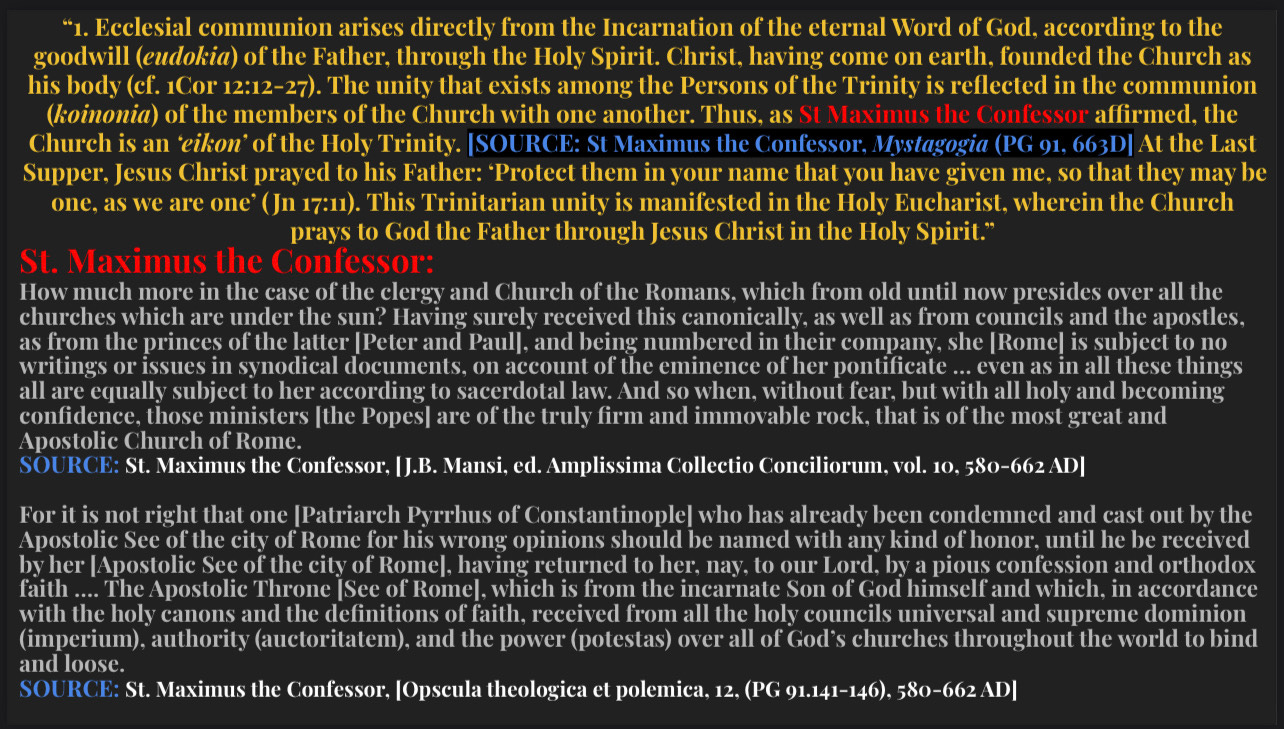
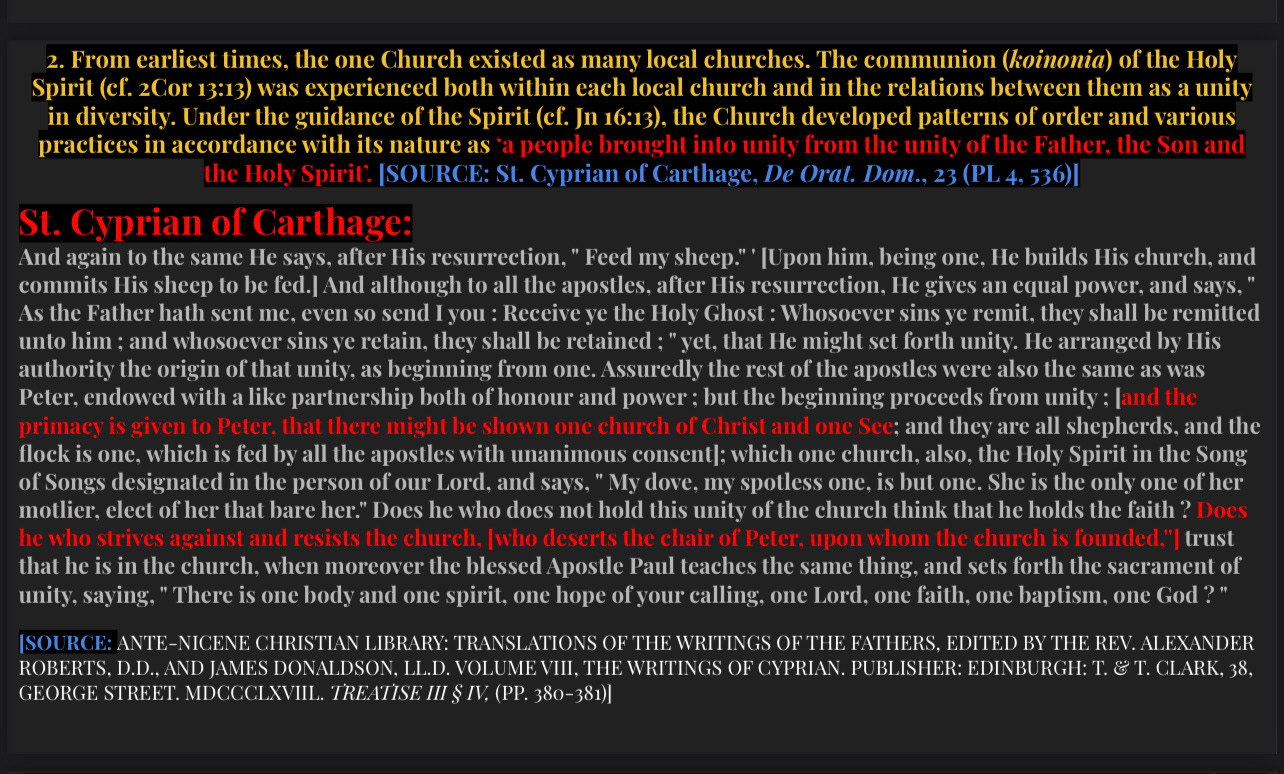
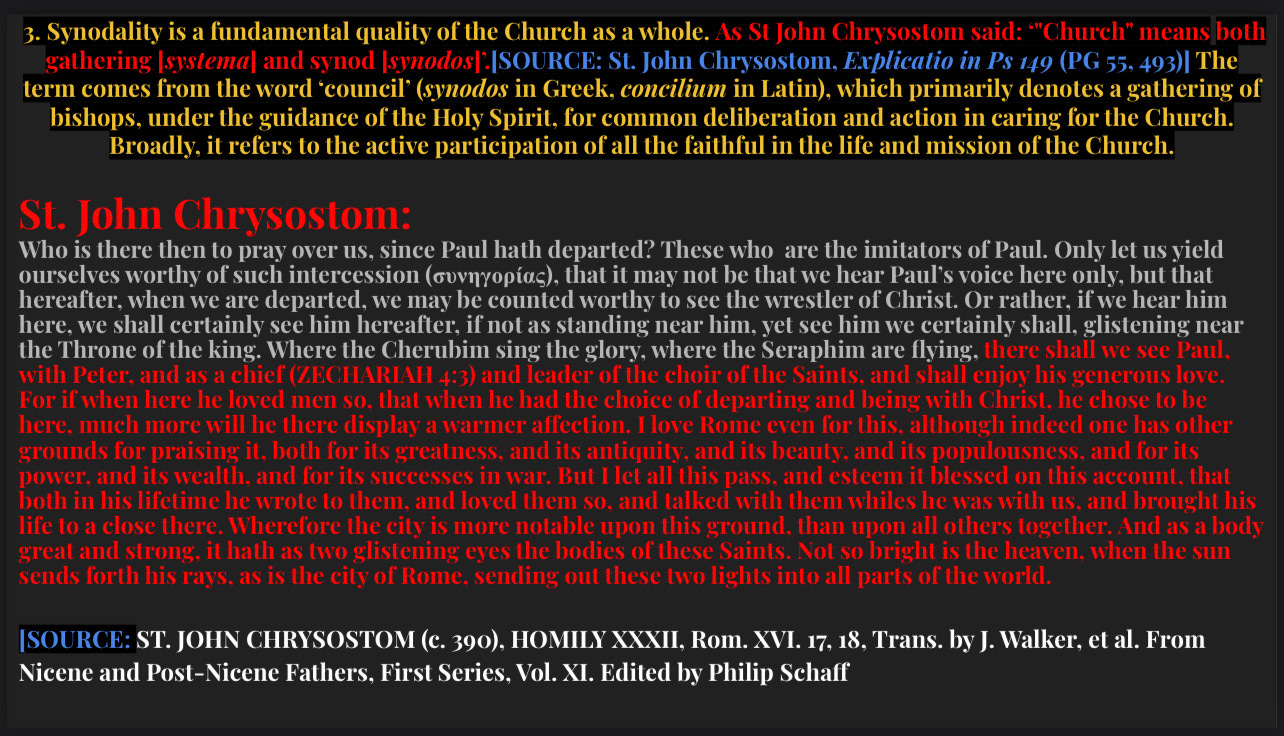
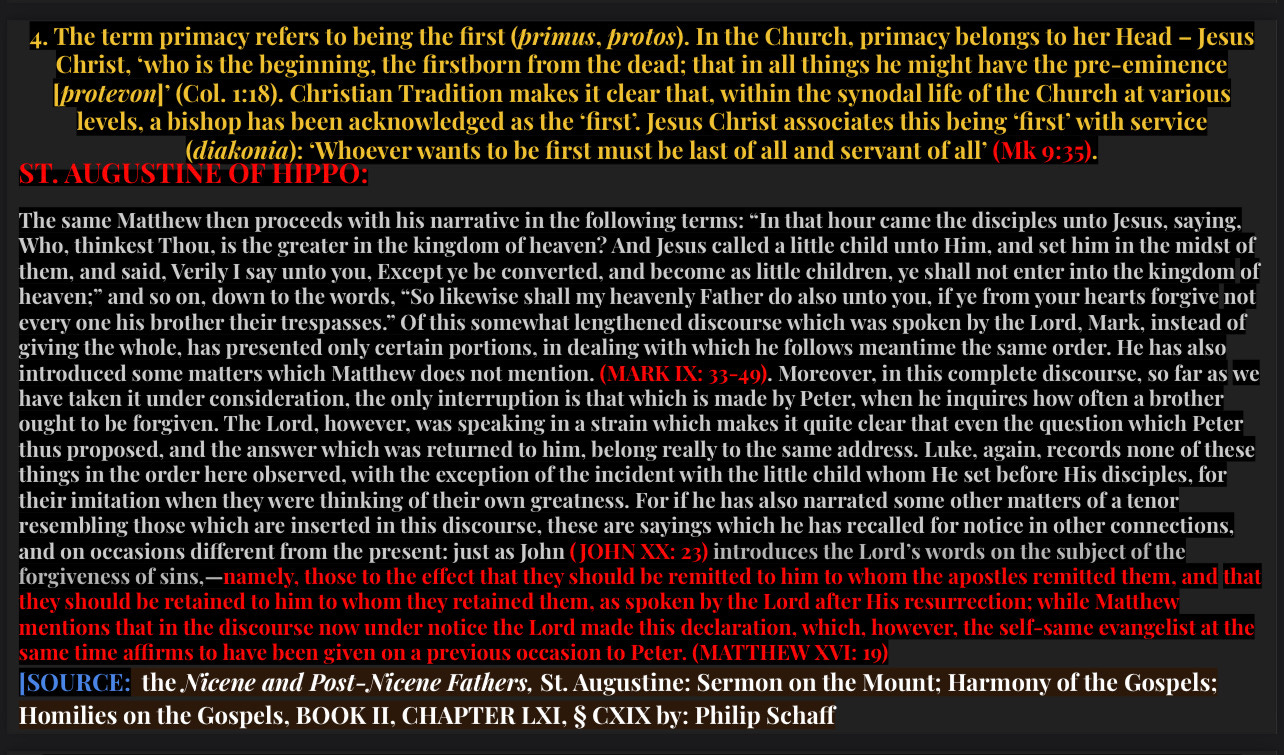
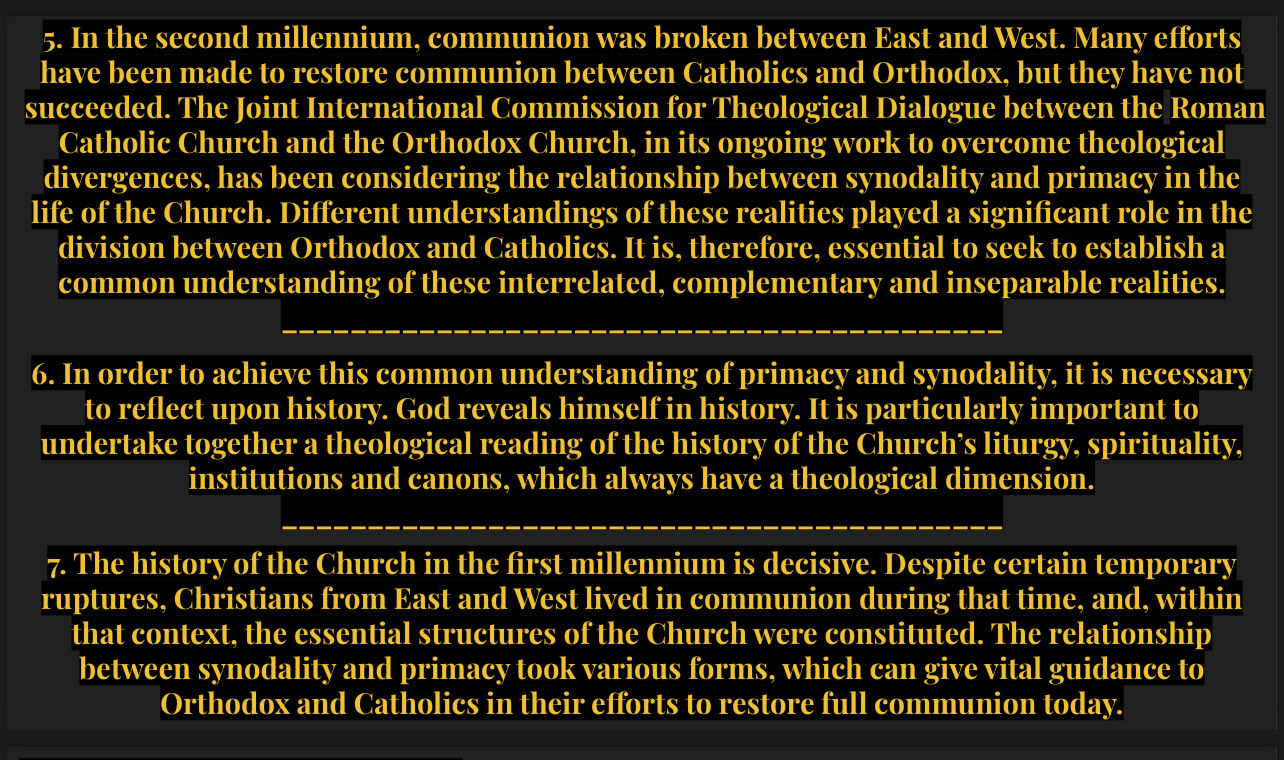
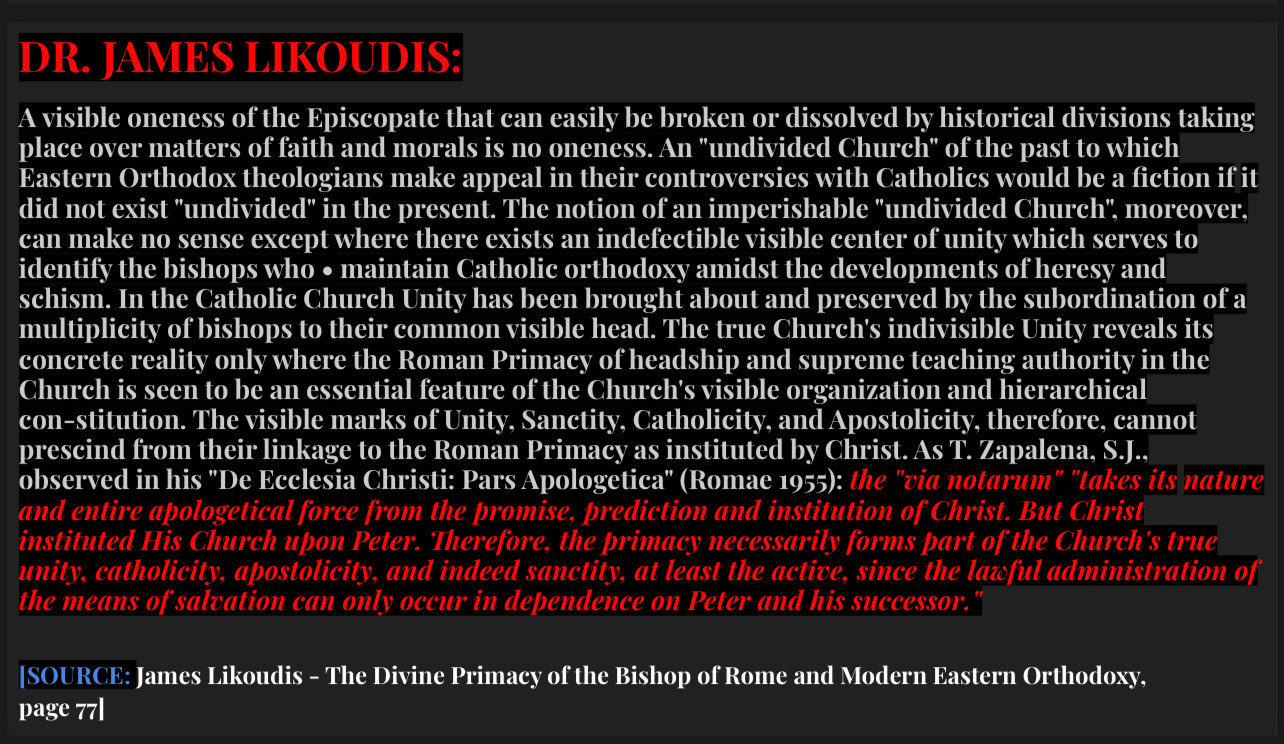
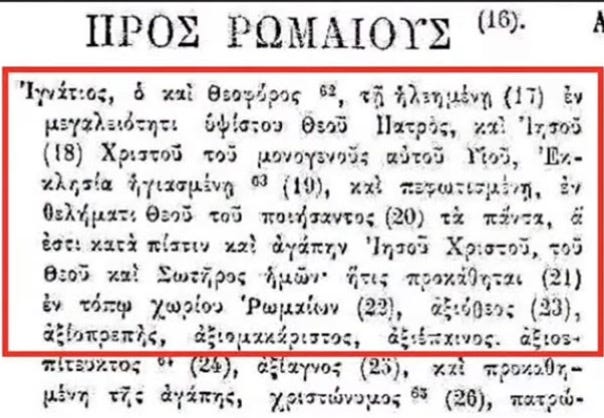
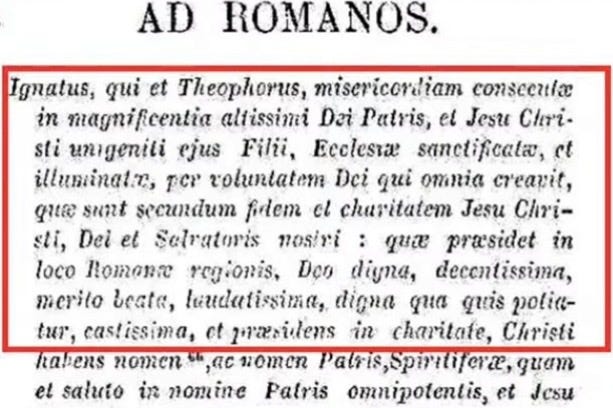
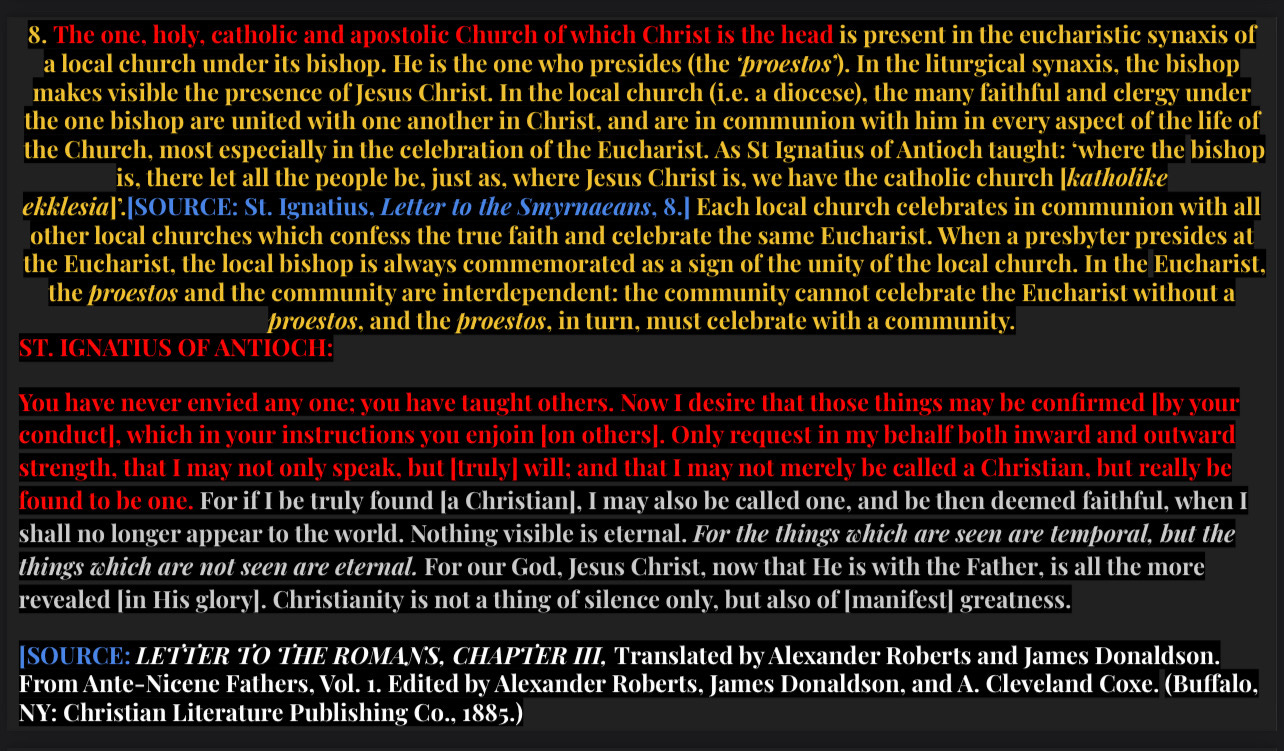
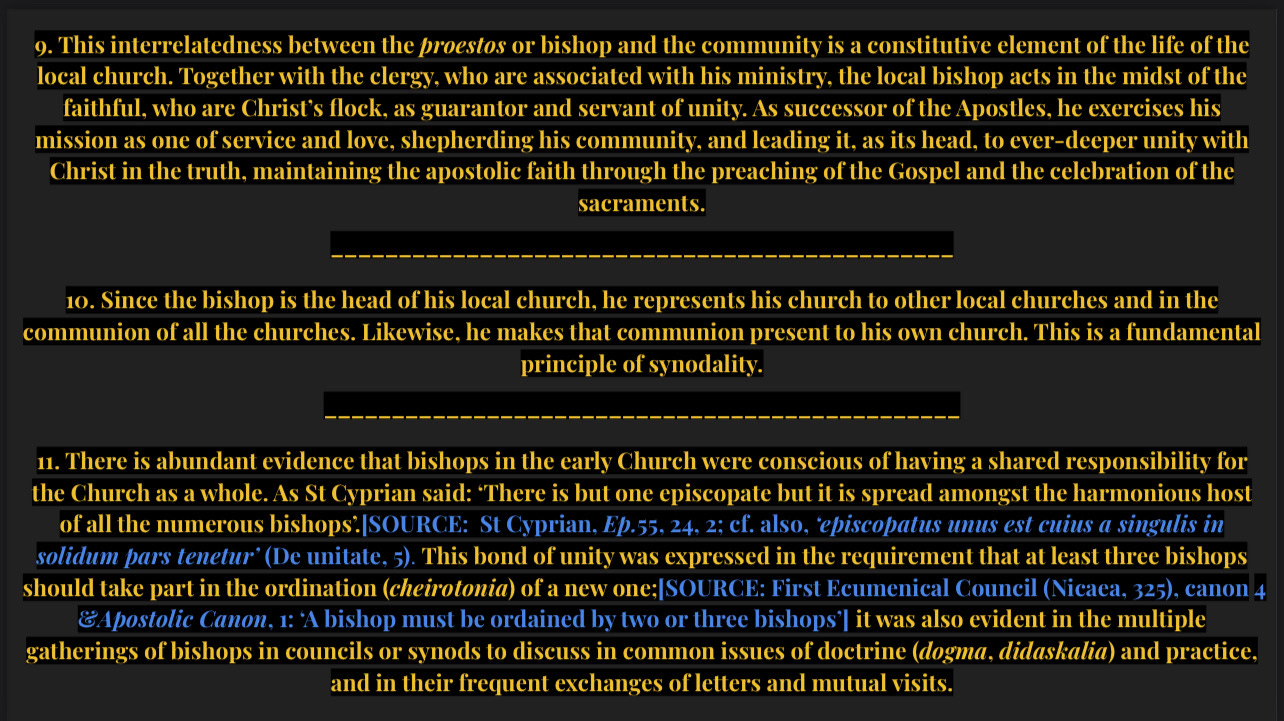
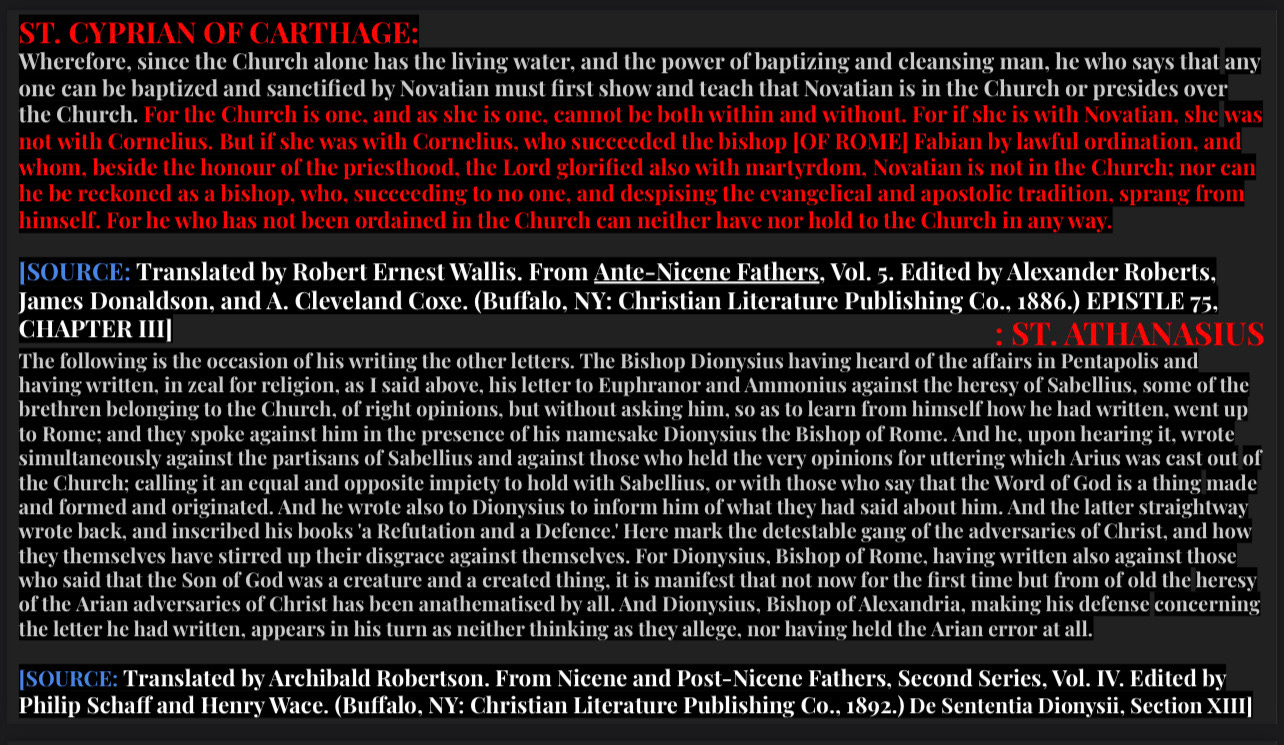
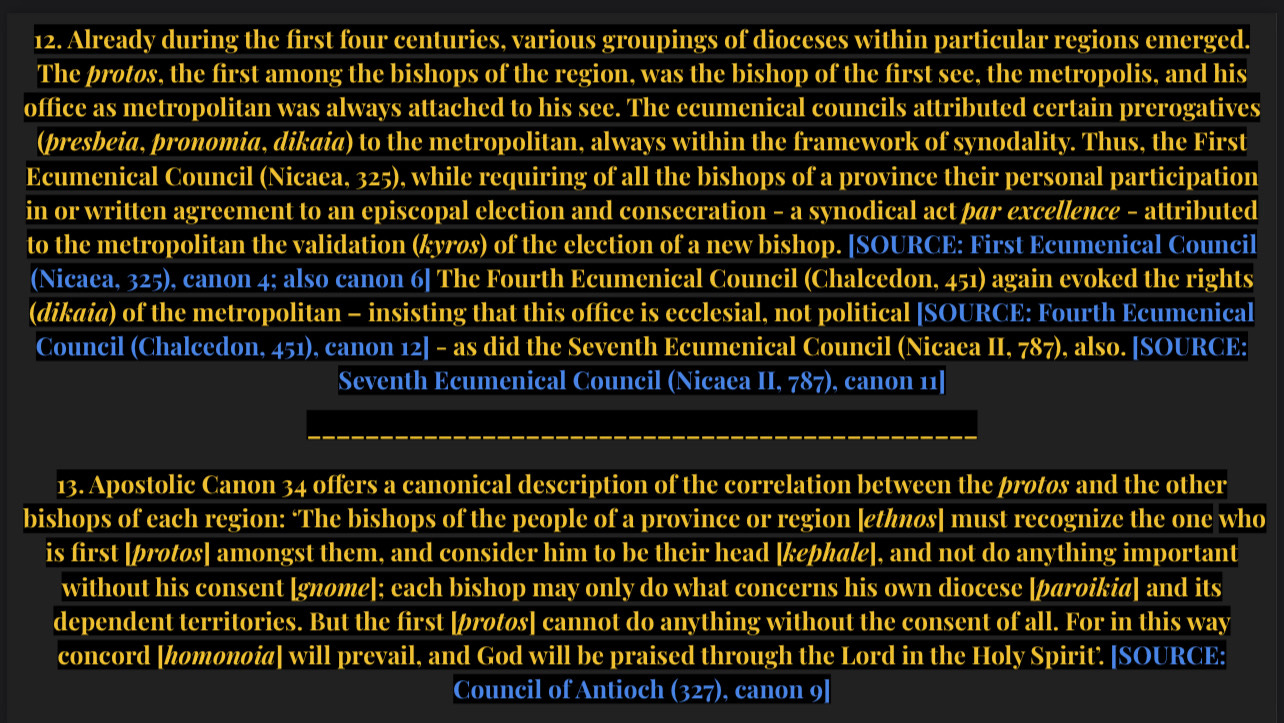
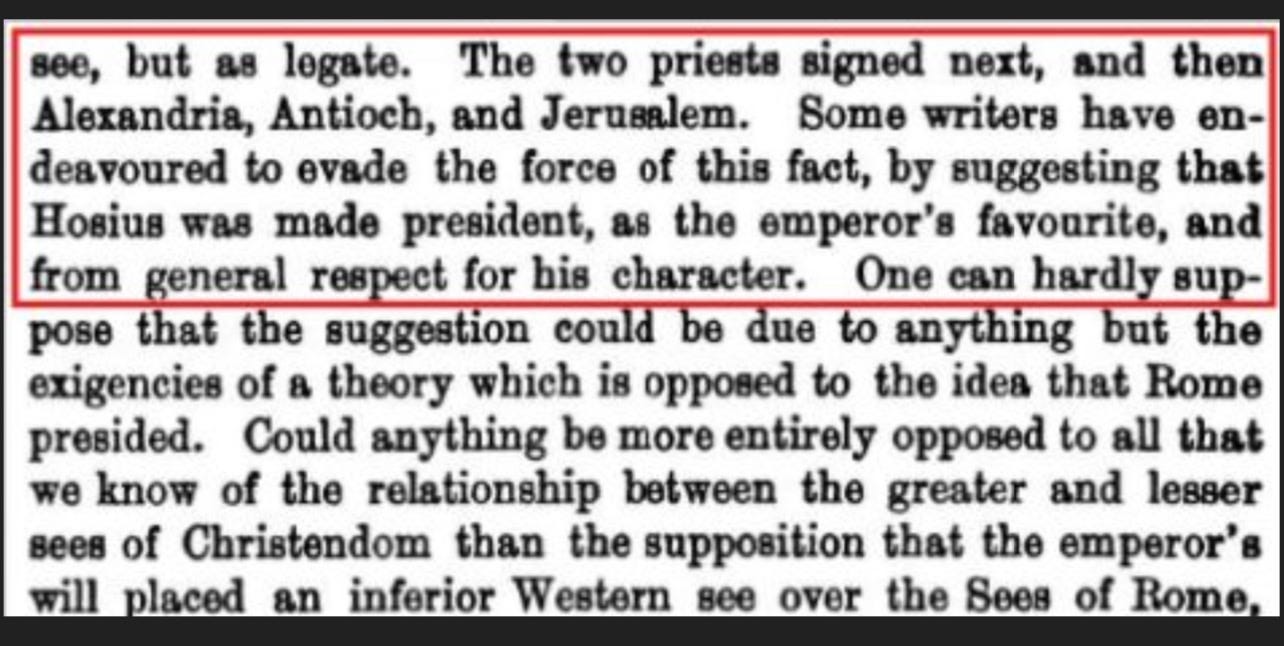
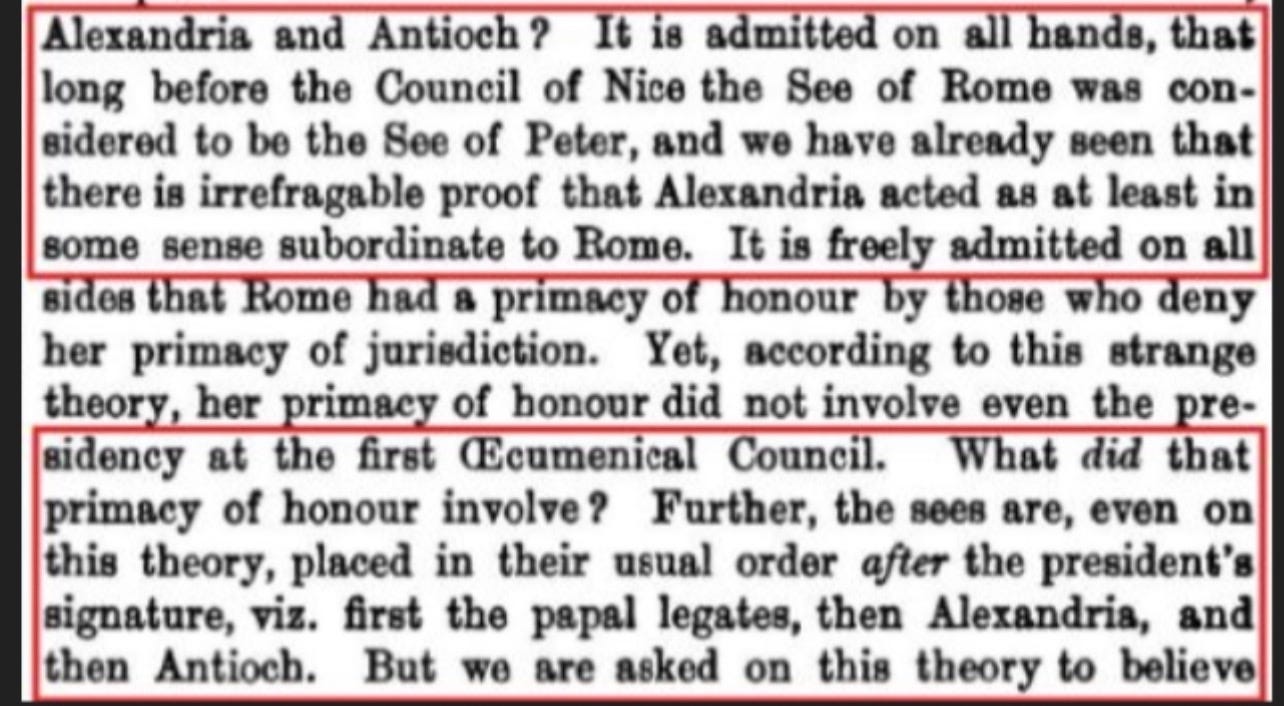
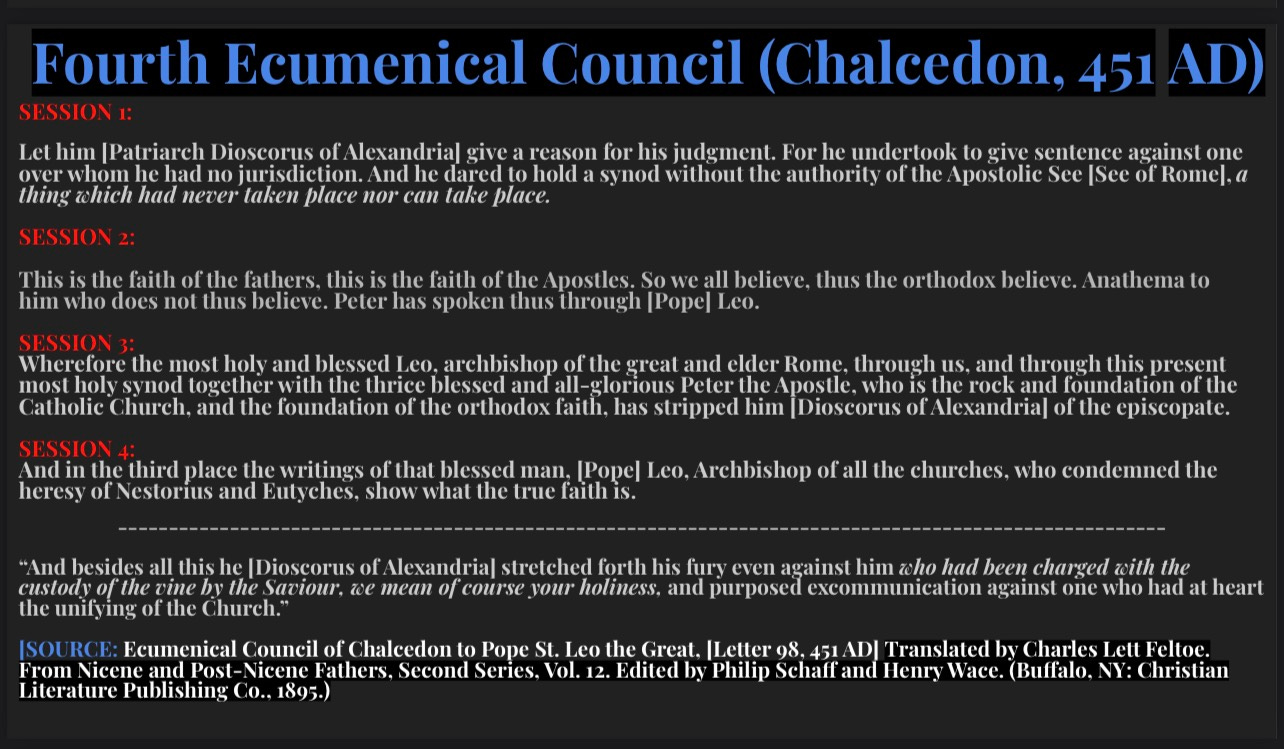
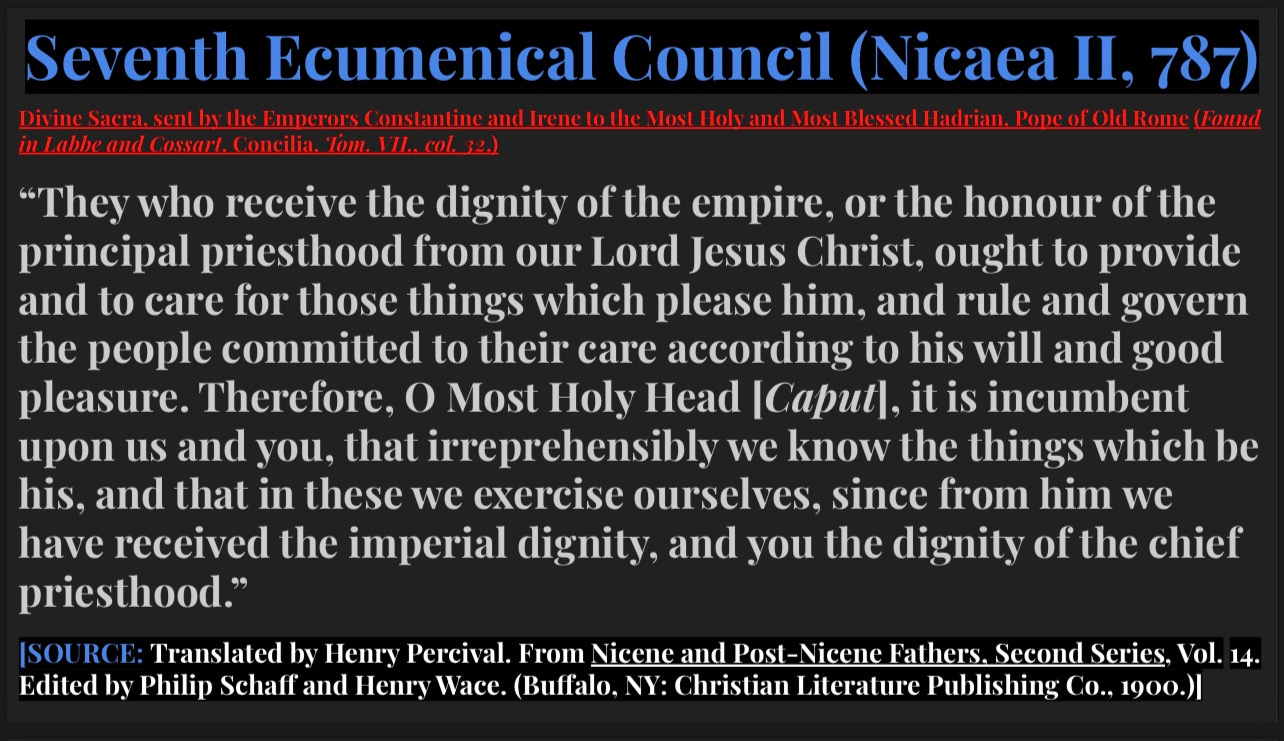
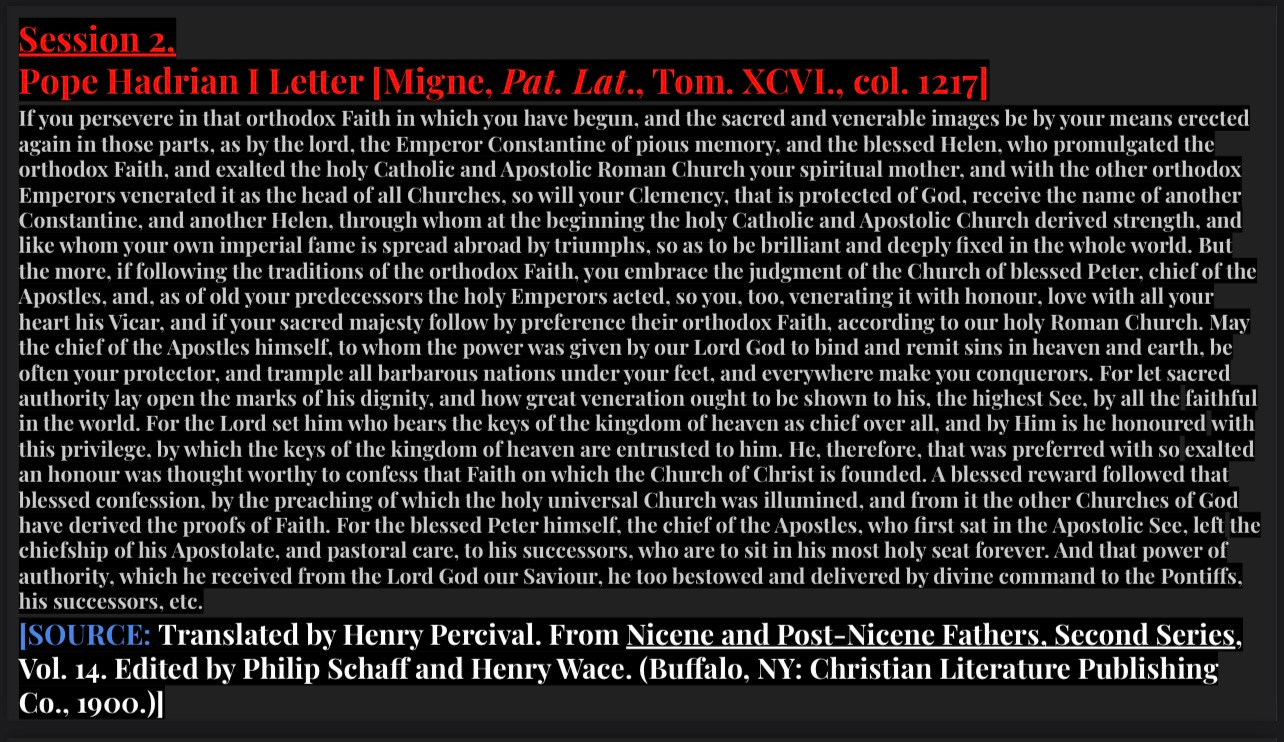
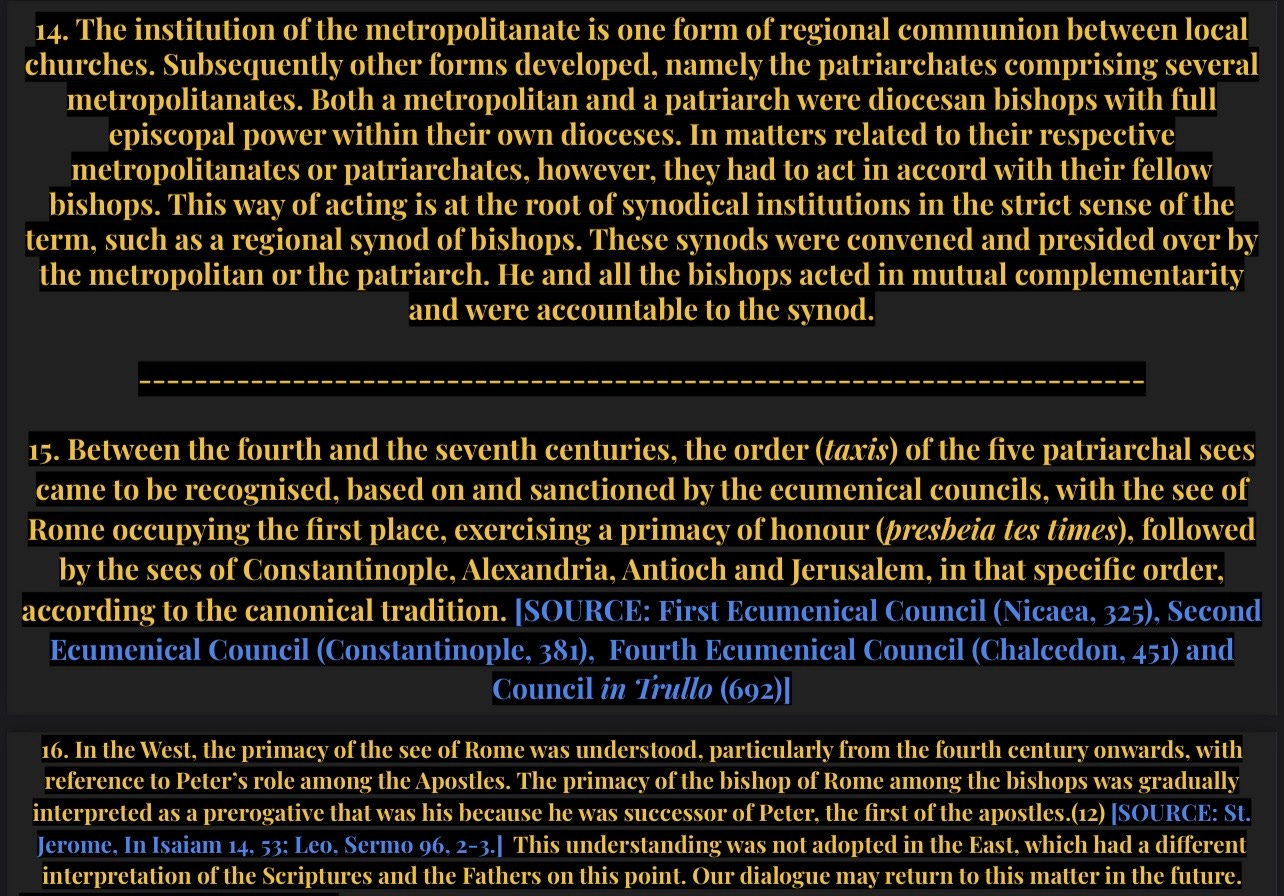
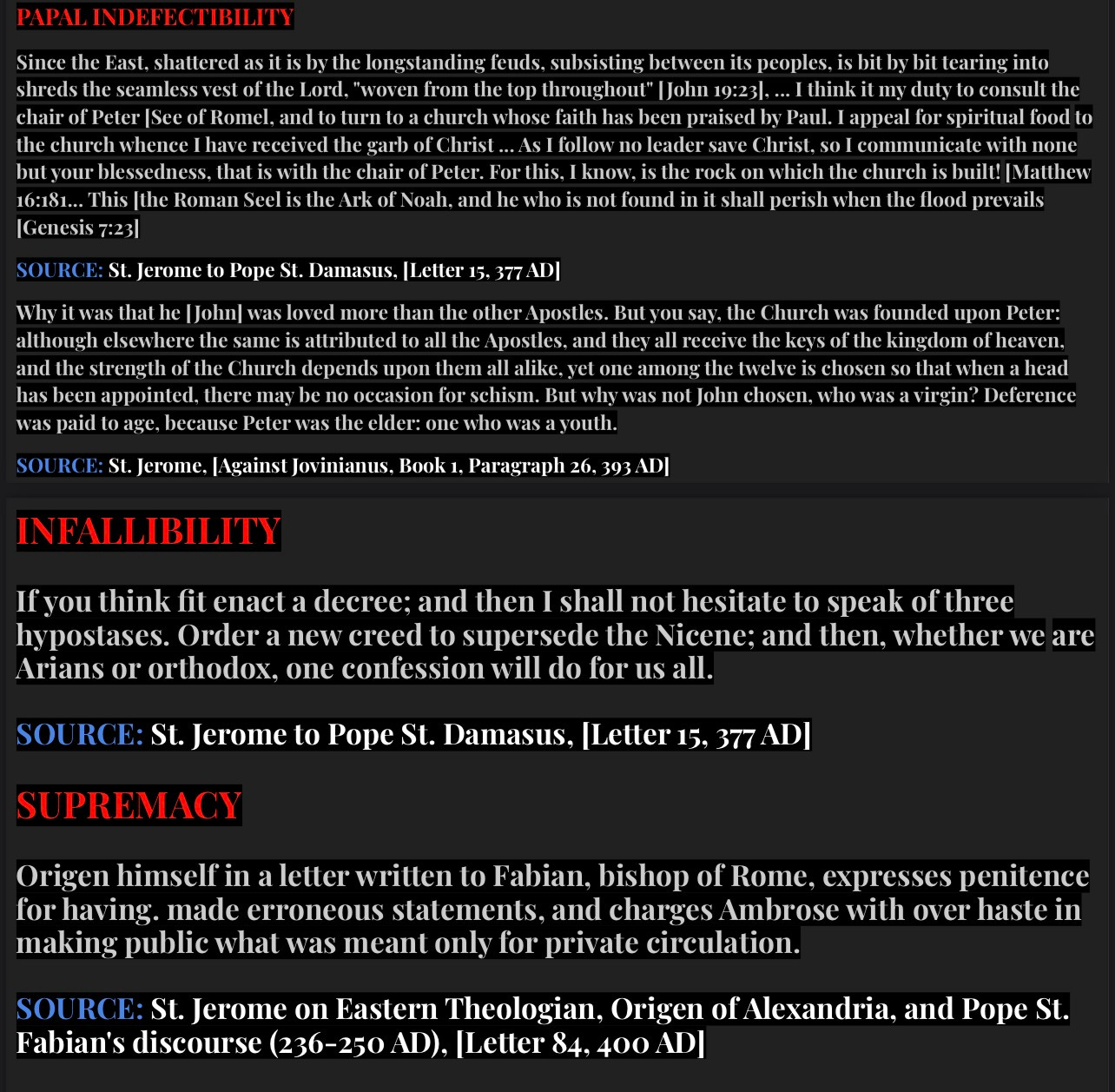
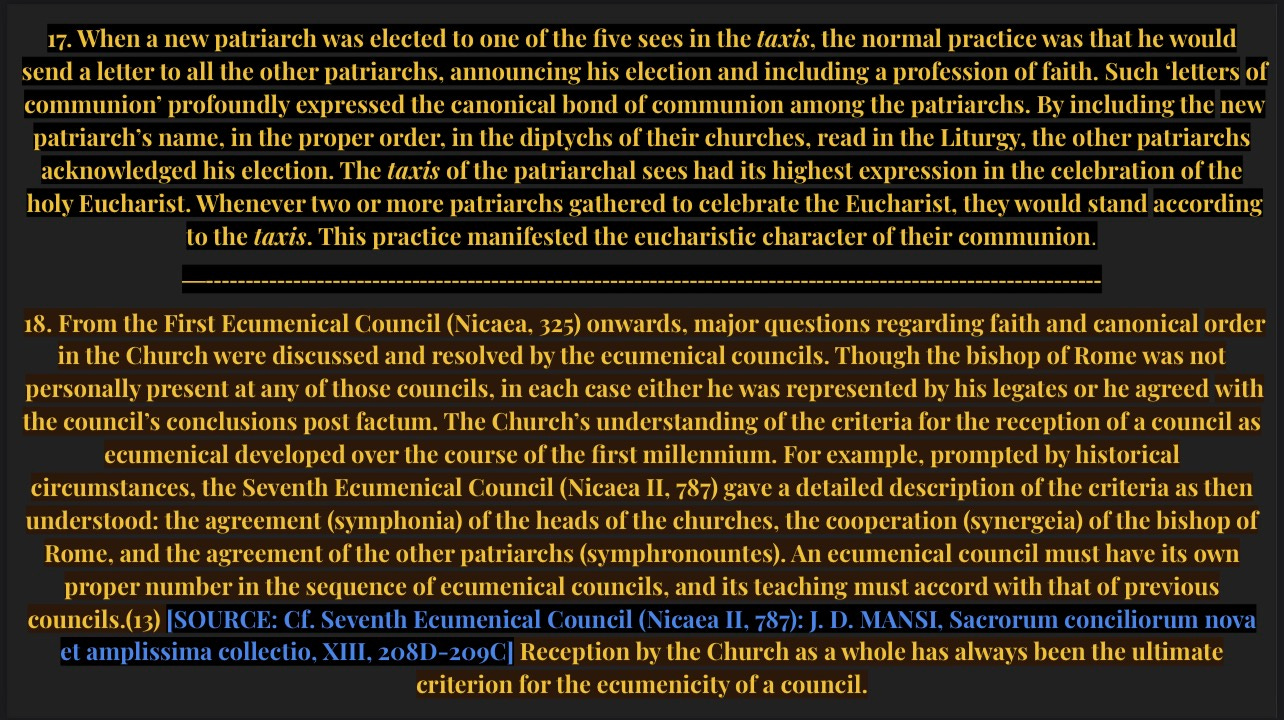
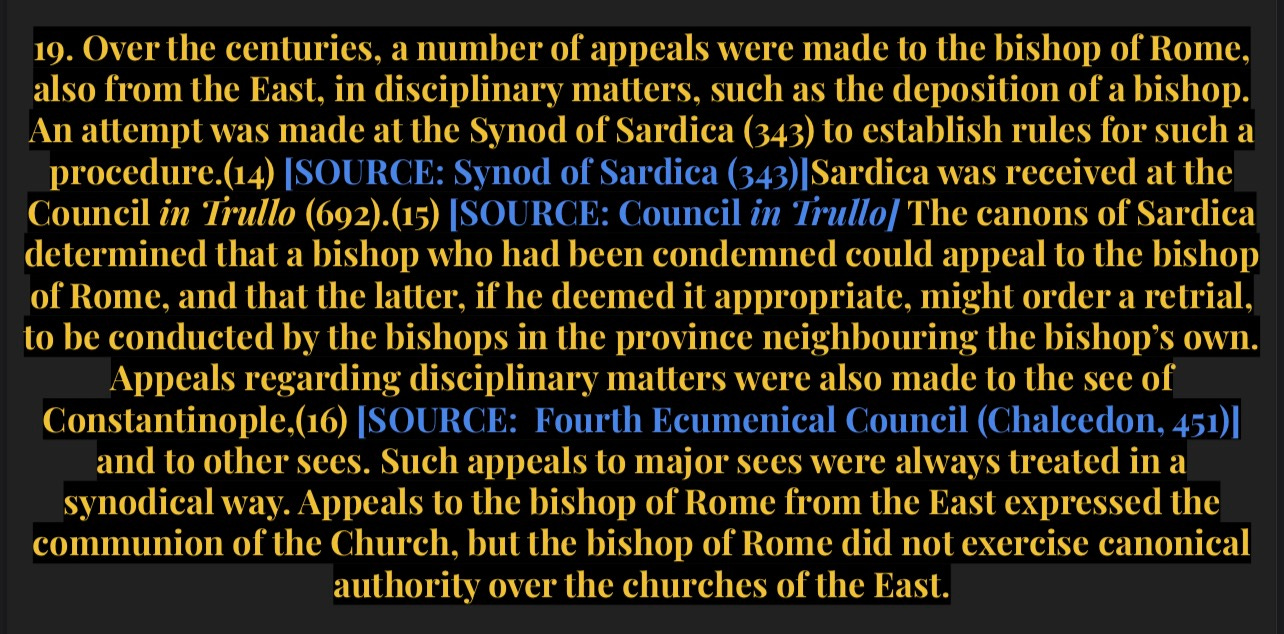
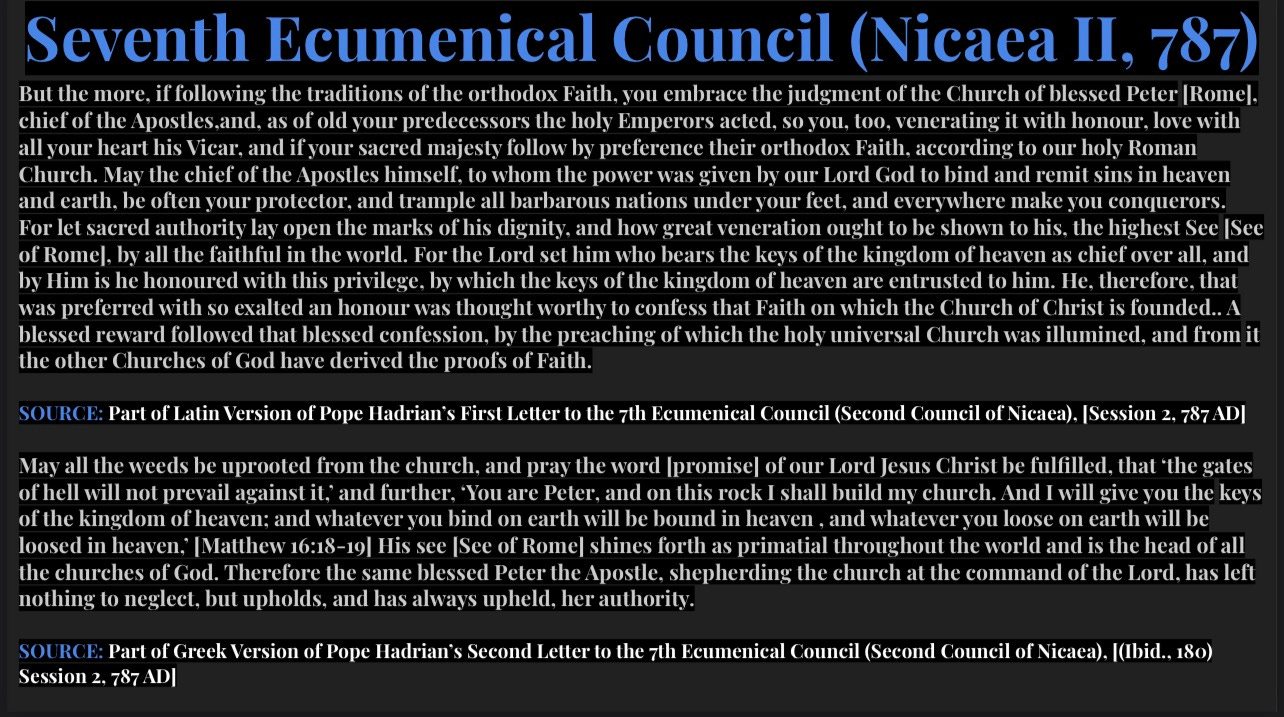
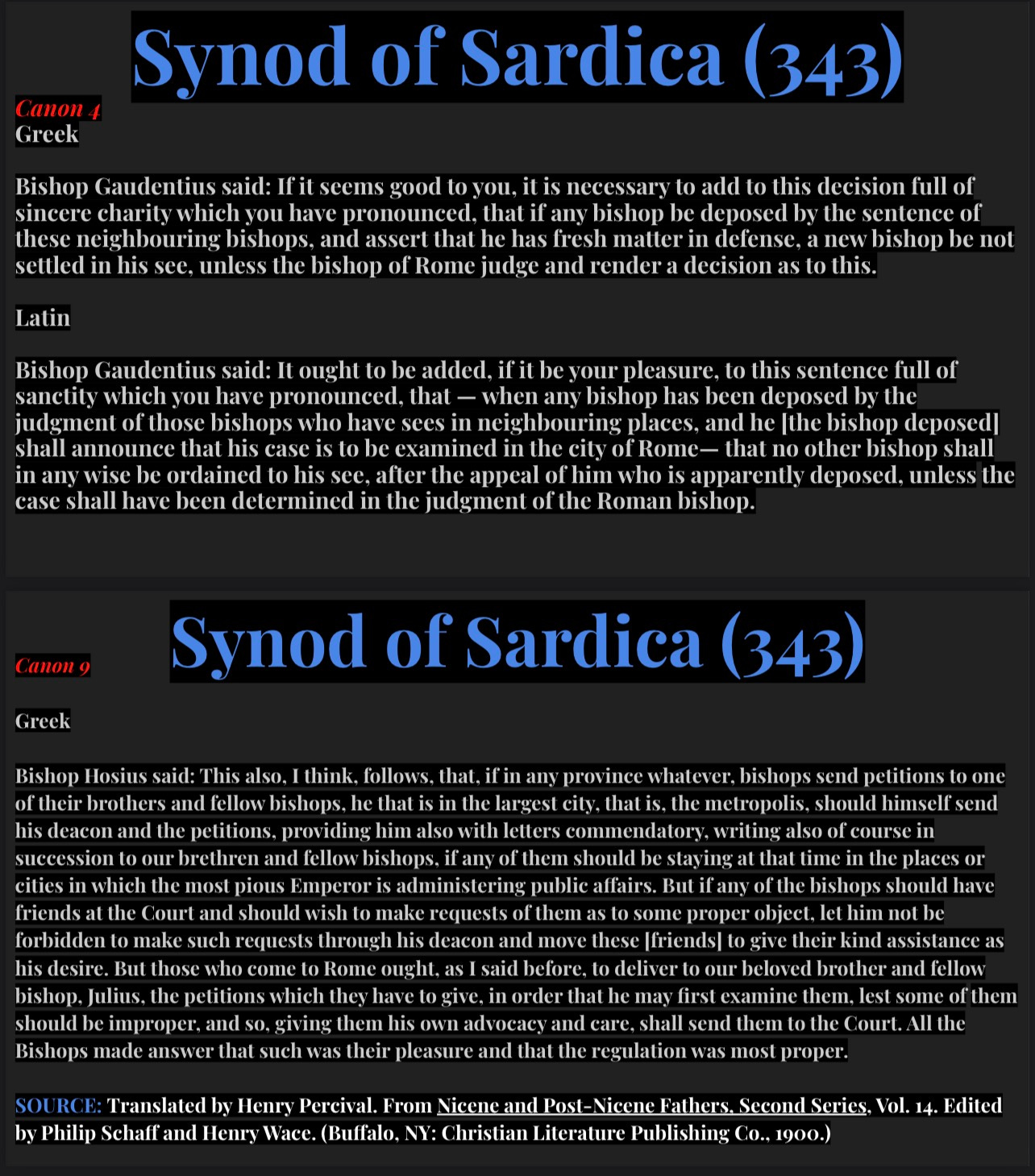
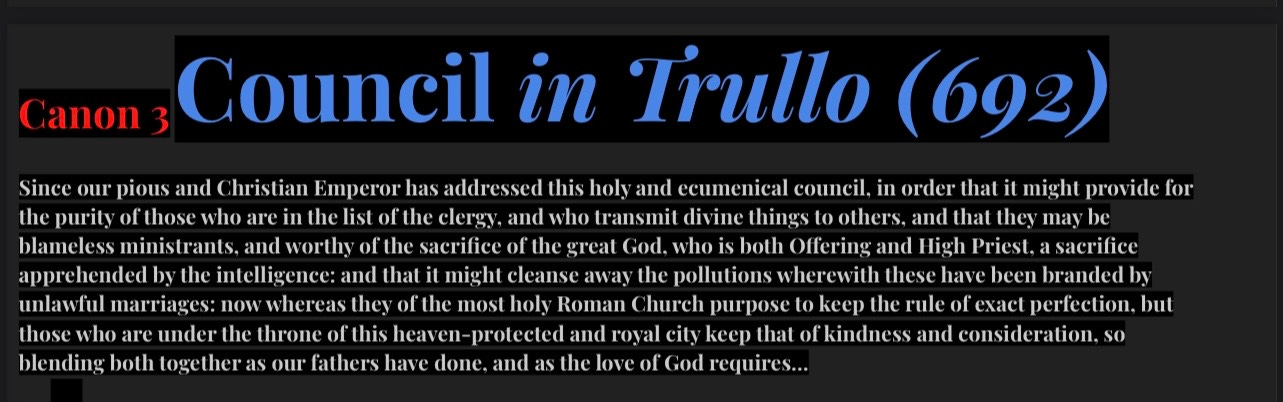
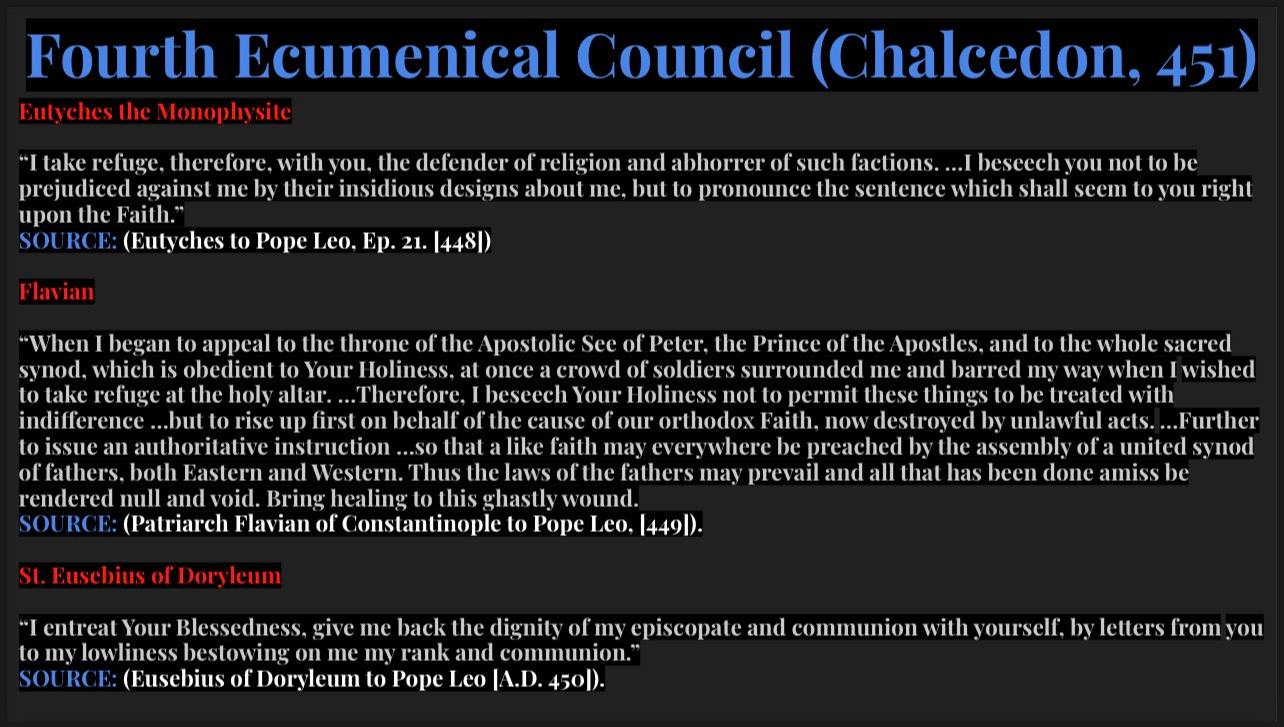
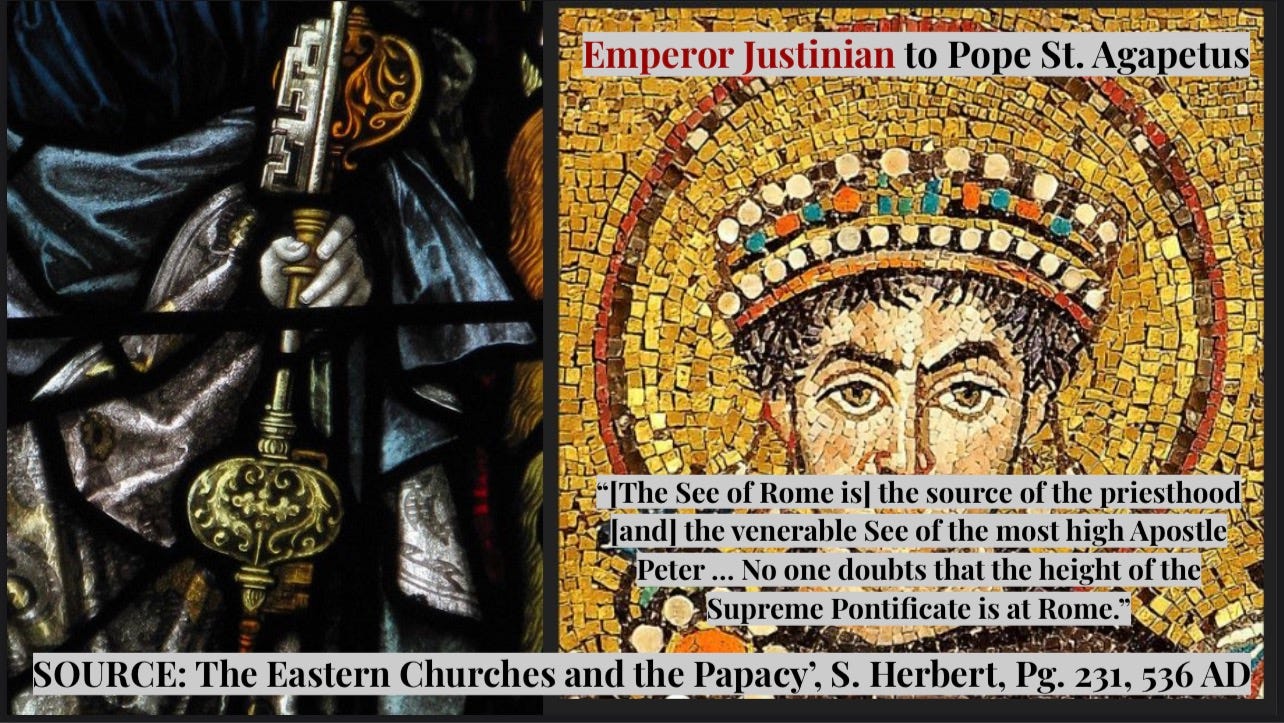
 albanianchristianity